
Buying Land in France: A UK Citizen's Guide
UK citizens can buy land in France without special restrictions. This guide covers average land prices (agricultural ~€6,400/ha, buildable ~€120/sqm), taxes, notary fees, and…

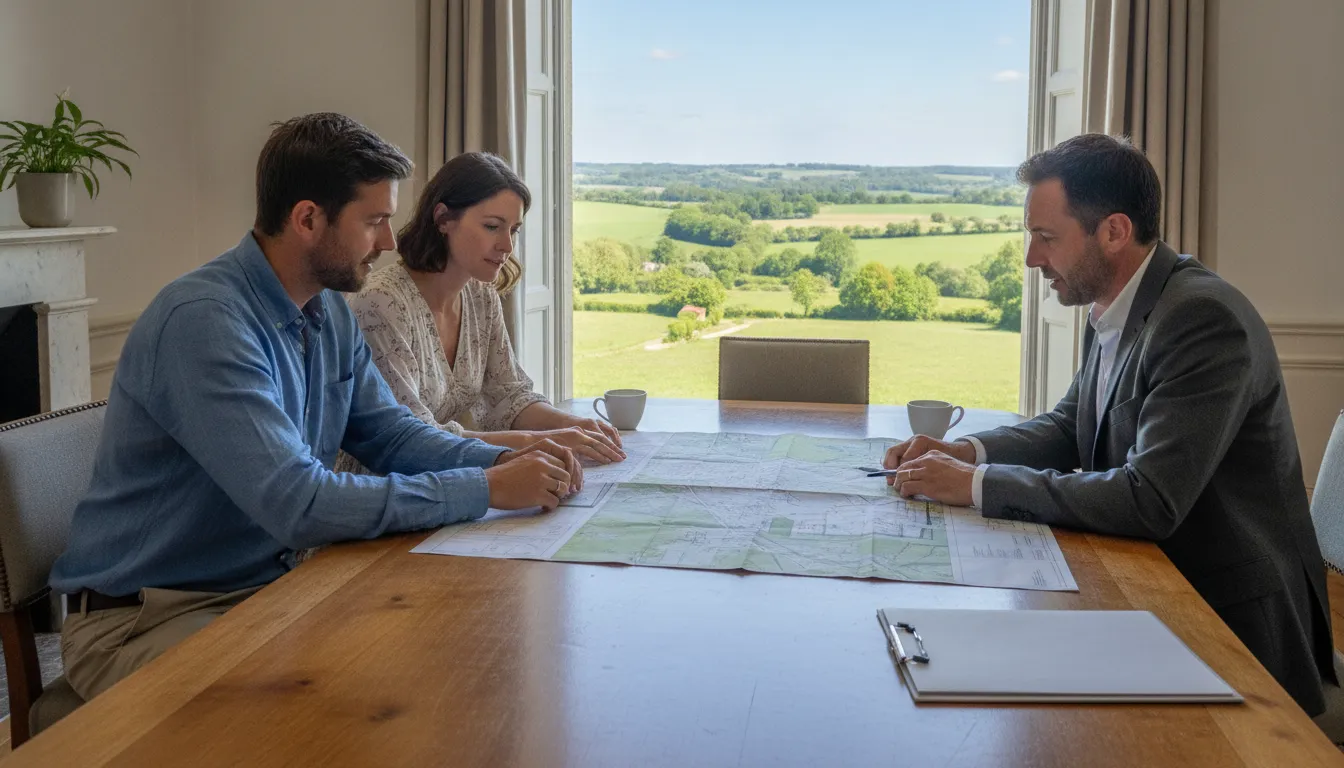
TL;DR: Yes, UK citizens can buy land in France without special restrictions. Agricultural land costs about €6,400 per hectare on average, while buildable land is around €120 per square metre. Expect to pay extra fees like transfer taxes (5.8% to 6.3%) and notary fees (7% to 9%) on top of the land price. The cheapest places to buy land in France are often in rural regions like Bourgogne-Franche-Comté.
For many, owning a piece of France is a lifelong dream – whether it’s a small plot for a garden or a larger parcel for a new home. Imagining a life split between countries often involves thinking about new beginnings, but also about staying reachable and keeping your home phone number working abroad. Building a base in a beautiful country known for its amazing food, rich history, and busy tourism can be a big step. This guide is for you if you’re a UK citizen looking to buy land in France. We’ll cover everything you need to know, from average land prices France and any usage restrictions buying land in France to the taxes and extra costs involved.

Can Foreigners Buy Land in France?
Yes, people from other countries can buy land in France. This is true for citizens of the UK, even though the UK is no longer part of the EU. You can buy land in France as a foreigner without special rules and have the same rights as any French citizen. However, owning land or property in France as a UK citizen does not automatically mean you can live there long-term. To get residency, you will need to apply for a long-stay visa and complete the required registration steps when you arrive. If you’re planning a big move, it’s worth checking out our moving abroad checklist for UK citizens.
What Should You Think About Before Buying Land in France?
Before you decide to buy land in France, there are several important things you should carefully consider to make sure your purchase goes smoothly and meets your needs.
Usage restrictions
Land in France is mainly split into two types: land you can build on (terrain à bâtir) and agricultural land (terres agricoles). It’s very important to know the difference. If you buy agricultural land France, you might not be allowed to build a house on it. The same applies the other way around. Always check that the land’s official use matches what you plan to do with it before you commit to buying.
Condition of the land
When you find a piece of land you like, ask the seller for the most recent diagnostic reports. These are called a Dossier de Diagnostic Technique. You should review these reports carefully with your agent. They will tell you important things, like if there is any lead present in the soil or if the land is at risk from natural disasters such as floods or landslides.
Construction restrictions
Some areas have strict rules about what you can build. These rules might cover the type of building, its size, and even its style. It’s a very good idea to check these rules with the local planning office for that area. The plans are known as a Plan d’Occupation des Sols (POS), Plan Local d’Urbanisme [PLU], or Carte Communale. The exact name depends on where in France the land is located. This step helps you avoid problems later if you plan to build.
Language barriers
It’s helpful to know that only about 31% of French people speak English, according to the Ministry of Culture. When you are buying land in France, hiring an interpreter can be very useful. This helps reduce misunderstandings that could cause problems or delays in the buying process. Clear communication is key for a successful purchase. Also, if you plan to live there, knowing how to keep your old phone number or get a French number can simplify your life.
Currency conversion fees
Buying land in France as a foreigner involves careful financial planning. Throughout the process, you will likely need to pay various professionals, such as interpreters, project managers, real estate agents, and land surveyors. If you pay these professionals using a UK bank account, you might face extra costs because of currency conversion fees. Managing international payments efficiently is crucial to avoid losing money when converting Pounds to Euros. Researching services that offer good exchange rates and low fees for large international transfers can help you save a significant amount of money.
Taxes and additional fees
When you buy land in France as a foreigner, you will need to pay several taxes and extra fees. These include notary fees, registration fees, and transfer taxes. You will also have to pay annual property taxes. Additionally, you are required to report that you own land outside your home country and to declare any profit you make if you sell the land later (known as capital gains). Understanding these costs upfront is important for your budget. You can find more details on general costs of buying property in France.
How to Buy Land in France
The process of buying land in France involves several clear steps. Following these steps carefully will help you make a smooth and successful purchase.
Set a budget
First, do your research. Look at various property websites and land listings to get an idea of land prices France. Then, set a budget that covers the cost of the land you want. Remember, buying land in France also comes with extra fees and taxes. Make sure to include these in your budget so you are not surprised by unexpected costs. Being prepared financially is a key first step.
Work with an agent
Hiring a good real estate agent can save you a lot of time and effort. An agent can help you find land that fits your needs and wishes. You can often find agents listed with properties on various property websites. They can guide you through the local market and help with the legal steps.
Choose Land
After looking at different options, select the piece of land that you like the most and that best suits your plans. Think about its location, size, and the allowed uses.

Review the diagnostic report
Before you agree to buy, ask for and carefully review the diagnostic report (Dossier de Diagnostic Technique). This report helps ensure the land is safe and does not have problems like lead contamination or risks from natural disasters. Your agent or a local expert can help you understand the details.
Make an offer
You will need to negotiate the land price France with the seller. Once you both agree on a price, you will sign a first agreement called a compromis de vente. This agreement takes the land off the market temporarily, meaning the seller cannot offer it to anyone else while you complete your purchase.

Pay a deposit
After signing the compromis de vente, you will usually need to pay a deposit. This deposit is typically 5-10% of the total price of the land and is paid to a Notaire (a public official who handles property transfers). The Notaire will then do a detailed check of the land. This check confirms who owns the land, its exact borders, any rights others might have over the land (like a right of way), and all planning rules. The Notaire also helps write the final deed of sale.
Complete the payment
Once all checks are done, you will pay the remaining amount for the land to the Notaire. You will also pay the Notaire’s fees and other taxes at this stage. After these payments, you will sign the final deed of sale, which officially makes the land yours. If you plan to build on the land, there are further steps and permits to consider.
Pay subsequent taxes and fees
Later on, you will need to get a French tax number (numéro fiscal). This number is essential for paying your annual land and property taxes in France. Understanding these ongoing costs is an important part of owning land abroad.
Is Land Expensive in France?
No, land in France is generally quite affordable when compared to the UK and many other parts of Europe. However, land prices France do change a lot depending on the region. Land usually costs more in the south, especially along the Mediterranean coast. Also, agricultural land France is almost always cheaper than buildable land France.
Besides the actual price of the land, you need to budget for several other costs when you buy land in France:
- Transfer taxes (DMTO): These are typically 5.8% to 6.3% of the purchase price, according to Investropa.
- Notary fees and taxes: These can range from 7% to 9% of the land price Investropa.
- Translator or interpreter services: Expect to pay between €300 and €1,500 for these services Investropa.
- Agent fees: If the seller doesn’t cover these, they can be 3% to 10% of the price Investropa.
- Extra legal checks: These might cost an additional €300 to €1,500 Investropa.
- Departmental registration tax: This is typically 3.8% to 4.5% Estatefy.
- Annual Land tax (taxe foncière): This tax changes based on where the land is located.
How Much Does a Piece of Land Cost in France?
The cost of land in France varies quite a lot depending on its location and whether it’s agricultural, buildable, or for residential use.
Agricultural land generally costs about €6,400 per hectare on average, according to REUSSIR. Prices for this type of land can range from as low as €2,900 per hectare to more than €40,000 per hectare in some areas.
On the other hand, the average cost of buildable land in France is around €120 per square metre, according to Le marche vert. The price can vary significantly, from €20 to €300 per square metre, depending on demand and location.

Where is the Cheapest Place to Buy Land in France?
The cheapest places to buy land in France are often found in rural areas, away from big cities and popular coastal regions. Here are some regions in France where you can find more affordable buildable land France and agricultural land France, based on average prices.
Average Agricultural Land Prices by Region⁴
| Region | Average price per hectare |
|---|---|
| Bourgogne-Franche-Comté | €2,920 |
| Pays de la Loire | €4,040 |
| Auvergne-Rhône-Alpes | €4,860 |
| New Aquitaine | €5,470 |
| Brittany | €6,520 |
In terms of agricultural land, Bourgogne-Franche-Comté stands out as one of the most affordable regions, with an average price of just €2,920 per hectare. This is significantly lower than other regions like Brittany, which has an average of €6,520 per hectare.
Average Buildable Land Prices by Region⁷
| Region | Average price per square metre |
|---|---|
| Burgundy-Franche-Comté | €50 |
| Centre-Val de Loire | €60 |
| Normandy | €60 |
| Nouvelle-Aquitaine | €68 |
| Hauts-de-France | €80 |
For buildable land, Burgundy-Franche-Comté again offers some of the lowest prices, averaging around €50 per square metre. This makes it an attractive option if you’re looking to build your dream home on a budget. Other regions like Centre-Val de Loire and Normandy also offer competitive prices at about €60 per square metre. These numbers give you an idea of where your investment might go further.
Buying land in France as a foreigner does not have to be difficult. With good planning and advice from the right professionals, you can find land that is easy to access, holds good value for the future, and is perfect for what you want to use it for. Making sure your financial transfers are managed well is also key to a smooth purchase. When you’re planning such a significant international financial move, ensuring your money transfers are secure, convenient, and cost-effective is vital. This includes finding services that offer clear fees and fair exchange rates for large amounts, helping your investment go further. Understanding these options can make your buying process much simpler. It’s important to do your research on how to best manage large international payments to avoid unnecessary costs and ensure your funds are handled safely. If you are a UK citizen moving abroad and want to keep your local connections, you might also find it useful to learn about what happens to your number when you move abroad.
Related reading
Sources
| # | Source | Website |
|---|---|---|
| 1 | Ministry of Culture | culture.gouv.fr |
| 2 | Investropa | investropa.com |
| 3 | Estatefy | estatefy.com |
| 4 | REUSSIR | reussir.fr |
| 5 | Le marche vert | lemarchevert.fr |