How to Call Canada from Abroad: Your Complete Dialing Guide
Learn how to call Canada from any country with our complete guide. Understand the +1 country code, international exit codes, phone number formats, and common dialing mistakes.


TL;DR: To call Canada from another country, you always need the Canada country code, which is +1. You must also use an exit code international call (like 00 or 011 from many countries, or simply + on mobile phones) before the +1 and the 10-digit local Canadian phone number. For example, if calling from the UK, dial 00-1-XXX-XXX-XXXX.
Have you ever tried to call loved ones or a business in Canada only to have your call fail, leaving you feeling frustrated and disconnected? Many people living abroad struggle to keep their home phone numbers working or to simply reach someone back home. The secret to a successful international call to Canada lies in understanding a few key dialing steps, starting with the right Canada country code. Getting these steps right means you can stay connected easily, no matter where you are in the world.
What is the Canada Country Code and Why Do You Need It?
The Canada country code is a special number that helps phone networks around the world know you want to call someone in Canada. This code is always +1. Think of it as Canada’s unique digital address in the global phone system. You need to use this code every time you make an international call to Canada, whether you are calling friends, family, or a company. It is an essential part of the international dialing code Canada.
Making calls abroad can sometimes seem confusing, but with the correct country code, it becomes much simpler. If you are someone who splits your life between countries, knowing this code means you can always reach out and stay in touch. It is particularly important if you are trying to keep your existing phone number active while living abroad, as incorrect dialing can lead to missed calls or connection problems.
How Do I Call to Canada from Abroad?
To call Canada from abroad, you need to follow a specific sequence of numbers. This sequence typically includes your country’s exit code, the Canada country code, and then the local Canadian phone number.
Here are the basic steps to make a call to Canada:
- Dial your country’s international exit code: This code tells your phone network that you are making an international call. Common exit codes are 00 (used in many countries, including the UK and most of Europe) or 011 (used in the US). On most mobile phones, you can simply press and hold the ‘0’ key until a ’ + ’ symbol appears. This ’ + ’ symbol automatically replaces the exit code for you.
- Enter the Canada country code: After the exit code or the ’ + ’ symbol, you must dial 1. This is the specific phone code for Canada.
- Dial the Canadian area code: Canada uses a 3-digit area code, just like the United States. This identifies the specific region within Canada you are calling.
- Enter the local phone number: Finally, dial the 7-digit local phone number of the person or business you want to reach.
So, the complete sequence for calling Canada from abroad generally looks like this: [Your Exit Code] - 1 - [Canadian Area Code] - [7-Digit Local Number].
For example, if you are calling a Canadian number (let’s say 999-555-1234 in the 999 area code) from the UK, you would dial: 00-1-999-555-1234. If you are using a mobile phone, you could dial: +1-999-555-1234.
What is a Canada Phone Number Format?
Understanding the Canada phone number format is key to making sure your calls go through. A typical Canadian phone number, when written for international dialing, will look like this:
+1 (Area Code) Local Number
For example, a common way to write this is:
+1 - (999) - (999) - (9999)
This means:
- +1: This is the Canada country code.
- (999): This represents the 3-digit area code.
- (999)-(9999): This is the 7-digit local phone number.
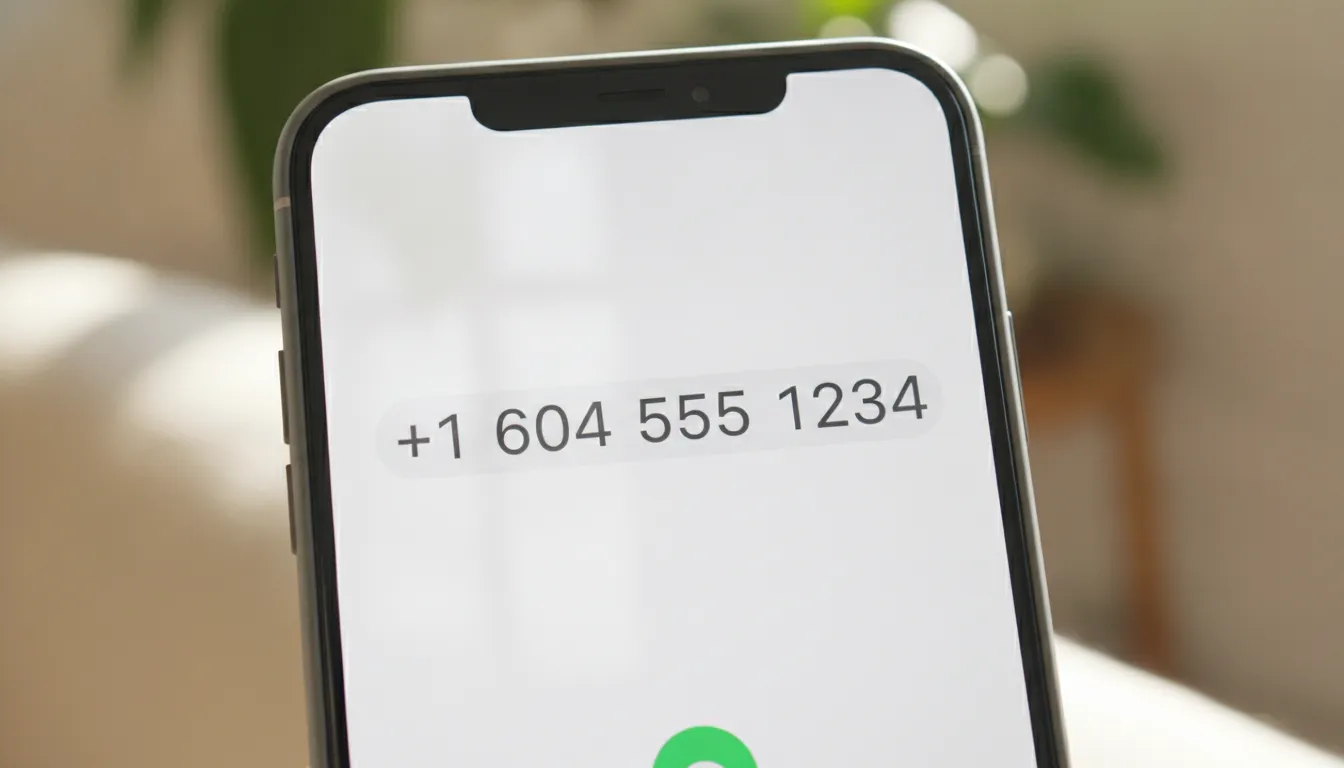
So, if you are given a number like (416) 555-1234, you would add the +1 in front to make it +1-416-555-1234 for international dialing. Always make sure you have the full 10 digits for the area code and local number combined, after the Canada country code.
Why Did My Call to Canada Not Work?
It can be very frustrating when you try to make an international call to Canada and it just doesn’t connect. Often, the problem is a simple mistake in the dialing process. If you find your call to Canada not work, check these common reasons:
- Forgetting your country’s exit code: You must dial a special code to tell your phone system you are calling outside your current country. If you miss this, the call won’t go through.
- Using the wrong country code or number code: The correct phone code for Canada is +1. Using any other code will lead to a failed call. Double-check all the numbers you are dialing.
- Not dropping the leading zero (if applicable): Some countries’ local numbers start with a ‘0’ that you need to remove when dialing internationally. While this is less common for Canada itself (as its numbers typically don’t start with a ‘0’ in this context), it’s a general international dialing rule to be aware of if calling other countries. For Canada, always dial the 10-digit number (area code + local number) directly after the +1.
- Calling a mobile number that does not accept international calls: Some mobile phone plans or specific numbers might be set up to block calls from certain international networks or countries.
To prevent these issues, it is a good practice to save international contacts in your phone with the full international dialing format, starting with the ’ + ’ symbol, the Canada country code (+1), and then the full 10-digit number.
Common International Calling Mistakes
Here is a quick overview of common errors and how to fix them when trying to call Canada:
| Problem | Solution |
|---|---|
| Forgot exit code international call | Dial the international access code (e.g., 00 or 011) or use the ’ + ’ symbol. |
| Dialed incorrect Canada country code | The correct calling code for Canada is +1. Make sure you use it. |
| Local number starts with a ‘0’ (not for Canada) | For many countries, remove the leading ‘0’ from local numbers when dialing internationally. For Canada, this is usually not an issue as the area code is part of the 10-digit number. |
| Call blocked by recipient’s network | Confirm with the person you are calling if their number accepts international calls, or try an alternative method like a messaging app. |
| Incorrectly entered area code or local number | Double-check that all 10 digits after the +1 are correct. |
What is an Exit Code and How to Call Internationally in Canada?
An exit code international call, also known as an international access code, is the set of numbers you must dial before the country code when making an international call from your current location. It tells your phone service provider that you want to connect to a phone network in another country.
The two most common exit codes used worldwide are ’ 00 ’ and ’ 011 ’.
- ’ 00 ’ is used in many countries, especially across Europe and Asia. If you’re calling Canada from abroad from the UK, for example, you’d start with 00.
- ’ 011 ’ is primarily used in North America, including the United States and other regions that share the North American Numbering Plan. If you were calling from Canada to another country, you would use 011.
However, with modern mobile phones, there’s an easier way to handle the exit code: use the ’ + ’ symbol. By pressing and holding the ‘0’ key on your phone, you can make the ’ + ’ symbol appear. This symbol is universally recognized by phone networks and automatically acts as the correct exit code for wherever you are calling from. So, for calling Canada from abroad, you can often just dial ’ +1 ’ followed by the Canadian area code and local number. This is a very helpful feature for those who travel frequently and want to avoid memorizing different exit codes for each country.
Traveling Frequently? Stay Connected with Local SIMs or eSIMs
For people who often travel or live in different countries, staying connected is vital. Relying on your home country’s mobile plan abroad can lead to very high roaming charges, making calls and data expensive. Two great ways to manage this are by using a local prepaid SIM card or an eSIM.
Prepaid Local SIM Cards
When you arrive in a new country, you can buy a local prepaid SIM card. This gives you a local phone number and access to local data and call rates, which are usually much cheaper than roaming with your home SIM. However, it means you’ll have a different number in each country, and you might need to swap out physical SIM cards. If you need to keep your main phone number active, you might consider solutions like porting your number to a service that allows you to manage it digitally, as discussed in guides like how to keep your UK number abroad or keep your US number abroad.
eSIMs (Embedded SIMs)
An eSIM is a digital SIM card that is built into your phone. Instead of needing a physical card, you can download different mobile plans directly to your phone. This is very convenient for travelers because you can switch between plans for different countries without changing SIM cards. You can even have multiple eSIM plans active at once, allowing you to use a local plan for data while keeping your main number (on a physical SIM or another eSIM) active for calls. Many phones today support eSIM technology, offering a flexible way to stay connected worldwide. Learn more about the benefits of eSIMs for travel or how eSIMs compare to physical SIMs.
Both options help you avoid huge costs and ensure you always have internet and calling access. This is especially helpful if you need to make or receive calls to or from Canada, making it easier to manage your international life.
Managing Your International Finances While Abroad
Beyond making calls, managing your money when you are living or traveling abroad is another important part of staying connected and feeling at home. When you are in Canada or any other country, you need ways to pay for things easily, without high fees. Companies like Wise offer solutions to make international spending straightforward.
For example, the Wise card lets you spend money in over 150 countries. It automatically changes your money into the local currency using the real mid-market exchange rate. This means you avoid hidden fees or bad exchange rates that traditional banks often charge. When you are making an international call to Canada to talk to a supplier or arrange something, you might then need to pay them. Using a card designed for international travel can save you a lot of money on these transactions. It helps you manage expenses like booking taxis, paying for meals, or buying things from local shops, all while benefiting from fair exchange rates. According to Wise, their goal is to make international money transfers and spending transparent and affordable [https://uk.linkedin.com/company/wiseaccount]. Such financial tools are particularly useful for expats and digital nomads who often need to handle money in various currencies, ensuring that their financial life is as smooth as their communication.
Making a successful international call to Canada is quite simple once you know the right steps. Always remember to dial your exit code (or use ’ + ’), followed by the Canada country code ( +1 ), and then the 10-digit local number. By understanding these dialing rules and using modern tools like eSIMs or international spending cards, you can stay easily connected with Canada and manage your life across borders without any hassle.
Related reading
Sources
| # | Source | Website |
|---|---|---|
| 1 | staying connected is vital | wiseconnect.io |
| 2 | Companies like Wise offer solutions | uk.linkedin.com |