
Navigating the US Education System: A Family Guide for Expats
Moving to the US with children? Learn about the American education system's structure, costs (public vs private), and options like homeschooling. Essential guide for expat…


TL;DR: If you are moving to the United States, children must go to school for 12 years, usually starting between ages five and six and continuing until at least 16, or sometimes 18. While public schools are free, private schools can cost around $10,000 per year on average, with some states seeing costs over $20,000. Families also have options like international schools or homeschooling.
Moving your life to a new country like the United States comes with many big decisions, especially when you have children. One common challenge for families splitting their lives between countries is ensuring their children’s education continues smoothly, often while also trying to maintain connections with their home country. Understanding the American education system is key to making good choices for your family, whether you plan to stay in the US for a short time or make it your permanent home. Getting to grips with how schools work, from their structure to their costs, will help you feel more settled and keep your children on the right path.
The US is vast, and because each state makes its own rules for schools, the way education works can change a lot from one place to another. States play a big part in setting standards and funding public schools USA. This means that how schools are run and the quality of education can differ greatly. As someone moving to the US, you have several choices:
- You can send your child to a public school USA, which is run by the state.
- You can choose a private school USA, which often charges fees.
- You can decide on homeschooling USA.
If you pick a private school that charges fees, you can also choose the type of learning and exam system you think is best for your child. For example, you might look for an international school that uses the International Baccalaureate program. Or, if you plan to return to your home country after living in the USA, you might want a school that follows your home country’s curriculum.
If you are thinking about your options, you can compare the quality of education in the US with what is available in your home country. You can use the PISA assessment framework from the OECD for this, which helps measure student performance. The United States performs about the same as other OECD countries when different subjects are reviewed according to the OECD. It is interesting to note that public schools USA show particularly good results for immigrant students compared to public schools in other nations.
Whether you already have your American work visa and your move is completely planned, or you are just starting to think about life overseas, knowing about the education choices in the United States is helpful. This guide will give you a quick start.

How is the American Education System Organized?
The American education system has different structures that each state sets. For most children, school starts when they are around five to six years old, and they attend for 12 years in a row. Going to school is required until at least age 16 in all states. Some states even require students to stay in formal education until they are 18 years old.
Before compulsory schooling, pre-school (also known as Pre-Kindergarten or Pre-K) is usually offered for children aged about three to five years old. Kindergarten is the very first year of required schooling, typically for children aged five or six. After kindergarten, education continues for 12 years. This can follow one of two main structures:
- Elementary school, then middle school, then high school.
- Elementary school, then junior high, then senior high.
Here is a summary of the typical school stages in the United States:
| School Stage | Typical Ages | Compulsory? | Length (Approx.) |
|---|---|---|---|
| Pre-K (Pre-school) | 3-5 or 6 years old | Optional | 1-2 years |
| Elementary School | 5 or 6 - 11 or 12 | Compulsory | 5-6 years |
| Middle School | 11 - 14 years old | Compulsory | 3 years |
| Junior High | 12 - 15 years old | Compulsory | 3 years |
| High School | 14 - 18 years old | Compulsory | 4 years |
| Senior High School | 15 - 18 years old | Compulsory | 3 years |
This table provides a quick look at the stages. Now, let’s explore each stage in more detail.
Pre-School (Pre-Kindergarten, or Pre-K)
Pre-school, often called Pre-Kindergarten or Pre-K in the US education system, is not mandatory. Pre-K classes usually last for one or two years. Children typically attend between the ages of three and five or six. However, the exact rules and arrangements differ from state to state.
Private companies, community groups, and independent childcare providers run pre-schools. These schools might focus on specific areas, like learning a language, or they might offer a general early education program. If you want your child to attend, you must sign them up directly with the school you choose.
Primary School (Elementary)
Starting around age six (though this depends on state laws), it is compulsory for children to attend elementary school US. This stage of schooling is free of charge. Places are often given based on where the family lives, so children usually go to the local school in their neighborhood.
Elementary school US typically lasts for five or six grades, beginning with kindergarten class. Students move up to the next grade if they perform well enough. If they struggle with their schoolwork or fall behind, they can repeat the year. The subjects taught are set at both the state and county levels. The curriculum is broad and covers basic skills such as math and reading. It also includes physical education and, in some cases, foreign languages.
Middle School or Junior High
After elementary school, different states have slightly different school structures. Some states use a middle school system, while others have junior high. Junior high often starts a year later than a typical middle school.
Usually, middle school starts when students are around 11 years old, and junior high starts at age 12. Both of these stages typically last for three years. Middle school in the United States is free of charge. It includes both required subjects and subjects that students can choose for themselves (electives). The curriculum at this stage remains wide-ranging, covering subjects like math, science, English, social studies, art, and physical education.
High School or Senior High School
If a state uses a middle school structure, students will move on to high school US at about age 14. In the junior high system, students go to senior high school a year later, usually around age 15. In both cases, school continues until age 18. However, some states allow children to leave school earlier if their parents give permission.
All students take core subjects, but they also choose ‘elective’ subjects to complete their timetable. These choices allow students to focus on areas of interest or prepare for future careers. The quality and structure of secondary education in the US can vary a lot from one place to another. Most publicly funded schools offer places based on where the student lives, giving preference to those who live closer. However, there are also special schools for certain skills or jobs (vocational schools) that accept students under different rules, no matter where their family lives.
About ten percent of American students attend privately funded, fee-paying schools. These private schools USA are run by independent organizations and religious groups. Homeschooling USA is also more common than in many other countries. Figures suggest that about 1.5 million American children learn at home.
As you navigate these choices for your child’s education in the US, remember the importance of staying connected with family and resources back home. Many families choose to keep their original phone number, even when living abroad, to stay reachable. This might involve looking into services that help you keep your number, whether you’re moving to the US from the UK or from any other country, or moving from the UK to Australia. Making sure you have reliable communication is just as crucial as understanding the school system. For those considering returning to their home country after a period abroad, keeping your original number makes the transition much smoother, whether that’s back to the UK or elsewhere.

What is the Typical School Calendar and Hours in the US?
The school year in the American public school system usually starts around the end of August or early September and finishes towards the end of May or early June. The exact dates are set by each state and individual schools, so they can vary.
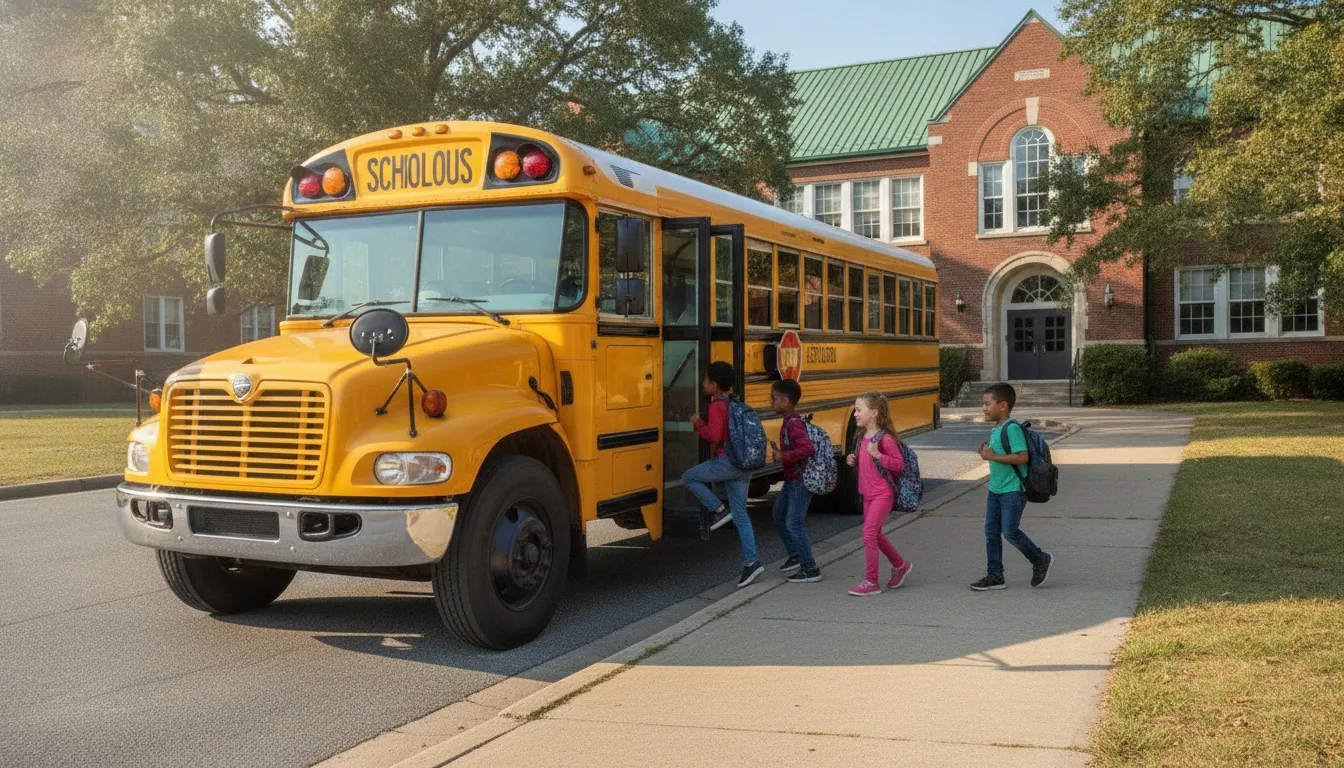
School years are generally divided into either two semesters or three trimesters, with holiday breaks in between these periods. School hours also differ a lot between schools and are decided at the local level. Most students in public schools USA travel to school by bus, which the education department provides. Because of this, bus schedules are considered when school timetables are set. The school day can start as early as 7 AM in some school areas, although 8 AM is a more common start time.

What is the Cost of Education in the US?
Public schools in the USA are mostly paid for by taxes, which means parents do not have to pay tuition fees. However, there can be extra costs for things like school uniforms, transportation, and school supplies. These additional costs should be factored into your budget when planning your moving to USA education.
If you choose not to use the public school system and decide on a private school USA, the costs are often very high. Private, fee-paying schools exist in all states. Their costs change depending on the subjects they offer and where they are located. Nationally, the average cost for private school is around USD 10,000 a year. However, in some states, the average costs can be more than USD 20,000 a year according to Private School Review.
No matter which path you decide is best for your family, there will be costs involved in educating your children in the United States. Schooling can often be expensive. When you are funding your child’s education from a bank account in your home country, it is important to think about how to manage these payments efficiently. Fees for international transfers or hidden exchange rate markups can add up quickly. It’s wise to consider all potential expenses, including transaction costs. Finding ways to save money on these transfers can help you put more towards your child’s actual education. You can also look into general financial planning for expats, which includes tips on managing money abroad, such as avoiding high fees when using ATMs in the USA.

This information is for general guidance only and is not legal, tax, or financial advice from Wise Payments Limited or its associated companies. It is not meant to replace advice from a financial advisor or other professional. We do not promise that the content is accurate, complete, or current.
Related reading
Sources
| # | Source | Website |
|---|---|---|
| 1 | according to the OECD | compareyourcountry.org |
| 2 | according to Private School Review | privateschoolreview.com |