
Ace Your Japanese Job Interview: Cultural Etiquette Guide
Navigate the unique world of Japanese job interviews. Learn about cultural etiquette, dress codes, common questions, and how to impress potential employers in Japan to land…


TL;DR: Japan offers a good chance for foreign job seekers, with roughly two job openings for every applicant in Tokyo. However, prepare for highly formal interviews focused on group harmony, specific dress codes like the “recruit suit,” and strict etiquette, including precise ways to enter and exit rooms.
Imagine you’ve landed a job interview in Tokyo, a city bustling with opportunity, where there are roughly two job openings for every person looking for a job according to Wise.jobs. This sounds great, right? But what if following the wrong custom could cost you that dream role before you even open your mouth? Many people who move abroad for work often overlook the deep cultural differences in job interviews, and Japan is one country where these details matter immensely. For those splitting their life between countries, staying reachable on your home phone number and managing international calls is also a key concern, but acing the interview itself is the first big hurdle. This concern often leads expats to look into solutions like understanding eSIM vs physical SIM options or even how to keep their UK number abroad.
Japan is a country that boasts a truly long and fascinating history. It also has a robust and continuously expanding economy. In specific business areas, such as the technology sector, significant growth and expansion are now starting to be observed. Because of these factors, Japan is quickly transforming into a key destination for individuals from other countries who are seeking their next great adventure or career opportunity. There are rules concerning the language you use, the clothes you wear, the way you behave, and even the exact sequence in which you should enter or exit a room. Young Japanese applicants grow up learning these specific ways of working from an early age. This means that as a foreign applicant, you will need to catch up quickly to ensure you are on an equal footing during the interview process. If your goal is to secure a job in Japan, this detailed guide is designed to assist you in navigating the entire Japanese job interview process. By understanding the cultural etiquette and important customs, you will learn how to properly follow the strict protocols that are considered very important by Japanese people.

How can I get ready for a job interview in Japan?
It is crucial to perform thorough research before your interview, just as you would for any job application in any country. You should never go into an interview without first becoming very familiar with the company’s full history. Also, understand its core mission, how its structure is organized, and its overall culture. After gaining this general understanding, you should then go more deeply into details. Discover unique and specific information about the exact role for which you are interviewing.
What is important in Japanese work culture?
The core of Japanese work culture is a strong commitment to the idea of group harmony, known as wa. Because this principle is so central, it is very important that you give the impression of being a strong team player. You should also appear organized and show that you are considerate of others. For example, a process called nemawashi, which means consensus-building, is common. In nemawashi, workers come together in groups to talk through and refine ideas. They do this carefully before these ideas are ever presented to senior managers or important clients. Clearly, the group itself forms the central focus, or nucleus, of Japanese work culture, contrasting with individualistic approaches found elsewhere. For expats settling into new places, understanding such nuances is as important as navigating daily life, perhaps even learning about 8 must-have apps for expats in Milan.
Furthermore, your body language should clearly show respect. When you are asked to hand over papers or any other documents, make sure to use both hands as you give them to your interviewer. This action is a clear sign that you recognize the importance and seriousness of the transaction taking place. Certain physical behaviors must be entirely avoided, as they can be seen as disrespectful. These include actions like:
- Playing with an item or fidgeting
- Drawing on paper
- Sitting with your legs crossed
- Putting your hands in your pockets
- Resting your chin on your hands or arms
- Sitting in a relaxed way – this is never proper
- Speaking too softly, so your interviewer has to strain to hear you

What should I know for a job interview by video call (Skype)?
If you are not currently located in Japan, companies may choose to offer you an initial job interview through a video call service, such as Skype. Following this, they might then invite you for a more formal interview that takes place in person. Even for the video call interview, you should prepare thoroughly. This means learning all the basic information about the company and understanding the specific requirements of the role. It is important to use formal language and ensure you look presentable, just as you would for an in-person meeting. However, you will not need to be concerned about the detailed physical etiquette that would be expected during a traditional, face-to-face interview. Before the interview begins, you absolutely must test your internet connection, your headset, and your microphone. This will help ensure that the interview runs smoothly and without any technical issues or interruptions.

What are common questions asked in a Japanese job interview?
During your Japanese job interview, it is very likely that your interviewer will first ask you to introduce yourself. Following this, they will typically ask about your educational background and where you completed your studies. You should also be fully prepared to answer detailed questions about your knowledge of the company and your employment history.
Here are some of the common questions you can expect to be asked in a Japanese interview:
- Why do you want to work for this company?
- What do you already know about our company? (This question checks if you have done your research)
- Why did you come to Japan / Why do you want to come to Japan?
- What are your strengths and weaknesses?
- What kind of work have you done until now?
- How well do you speak Japanese?
- What is your hobby?
- How would you solve a problem at work, or what would you do if you could not finish work on time?
- Why do you want to leave your current job?
When providing your answers, you should keep them as brief and to the point as possible. Only share information that directly answers the question asked. Do not feel that you have permission to give overly broad answers or bring up comments that are not directly relevant to the topic. Moreover, it is absolutely essential that you never say anything negative about your current or past employers. Such comments are considered a clear sign of disrespect. Saying anything critical will almost guarantee that you do not advance further in the interview process.
Furthermore, when the interviewer asks about your current job, avoid talking about “work in general.” Instead, give an actual, technical breakdown of exactly what you do in your role. This should include the specific skills you use and the particular tasks for which you are responsible. You want to show the specific value you bring to your current employer. You also need to clearly show how your current duties and skills align perfectly with the role for which you are interviewing.
What questions should I ask during a Japanese interview?
It is expected that you will come to the interview prepared with a number of questions to ask. This action clearly shows your strong interest in the specific position. Here are some appropriate questions that you can consider asking during the interview:
- What is a typical day like for someone in this position?
- Who does this job report to (who is their boss)?
- What are the main duties for this role?
- What is the team like for this role?
- What type of person would do best in this job?
It is important to note that it is not considered rude to inquire about the usual working hours or whether the job involves business travel. However, you should definitely avoid asking about salary expectations or benefits packages during the actual interview itself. This is culturally seen as being presumptuous and overly forward before you have even been extended a job offer. Always use polite and respectful language at all times when you are asking these questions.
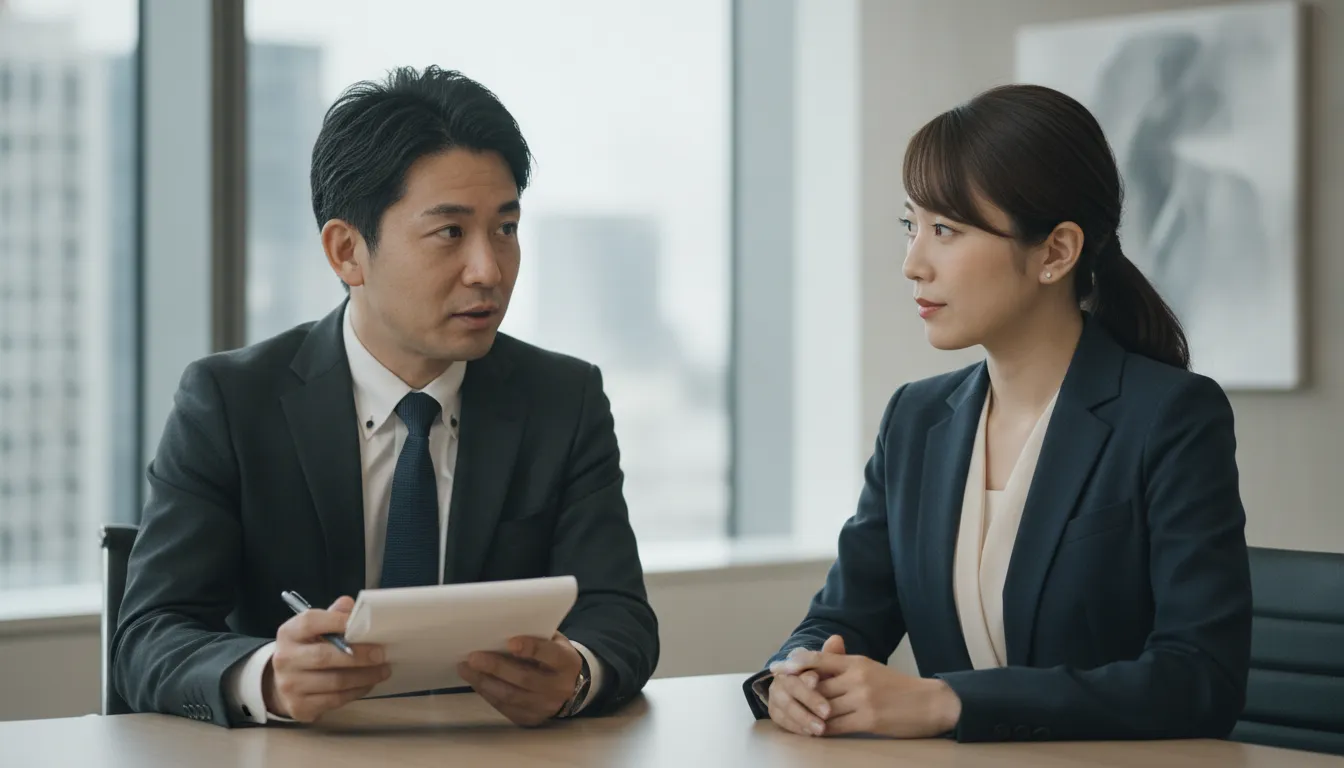
What is the proper interview behavior in Japan?
You should make plans to arrive at your interview location with at least ten minutes to spare before the scheduled time. In Japanese business culture, arriving early is actually considered to be arriving on time. Conversely, if you arrive exactly on time, it is seen as being late. Under no circumstances should you ever be late for an interview. If you are offered a drink, such as coffee or water, it is polite to accept it. Once you are seated, you should place your hands on your knees and maintain a straight posture. Plan to hold this position for the entire duration of the interview. Try to present a calm and patient expression on your face.
It is also absolutely essential to ensure that your mobile phone is completely turned off before, during, and after your interview. Some recruitment agencies even advise that potential employers might be observing you from the moment you leave the train station on your way to the interview, right up until you return to your train to go home. They will expect that you are not idly using your phone at any point during this entire period.
Is a Japanese interview formal or informal?
Japanese job interviews are consistently a very formal process. You are expected to always address your interviewer with formal vocabulary and observe strict etiquette rules. If you are not fluent in Japanese, it is highly recommended that you learn key polite phrases ahead of time. This will help you avoid accidentally offending your interviewer. Regarding language, native Japanese speakers will use different words depending on the person they are speaking to. If you fail to use polite terms, you will project an image of disrespect and come across as far too casual, perhaps as if you were simply chatting with your friends in a casual setting like a restaurant. For instance, you will use distinct words for “I” and “to do” when you are speaking in a formal context compared to an informal one.
You should also make certain that you wait until your interviewer has completely finished speaking before you attempt to answer any of their questions. Japan does not have a culture where it is acceptable to interrupt someone or to speak over them – doing so is considered a definite social blunder or faux pas. Your questions should be answered clearly and concisely. Do not feel any pressure to engage in “chit-chat” or to bring up personal stories that are not relevant to the interview.
How should I greet people?
In Japan, you will also need to be fully prepared for the numerous formal procedures that are an integral part of the interview process. The act of entering an office, for instance, is a highly structured procedure. Here are the specific steps you should follow carefully when entering an office room for an interview:
- Knock three times. Knocking twice is seen as rude, as it is usually done to check if a toilet stall is empty.
- Your interviewer will say “Please,” or douzo. Then you can enter the room.
- Turn around and close the door as quietly as possible. Make sure you are not facing forward when you do this.
- Say “excuse me” – Shitsurei shimasu.
- Bow and walk to the left side of the chair you are meant to sit in.
- Say your name and your university, or a fact about yourself. For example, you might say, “I am Susie Mayweather from a city in the Netherlands famous for its porcelain pottery. I have been to Japan four times and studied abroad in Okinawa.”
- Bow again.
- Stand and wait to sit down until someone asks you to.
It is also worth noting that, by law, it is not illegal to smoke inside a Japanese office building. Many offices feature very open-plan layouts, which can mean they are often quite loud and designed to be more collaborative than what you might be accustomed to in your home country. Do not show surprise or make any comments if you find yourself entering an environment that is smoky or noisy.
How should I dress for a Japanese job interview?
The importance of how you dress is much more emphasized and follows a stricter, more streamlined style in Japan compared to what you are likely used to. You should not feel the need to be creative or original with your interview outfit. In Japan, it is most common for individuals to wear a plain black suit paired with a white shirt for job interviews. This specific ensemble is widely recognized as the “recruit suit.” This attire can be completed with a formal black bag and black shoes. Ensure you are clean-shaven, and your hair must be its natural color. You should avoid wearing any flashy jewelry, heavy makeup, or prominent accessories. If you have any visible tattoos, it is crucial not to display them. It is also extremely important that you remove your coat and any hat you might be wearing before you enter the actual building. Both inside and outside the office, taking off your outer coat is a universally recognized sign of respect in Japan.
Can I negotiate my salary in Japan?
Salary negotiations in Japan are a culturally sensitive matter and require careful consideration. It is important to know that some Japanese firms do not provide any room for negotiating salaries. In many cases, new employees will receive the exact same salary as other employees who are at their same level within the company. However, some larger, more global companies may indeed offer you the opportunity to negotiate your salary. You should certainly conduct thorough research ahead of time to understand what a fair and reasonable salary range is for the specific role you are interviewing for in Japan. It is also important to recognize that Japanese salaries might differ significantly from what you are accustomed to receiving in your home country.

Do I need a visa or work permit for Japan?
It is highly probable that you will require a visa in order to legally work in Japan. Various forms of work visas exist, but the majority of them stipulate that you must first secure a job offer before you can apply. It is quite common that your new employer will either sponsor your visa application or, at the very least, provide you with guidance on the necessary steps to obtain one. For further comprehensive information, you can always consult the official Japanese Ministry of Foreign Affairs website. When considering a move abroad, whether it’s to Japan or another country like Australia, it is always vital to understand the local visa and work permit rules. For instance, knowing the Australia skills in demand visa guide can help clarify requirements. Similarly, if you are moving from Spain to another country, learning about ways to keep your Spanish number abroad can help you stay connected with your home country. Understanding these various country-specific requirements is key to a smooth transition.
How do I end a Japanese job interview?
At the conclusion of your interview, you should perform a series of expected steps. These are quite similar to the formal procedures you followed when you first entered the room. The proper steps to end your interview are:
- Thank your interviewer very much – doumo arigatou gozaimashita.
- Bow, first while you are still seated.
- Stand up and bow again, this time at a 45-degree angle.
- Put your chair back to its original spot. Some people have been removed from the interview process for forgetting this step.
- Excuse yourself.
- Bow one more time when you are in the doorway.
- Close the door behind you.
It is important to continue acting as if you are still within the interview setting until the exact moment you have completely left the building. Do not put on your coat or check your phone until you are far away from the premises or, ideally, once you are already on your train heading home. Additionally, if you are exiting a room alongside other people, Japanese professionals typically leave based on their seniority or rank within the company. Do not rely on the Western custom of “ladies first,” as this might result in awkward collisions in the doorway. Instead, practice patience and wait until everyone else has left the room before you make your own exit.
Because of all these detailed cultural formalities, interviewing for a job in Japan can indeed be tricky. However, if you take the time to prepare yourself thoroughly ahead of time and diligently use the advice in this guide, you can significantly impress your interviewers. This will set you on a clear path towards landing your dream job in Japan. For those managing life across borders, ensuring you can still reach loved ones back home is important. Consider how to keep your US number abroad or your German number abroad so you stay connected, regardless of where your career takes you.
Sources
| # | Source | Website |
|---|---|---|
| 1 | according to Wise.jobs | wise.jobs |
| 2 | Japanese Ministry of Foreign Affairs website | mofa.go.jp |