
Bringing Cash into the US: Rules for Business Travelers
Business travelers bringing cash into or out of the USA must declare amounts over $10,000 to US Customs using FinCen 105. Learn the rules to avoid severe penalties, fines up to…

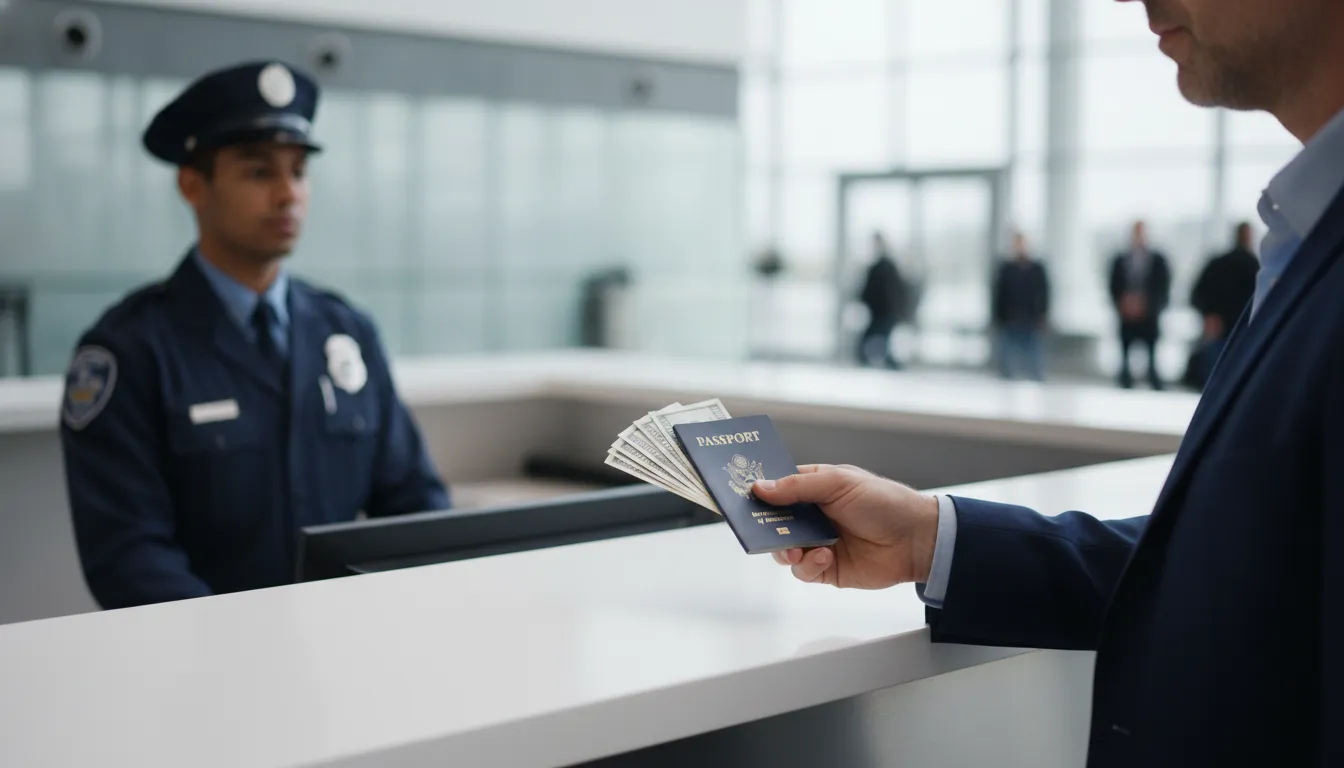
TL;DR: If you are an international business traveler taking cash in or out of the USA, you must declare any amount over $10,000 (US dollars) per person or group. Failing to declare cash can lead to serious penalties for not declaring cash US, including confiscation of funds, large fines up to $500,000, and even prison sentences of up to 10 years. Always complete the FinCen 105 form if your cash exceeds this limit.
Imagine a critical business trip to the United States, where every detail matters for a successful outcome. You’ve planned meetings, prepared presentations, and sorted out your itinerary. But have you considered the strict rules around taking cash in or out of the USA? Many international business travelers overlook these important financial regulations, which can lead to significant delays, financial losses, and even legal trouble. Understanding the $10,000 rule US customs is crucial for ensuring a smooth, compliant journey, preventing your valuable funds from being confiscated, and avoiding severe penalties for not declaring cash US.
This guide will explain the essential rules for bringing cash into or taking it out of the United States. We will cover the specific limits, what counts as cash, how to declare your funds correctly, and the serious consequences of not following the rules. This information is vital for business travelers who often carry funds for expenses or transactions and need to maintain full compliance with US customs regulations.
How much cash can you bring to the US, and what are the limits?
You can bring any amount of cash to the United States, but there is a key condition: if the total cash you are carrying is more than $10,000 US dollars, you must officially declare it at customs. This rule applies to everyone, including business travelers carrying funds for company expenses or transactions. If you do not declare cash that goes above this $10,000 limit, airport security can seize it. This seizure is often followed by a full investigation, which can cause significant delays and problems for your trip.
Is the limit per person or for a family/group?
The $10,000 declaration rule is not just for each person; it applies to a family or group traveling together. This means you cannot try to avoid the rule by splitting the cash among different members of your travel party. For example, if two business partners are traveling together and jointly carry $12,000 in cash, they must declare it. If your entire unit or group has cash that adds up to more than this limit, you must declare the total amount.
What qualifies as cash when moving through borders?
When you travel internationally, the term “cash” means more than just paper money. For US customs, “cash” includes various types of financial instruments and valuable items that can be easily turned into money. It is important for international business travelers to understand this broad definition to ensure full compliance.
Here’s a breakdown of what counts as cash:
| Item Type | Description |
|---|---|
| Paper Money | This includes all physical banknotes and currency from any country. |
| Traveler’s Checks | These are pre-printed, fixed-amount checks used for international travel, which act like cash. |
| Money Orders | These are payment orders, often used by those without checking accounts, and are considered negotiable instruments. |
| Promissory Notes | Written promises to pay a specific amount of money to a specific person by a specific date, which can be transferred. |
| Bearer Bonds | Investment instruments where the owner is the person who physically holds the bond, without being registered. These are like cash. |
| Other Negotiable Items | This can include certain types of unendorsed or endorsed checks made out to a specific person but not yet cashed, or securities that can be transferred easily. |
| Precious Metals/Jewels | While not always included, in some cases, highly valuable items like gold, silver, or diamonds can be considered if they are clearly intended as a way to carry significant wealth, especially if they are easily liquidated. According to HMRC, similar rules apply when bringing cash into the UK. |

Some prepaid cards can also sometimes fall under this definition, depending on their features and how they are used. Always check the latest guidelines from US Customs and Border Protection if you are unsure.
Are there penalties if you enter the US with too much cash?
Yes, there are very strict and serious penalties for not declaring cash amounts above $10,000 when you enter the US. These rules are in place to fight money laundering and other illegal financial activities. If you fail to declare your funds:
- Your money could be confiscated: Customs officers have the right to seize all your cash, regardless of the total amount. This means you could lose all the money you were traveling with.
- You could face huge fines: You might be fined a very large sum, potentially up to $500,000. These fines are meant to punish violations severely.
- You could go to prison: In serious cases, particularly if there is suspicion of criminal activity, you could face up to 10 years in prison.
These consequences highlight why it is so important for international business travelers to understand and follow the declaration rules. Compliance prevents major disruptions to your trip and protects you from legal trouble.
How do you declare cash at customs when you travel?
If you are carrying cash that needs to be declared, the process is straightforward. You can declare your cash either before your trip begins or when you arrive in the US. Both methods involve filling out a specific form. Knowing these steps helps business travelers prepare properly and avoid last-minute stress.
Declaring cash before your trip
The official way to declare large amounts of cash is by completing the Currency and Foreign Transaction Report, also known as the FinCen 105 form. You have the option to fill out this form online before you travel, which can save time upon arrival. You can access the online form through the FinCEN 105 website. Once completed online, you can either submit it electronically or print a copy to present to a customs officer when you arrive in the US. This pre-declaration step is highly recommended for business travelers to ensure everything is in order.
Declaring cash on arrival in the US
If you were unable to fill out the FinCen 105 form before your trip, don’t worry. You can still declare your cash upon arrival in the US. Simply ask a customs officer for a paper copy of the form when you get to the port of entry (like an airport or land border). You will then need to complete the form before you officially enter the country. It’s always best to be proactive and ask for the form right away if you know you need to declare funds.
Checklist for cash declarations at US customs
To make sure your cash declaration process goes smoothly at US customs, you will need to provide specific information. Having these details ready will speed up your entry and ensure compliance. Business travelers should prepare this information in advance.
Here’s a checklist of what you will need:
- Your permanent address: This is your home address, not a temporary travel address.
- Passport details: This includes your passport number, country of issue, and expiration date.
- Amount of cash: The exact total amount of cash you are carrying.
- Currency or cash type: Specify whether it’s US dollars, Euros, British Pounds, or other currencies, and list any other forms of “cash” like traveler’s checks or bearer bonds.
- Purpose of cash: Clearly state why you are carrying the money (e.g., business expenses, personal travel funds, specific transaction).
- Who the cash is for: Indicate if the money is entirely for you, for your business, or for another person or entity.
- Any additional documentation: This could include receipts, letters from your company, or other papers that explain the source or purpose of the funds.
Having all these details prepared will help you navigate the declaration process efficiently.
How much cash can you take out of the US? Are there limits?
The same rules apply for taking money out of the US as they do for bringing money in. If the total cash you are carrying when leaving the country goes over $10,000, you must declare it. This applies whether you are a US citizen or an international business traveler heading home or to another destination. It’s a common misunderstanding that the rules only apply upon entry, but the outgoing declaration is just as important.
What are the penalties for traveling with too much cash?
Traveling with large amounts of undeclared cash, whether entering or leaving the US, can lead to severe penalties. Many countries have similar rules aimed at stopping illegal financial activities. If you are caught with undeclared cash exceeding the limit:
- Cash confiscation: In most cases, your cash will be immediately seized by authorities, pending a thorough investigation into its origin and purpose.
- Financial fines: You could face substantial fines, which can vary widely depending on the country and the amount involved.
- Imprisonment: For serious offenses, or if there’s a suspicion of criminal activity like money laundering, you could face jail time.
These penalties are designed to be a strong deterrent, so it’s always best to follow the declaration rules carefully.
Are there destinations where a declaration isn’t needed?
The US Government has not named any specific countries or locations where the cash declaration rule would not apply. This means that regardless of where you are traveling to or from, if your cash totals more than $10,000, you should always declare it. This universal application of the rule helps maintain consistent security and financial oversight for all international travel involving the US.
For which destinations is cash declaration needed?
Declarations are necessary for any cash amount over $10,000 for travelers going to or from the US, especially when traveling to or from neighboring countries. This includes journeys to or from Mexico and Canada, as well as other Southern American countries. Similarly, if you are traveling to or from countries in the European Union in relation to the US, you will still need to declare these funds if they exceed the $10,000 limit. These rules apply broadly across international borders to maintain financial security. If you are handling a lot of international payments for your business, you might consider alternatives to carrying cash, such as withdrawing funds from an ATM upon arrival or using multi-currency payment solutions.

Additional tips for traveling with cash
When international business travel requires you to carry cash, taking extra precautions is essential. While cash can be useful, it also comes with risks. Here are some tips to manage your money safely and smartly:
Avoid traveling with cash if you can
Carrying large sums of cash can make you a target for theft and raise security concerns, especially in unfamiliar places. It’s generally best to avoid traveling with more cash than you absolutely need. Instead, consider using alternative methods like withdrawing smaller amounts of cash from an ATM once you arrive at your destination. For larger sums, a bank transfer or secure digital payment method is usually safer and more traceable.
Get a money belt
If you must carry cash, the safest way to do so is usually on your person, hidden from view. Invest in a good quality money belt or a neck pouch that you can wear securely under your clothes. This keeps your cash close to you and makes it much harder for thieves to access, offering an extra layer of security throughout your journey.
Split your cash
Carrying all your money in one place is risky. If it gets lost or stolen, all your funds would be gone instantly. Instead, split your money among different places. Keep some in a money belt worn on your body, some in a secure part of your carry-on luggage, and perhaps a smaller amount in your wallet for daily expenses. If you’re traveling with colleagues, you could also consider splitting larger sums among different members of your party.
Be aware that exchanging currency in cash can be costly
If you plan to exchange the cash you carry once you reach your destination, be aware that you might not get the best exchange rates. Currency exchange bureaus, especially those conveniently located at airports or hotels, often offer poor rates. This means you will get less local currency for your money. To avoid losing out, you might have to spend valuable business time searching for a better deal, or simply accept the unfavorable rate. Using digital payment options often provides better exchange rates and helps you avoid these hidden costs.

Cash-free ways to manage money abroad
Avoiding the security worries and inconvenience of carrying large amounts of physical cash overseas is often preferable for international business travelers. There are many modern, cash-free ways to manage your money when abroad. These solutions often provide greater security, better exchange rates, and more convenience.
Consider using a multi-currency debit card or an account that allows you to hold and spend in various currencies. These types of solutions can work in many countries, including the US, without charging extra fees for foreign transactions. When you use these cards, the currency conversion often happens automatically at a favorable exchange rate, such as the mid-market rate. You might only pay a small conversion fee, or no fee at all if you already hold the local currency in your account.
These digital tools also allow you to easily send money worldwide, typically offering great exchange rates and low fees compared to traditional banking methods. For businesses, using a dedicated international business account can simplify managing funds in different currencies and streamline global expense tracking, helping ensure compliance and making international operations smoother. They help manage expenses without the physical risks of cash.

FAQs: How much cash can you travel with?
If you still have questions about bringing money into or taking it out of the US, these answers should provide more clarity. Remember, compliance is key for international business travelers.
How much cash can you travel with to the US?
You can travel to the US with an unlimited amount of cash. However, any amount exceeding $10,000 US dollars, whether for an individual or a group traveling together, must be reported to US Customs and Border Protection. Failure to declare these funds can lead to severe penalties.
Is it better to take cash or card to the US for business travel?
A combination of both cash and card often provides the best balance of security and convenience for business travel. While having a reliable international card available ensures you always have backup funds and can make large purchases, some smaller vendors or specific situations might only accept cash. Carrying a small amount of local currency for incidentals is usually a good idea.
Can airport security seize my cash?
Yes, if you fail to declare large amounts of money that exceed the $10,000 limit, airport security and customs officials have the authority to seize your cash. This seizure will typically lead to an official investigation to determine the origin and purpose of the funds, which can cause significant delays and legal problems.
Can you keep cash in your pocket at airport security?
Generally, when you go through airport security checkpoints, you are required to empty your pockets completely. This includes any loose change or cash you might be carrying. All items from your pockets, along with your wallet, should be placed in a bin for scanning to ensure security protocols are met. This is standard procedure, separate from the customs declaration process.
What’s the best way to travel with large amounts of cash for business?
The best and most compliant way to travel with large amounts of cash is to declare the full amount at customs, if it exceeds $10,000, by completing the FinCen 105 form. This ensures you avoid any legal troubles or confiscation risks. Alternatively, to minimize risks, consider using international debit cards or multi-currency digital payment solutions for significant sums, and only carry a smaller amount of physical cash for immediate needs.
Sources Used:
- US Government – Learn more about travel money regulations on USA.gov.
- FinCEN – Complete the declaration of cash form online at fincen105.cbp.dhs.gov.
- HMRC – Guidance on bringing cash into the UK can be found on gov.uk.
Related reading
- Keep your US number abroad
- Cash vs. Card in Singapore: Best Payment Methods for Tourists
- Hong Kong Payments: Cash, Card, or Digital Wallet?
- Alipay vs WeChat Pay: Which is Best for UK Tourists in China?
- Thailand Cash Limits: Declare It or Risk Fines
- Cash vs. Card in Italy: The Best Way to Pay for Travelers
- Moving Abroad Checklist: The Final Month Before You Go
Sources
| # | Source | Website |
|---|---|---|
| 1 | HMRC | gov.uk |
| 2 | FinCEN 105 website | fincen105.cbp.dhs.gov |
| 3 | USA.gov | usa.gov |