
Selling Property in Singapore as a UK Non-Resident Guide
Selling property in Singapore as a UK non-resident? This guide details the step-by-step process, from choosing an estate agent and solicitor to understanding Seller's Stamp…


TL;DR: If you are a UK non-resident selling property in Singapore, expect the process to take about 2.5 to 3.5 months. You will need a licensed estate agent (who charges around 2% + GST commission) and a solicitor (costing about 2,500 to 3,000 SGD). Be aware of Seller’s Stamp Duty (SSD), which can be up to 16% if you sell soon after buying, but drops to 0% after 3 or 4 years of ownership, depending on the purchase date.
Imagine you’ve lived in Singapore for years, building a life and maybe even buying a home. Now, a new opportunity or family matters call you back to the UK, or perhaps to another country. You’re physically moving, but what about your connections? Many people overlook how important it is to keep their home phone number working abroad. Similarly, when it comes to selling your Singapore property, many non-residents underestimate the steps involved and the specific taxes and fees they might face. Selling a property when you’re no longer living in the country can feel overwhelming, especially when you need to handle legal documents, agent communications, and transfer large sums of money across borders. This guide will help you understand every part of the Singapore property selling process, ensuring you are prepared for each step, from finding an agent to understanding all the Singapore property taxes non-resident sellers might encounter.
How do you sell property in Singapore as a non-resident?
Selling property in Singapore as a UK non-resident involves several clear steps, even if you are not physically in the country. If this is your first time selling private property Singapore, it helps to know what to expect. You might already know some parts of the process from when you bought your property. However, selling can be a little different. Here are the main steps typically involved in a property sale in Singapore.
1. Choose an estate agent and get a valuation
Your first step is to find out how much your property is worth. This helps you set a fair and real price. An estate agent can assist with this task. You can also do your own research. Look at other properties for sale and use online tools to help set the price.
When you look for an estate agent, always check that they have a proper license. They should be registered with the Council for Estate Agencies (CEA). This ensures they are qualified to help you with how to sell property in Singapore.
2. Appoint a solicitor
It is a good idea to find and hire a conveyancing solicitor early on. Conveyancing means handling the legal work for transferring property. Getting this done early means the legal process can begin as soon as you find a buyer. This can help prevent delays.
Your solicitor will look after your interests throughout the sale. They can write and check contracts. They will also offer legal advice and make sure your money is protected. To find a local solicitor, you can start by checking this UK Government website. It lists English-speaking lawyers who work in other countries. You can learn more about managing your life abroad by reading our guide on moving abroad checklist: final month.
3. Get your documentation in order
Before you can offer your home for sale, you need to gather all the important papers. Your solicitor and estate agent can help you with this. They will tell you if you need any other documents. Here are the main documents you will likely need for legal requirements selling property Singapore:
- Photo ID, like your passport.
- Proof of your address.
- The Certificate of Title for your property. This shows you own it.
- Any building permits or permissions for changes or repairs you made.
- Floor plans and details about the property’s boundaries.
4. Prepare your property
Before you put your property on the market, it is a good time to clean it thoroughly. Also, remove clutter to make the rooms look bigger. You might also want to do small repairs. Consider updating old fittings to make the property more appealing to buyers.
5. Market the property
Now it’s time to show your property to potential buyers. If you have an estate agent, they should do most of the marketing work. This includes taking nice photos and writing good descriptions. They will also list your property online. Some popular Singapore property sites and agencies include:
After listing, you or your agent can start showing the property to people. Offers should start coming in soon.
6. Issue an Option to Purchase (OTP) document
If a buyer makes an offer that you are happy with, you can issue them an Option to Purchase (OTP) document. You can do this yourself or through your agent or solicitor. This document gives the buyer a set time to complete any checks they need, like surveys. After this period, the sale becomes legally binding.
If the buyer decides to go ahead, they will pay you a deposit. This is usually about 1% of the property price. You then agree to remove the property from the market for the agreed time, typically 14 to 21 days.
7. Legal work and due diligence checks
At this stage, the solicitors for both you and the buyer take over. They will do detailed checks, known as due diligence. They will also complete all the necessary legal work and paperwork. This includes writing and agreeing on the Sale and Purchase Agreement (SPA). This document clearly states all the terms of the sale. A date for the final transfer of ownership will also be decided.
8. Both parties sign the Sale and Purchase Agreement (SPA)
Once all the legal requirements for transferring the property have been met, it’s time for the final sales contract. Both you and the buyer will sign the Sale and Purchase Agreement (SPA). This makes the sale official.
9. Completion
Congratulations, you have successfully sold your Singapore property. The buyer will transfer the rest of the money. Their solicitor will then register the change of ownership with the Singapore Land Authority (SLA). This makes the sale complete. The last steps are to hand over the keys and pay any remaining fees and taxes. We will talk about these costs soon.

What taxes and fees do you pay when selling property in Singapore as a non-resident?
When you are selling property in Singapore as a UK non-resident, it is important to know about the different costs. While the buyer often pays many fees, there are still some important ones you need to know about as the seller. This information is for general guidance only and should not be seen as financial or tax advice. You are responsible for figuring out and paying your own taxes based on the law. Always talk to a qualified financial advisor for tax advice.
Here is a summary of the main fees and taxes:
| Tax/Fee Name | Rate/Fee |
|---|---|
| Estate Agent Commission | Around 2% + GST |
| Legal/Conveyancing Fees | Varies, around 2,500 to 3,000 SGD |
| Seller’s Stamp Duty (SSD) | Up to 12% (bought between 11 Mar 2017 and 3 July 2025) Up to 16% (bought on/after 4 July 2025) |
Estate agent fees
Estate agent fees Singapore can change depending on the agent you choose. However, you should expect to pay around 2% of the sale price. On top of this, you will also pay GST (Goods and Services Tax). GST is like VAT in the UK. This is a standard cost when you are learning how to sell property in Singapore.
Legal fees
Another cost to consider is your solicitor’s fees. These costs also vary. They depend on the solicitor you use and how many services you need. As a general guide, the average cost for legal services for sellers is around 2,500 to 3,000 SGD.
Seller’s Stamp Duty
Unlike some other countries, Singapore does not charge capital gains tax when you sell property. However, it does have another potentially costly tax called Seller’s Stamp Duty (SSD). This tax is designed to stop people from quickly buying and selling properties to make a fast profit. It applies if you sell a property within a certain time after buying it.
The SSD rates depend on when you bought the property and how long you have owned it. A change to the rules in 2025 also affects these rates. Here is what you need to know about seller’s stamp duty Singapore:
| Date of Purchase | How Long You’ve Owned It | SSD Rate (on actual price or market value, whichever is higher) |
|---|---|---|
| Between 11 Mar 2017 and 3 July 2025 | Up to 1 year | 12% |
| 1 to 2 years | 8% | |
| 2 to 3 years | 4% | |
| 3+ years | No SSD payable | |
| On and after 4 July 2025 | Up to 1 year | 16% |
| 1 to 2 years | 12% | |
| 2 to 3 years | 8% | |
| 3 to 4 years | 4% | |
| 4+ years | No SSD payable |
It is also important to check if UK rules about capital gains tax apply when you sell property in another country. You also need to consider double taxation. This is to make sure you do not pay tax in both countries for the same income. Tax rules can be very complicated. It is best to get advice from a tax expert. They can help you understand your tax duties when selling property in Singapore as a UK non-resident. For more information on financial matters for expats, you might find our guide on moving to India from UK: expat guide helpful.
Does owning property in Singapore make you a tax resident?
For anyone thinking about moving to Singapore, or if you are already there temporarily, it’s useful to understand tax residency. This is how it relates to owning property. Owning a property in Singapore does not automatically make you a tax resident there. Instead, your tax residency depends on how long you actually live in Singapore. If you spend at least 183 days in Singapore during a tax year, you will be considered a Singapore tax resident. To learn more about living in the country, check out our article on the pros and cons of living in Singapore.
Do you need a lawyer or a solicitor to sell property?
Yes, you will definitely need a solicitor when selling private property Singapore. Having legal help is a key rule. The Singapore Land Authority needs official ownership documents and title transfers. These must be prepared, signed, and sent in by legal experts who have a license.
Your solicitor is crucial for many parts of the sale. They help gather all your legal papers. They will also draft and check contracts. They can give you advice about the whole selling process. This help can make your property sale much smoother. It can also help you avoid expensive mistakes, which is a key part of the legal requirements selling property Singapore.
Can you use Power of Attorney (POA) to sell your property in Singapore?
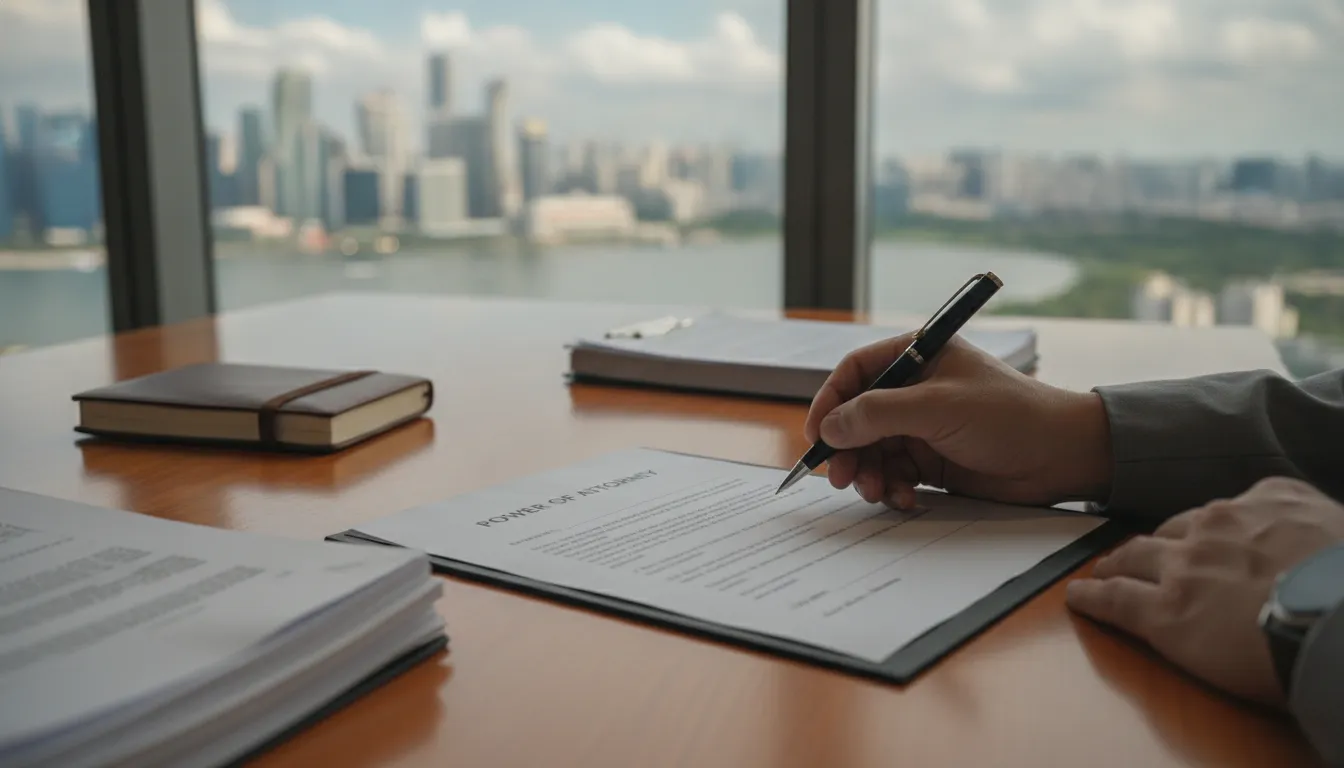
Yes, you can use a Power of Attorney (POA) document for a Power of Attorney Singapore property sale. This means you can sell your property even if you are not physically in Singapore. This can be very useful if you cannot travel there, or simply do not want to. However, you must complete the correct legal papers and follow all the processes.
You will need to create and sign a legally binding document. This document gives a lawyer or another chosen person the authority to act for you in all matters related to selling your property. It must clearly state that they have the power to sell real estate. The document also needs to be properly notarised and certified. If you are selling property in another country and need to manage funds, you might find our guide on receiving money from abroad in the UK: a how-to guide helpful.
Selling inherited property in Singapore
Many foreign citizens or UK expats living abroad might need to sell a property they have inherited in Singapore. This is certainly possible, but it does come with some challenges. Here are the main things you need to know about selling inherited property Singapore:
- All legal steps for the inheritance (probate process) must be finished. Also, the land registry records must be updated. Only then can the property be sold.
- Your ownership must be clear. You must have all the necessary documents that prove you have the right to sell the property.
- Singapore does not have inheritance tax or capital gains tax on property. However, you might still need to pay Seller’s Stamp Duty (SSD). This applies if the original owner bought the property recently.
- Inheritance processes can take a long time to complete, sometimes up to a year. So, be ready for a delay before you can sell the property.
- It is a good idea to use a solicitor or a tax specialist. They can help you understand the legal steps for inheriting and then selling property in Singapore. You may also want to compare options for sending money abroad, such as understanding the Mastercard exchange rate guide: avoiding hidden fees.

How long does it take to sell property in Singapore?
The time it takes to sell property in Singapore can change a lot. Many things affect this, some of which you cannot control. These include the local property market conditions, the type of property, its age, location, and condition. The price you set for it also matters, as does the buyer’s own situation.
On average, you can expect the process of selling property in Singapore to take about 2.5 to 3.5 months.
Here are some common reasons why property sales in Singapore might take longer:
- Paperwork errors: This can include missing documents or mistakes in the land registry.
- Slow legal processes: The conveyancing work might take more time than expected.
- Overpricing: If the property is priced too high, it might not attract buyers.
- Tenanted units: If the property is rented out, it can be hard to arrange viewings.
- Inheritance disagreements: Disputes over inherited property can cause long delays.
- Buyer’s mortgage application: If the buyer’s loan application is turned down, the sale will stop.
Do you need a Singapore bank account to sell property in Singapore?
It is not absolutely required to have a Singapore bank account when selling property in Singapore. It might be possible to use an international account or an offshore account for some money transactions. However, you will need to check this with your solicitor.
Having a local bank account could make some transactions simpler. But it might also be more expensive for sending money internationally. This is especially true if the bank adds an extra charge to the exchange rate when converting Singapore dollars (SGD) to British pounds, or the other way around. Understanding different payment methods is key for those living abroad, such as comparing cash vs card in Singapore payment methods.
Is now a good time to sell your property in Singapore?
Whether it is the right time to sell your property in Singapore largely depends on your personal situation. For example, consider how much you originally paid for the property. Also, look at what current prices are like in the local property market. It is also worth checking your obligations for Seller’s Stamp Duty (SSD). The rates for this tax go down over time, eventually reaching 0%, the longer you own your property.
Generally, now could be a good time to sell. Property prices have shown steady growth over the past year up to the first quarter of 2026. This is general market information only. It is not financial or investment advice. Always talk to a qualified financial advisor before making any decisions about selling property in Singapore. For those considering other international moves, our guide on moving to China from the UK offers useful advice on financial planning.
Key takeaways
Selling private property Singapore requires careful planning. As a UK non-resident, you will need a licensed real estate agent. This agent must be registered with the Council for Estate Agencies. You also need a solicitor to legally handle and register the transfer of property ownership. These steps are part of the essential legal requirements selling property Singapore.
Most property transactions typically take about 2.5 to 3.5 months to finish. Key steps include giving an Option to Purchase (OTP) document and signing a formal Sale and Purchase Agreement (SPA).
You should expect to pay around 2% plus GST for your estate agent’s commission. Legal conveyancing fees can range from 2,500 to 3,000 SGD. Singapore does not charge capital gains tax on property sales. However, if you sell the property within a short time after buying it, you might need to pay Seller’s Stamp Duty (SSD). This cost can be up to 12% to 16%, depending on when you bought the property. Understanding these Singapore property taxes non-resident sellers face is crucial for a smooth sale.
Related reading
Sources
| # | Source | Website |
|---|---|---|
| 1 | UK Government website | find-a-professional-service-abroad.service.csd.fcdo.gov.uk |
| 2 | PropertyGuru | propertyguru.com.sg |
| 3 | 99.co | 99.co |
| 4 | SRX Property | srx.com.sg |
| 5 | EdgeProp.sg | edgeprop.sg |
| 6 | PropertyforSale.sg | propertyforsale.com.sg |
| 7 | Knight Frank | knightfrank.com.sg |
| 8 | Conveyancing fees singapore 2026 | lovelyhomes.com.sg |
| 9 | Seller stamp duty | ohmyhome.com |
| 10 | Working out my tax residency | iras.gov.sg |
| 11 | Selling property in singapore 2173430 | expatica.com |
| 12 | Price history | globalpropertyguide.com |