
Thailand Cash Limits: Declare It or Risk Fines
Learn the strict rules for bringing cash into and taking it out of Thailand. Discover the foreign currency and Thai baht limits, declaration processes, and severe penalties for…


TL;DR: Planning to live or travel in Thailand while keeping your home number active means smart money planning. You can bring up to 20,000 USD (or its value in other currencies) into Thailand without declaring it. For Thai baht, the limit is 500,000 THB before declaration is needed. When leaving Thailand, the same 20,000 USD rule applies for foreign currency. For Thai baht, you can take out up to 500,000 THB to nearby “bonded” countries, but only 50,000 THB to other places. Failing to declare amounts above these limits can lead to serious fines or even prison. Knowing these rules is key to managing your money smoothly, especially when you need to stay reachable abroad.
Imagine you’re settling into a new life in Thailand, maybe setting up a long-term home, and you need to bring a significant amount of cash to cover initial costs or a property deposit. Or perhaps you’re simply traveling for an extended period, relying on your regular phone number for family and work back home, and need to manage your money carefully. Many people worry about staying connected when they move, but forgetting how to handle physical money can cause big problems too. Knowing exactly how much cash you can bring in or take out of Thailand, and what you need to declare, is crucial for a smooth trip or relocation.
Thailand, like many countries, has strict rules about how much money you can carry across its borders. These rules help authorities keep track of large amounts of money. They also help stop illegal activities. This guide will walk you through everything you need to know about bringing cash into and taking it out of Thailand. We’ll answer important questions like, “How much cash can I take to Thailand?” so you can plan your finances confidently and focus on keeping your connections strong, no matter where you are.
How much cash can I bring into Thailand? What are the limits?
Thailand has clear limits on the amount of cash you can carry when you cross its borders. If you are bringing foreign currency into the country, you can carry up to 20,000 US Dollars (USD), or the same value in another currency, without having to tell customs officials. However, if you carry more than this amount and do not declare it, you could face serious legal trouble, including criminal penalties. This information is confirmed by the Royal Thai Embassy in London.
The rules are a little different if you are carrying Thai baht. The highest amount of Thai baht you can bring into the country is 500,000 THB. If you have more than this sum, you must declare it to a customs officer upon arrival.
Is the cash limit for one person or a group?
The limit of 20,000 USD (or its equivalent in other currencies) applies to each individual person, not to a family or a group traveling together. This means every person in your travel party must declare any amount of foreign currency they carry that goes over this limit.
What is considered cash when crossing borders?
The term “cash” can mean more than just physical money. For customs purposes, what you must declare includes both actual cash and other financial items that can be easily used or turned into cash. These are often called “negotiable monetary instruments.” If you are unsure about any items you are carrying, it is always best to ask a customs official at the border.
Here is a simple list of what usually counts as cash and needs to be declared:
- Notes and coins: Any physical money in any currency that is currently being used.
- Bearer bonds: These are special documents that promise to pay money to whoever holds them, not to a specific person.
- Cheques of any kind: This includes personal cheques, business cheques, and even traveler’s cheques that you have signed but have not yet written out to a specific person or company.
- Money orders: These are like special cheques used to pay a specific amount of money.
- Gold coins: Coins made of gold are also considered declarable.
This definition is similar to guidance found from sources like GOV.UK, which helps clarify what counts as cash for border controls generally.
Are there penalties if I bring too much cash into Thailand?
Yes, there are serious consequences. If you bring more cash into Thailand than allowed without declaring it, you are committing a criminal offense. This means that if customs officials find undeclared cash, they can seize it (take it away from you). In more serious situations, you could face criminal charges, have to pay large fines, and might even be sent to prison.
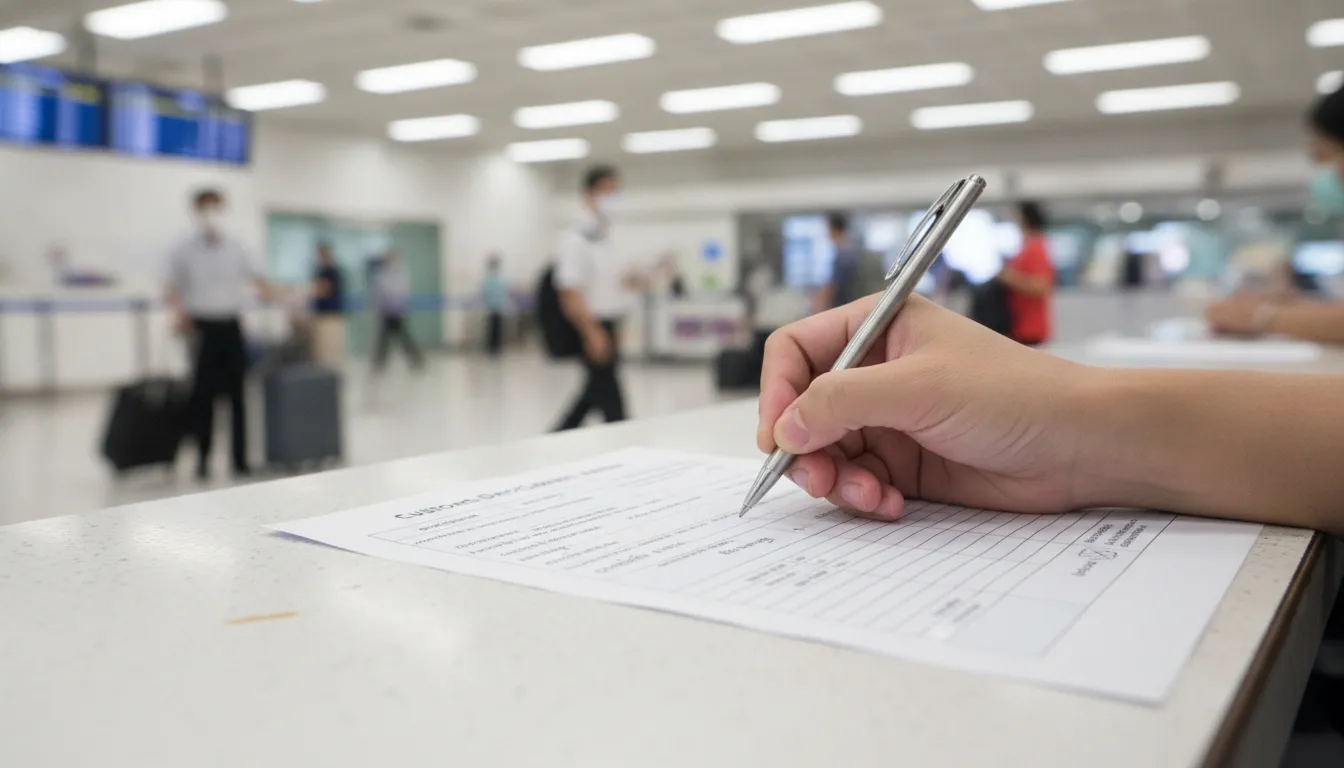
How do I declare cash at customs when I travel?
If you have never declared cash at customs in another country, the idea might seem a bit scary. But knowing what to expect can make the process much easier. It’s an important step for many people who are planning to move to Thailand or stay for a long time, especially if they are also trying to figure out how to keep their home phone number working abroad.
Can I declare cash before my trip?
The official website for Thai Customs does not mention any way to declare cash before you travel. So, even if you know you will be carrying a lot of cash that needs to be declared and you want to be very organized, you will have to wait until you arrive in Thailand to make your declaration.
How to declare cash when you arrive in Thailand
Once your flight or boat arrives at a Thai airport or port, you should look for signs that say “goods to declare” or “red channel.” These signs will direct you to the customs area where you need to go. A customs officer will then check your passport and your luggage. This is when you will be able to declare the cash you are carrying. You might have to pay some duties or taxes on certain items, and you will receive a receipt for your declaration. After that, you can collect your belongings and head towards the exit. Thai Customs provides guidelines for passengers.
What information do I need to declare cash at Thailand customs?
It is a good idea to have certain information and documents ready when you declare cash at customs. This will help make the process go smoothly:
- Your passport, your home address, and other personal details as the person carrying the cash.
- Information about who actually owns the cash and who it is meant for, if it is not you.
- Details about your journey, such as flight numbers, ferry routes, and any other countries you traveled through on the way.
- The type of cash you are carrying, including the currency (for example, US Dollars, Euros, or Japanese Yen) and whether it is notes or coins.
- The total exact amount of cash you have.
- A clear explanation of what the cash will be used for (e.g., living expenses, property purchase, business investment).
- Details and any proof you might have about where the money came from. This includes the country it originated in and how it was earned. For example, was it from selling property, earnings from a business, an inheritance, or another reason?
Making sure you have all this ready can save you time and stress, allowing you to quickly get on with enjoying your time in Thailand, whether you’re there for a holiday or moving for good. You can find more helpful advice on managing your move in our moving abroad checklist for the final month.
How much cash can I take out of Thailand? Are there limits?
The rules for taking cash out of Thailand are generally the same as the rules for bringing it in. You are allowed to take up to 20,000 USD, or its equivalent in another currency, out of the country without needing to declare it. This rule applies to foreign currencies.
If you are carrying Thai baht, the rules are a bit different depending on where you are going. You can take up to 500,000 THB to any country that has a special agreement with Thailand, known as “bonded countries.” However, if you are traveling to any other destination, you can only take out up to 50,000 THB. If you wish to take out more than these amounts, you must either make a customs declaration or exchange your Thai baht into another currency before you leave. These regulations are also outlined by the Royal Thai Embassy in London and on THAILAND.GO.TH. It’s always wise to be informed about rules when trying to keep your old phone number active, as you navigate different countries’ regulations.
What are the penalties for travelling with too much cash?
It is considered a criminal offense to bring too much cash into Thailand without declaring it, or to give false information to customs officials. The punishments for these actions can be very severe. For example, you could face a large fine of up to 500,000 baht, which is about £11,500 GBP. In some serious cases, breaking these rules could even lead to a prison sentence. These penalties are enforced under the Customs Act, as highlighted by Thai Customs. Understanding these risks is crucial for anyone managing their finances across borders, especially if they want to ensure their life abroad is as smooth as possible without unexpected legal hurdles.

Are there places where I don’t need to declare cash when leaving Thailand?
Thai Customs does not provide any specific information about destinations where you do not need to declare cash when leaving the country. Therefore, it is always safest to assume that the rules for declaring cash will apply no matter where you are heading after you leave Thailand. Always be prepared to declare if you are carrying amounts over the specified limits.
Which destinations require cash declaration when leaving Thailand?
Declaration is required when you travel from Thailand to its neighboring countries. These include Cambodia, Laos, Myanmar, Malaysia, Vietnam, and Yunnan in China. For these specific destinations, any amount of Thai baht over 450,000 THB per person must be shown and declared to customs officers. It is very important to always check the specific cash declaration rules for each country you plan to visit, as the allowed amounts and what you need to do can be different everywhere.
Extra tips for traveling with cash
Is it best to avoid traveling with cash?
Carrying large amounts of cash can make you a target for theft, which is a big safety concern. It is generally best to avoid traveling with a lot of physical money unless it is absolutely necessary. Instead, consider taking out cash from an ATM once you arrive at your destination, or arranging for money to be sent by bank transfer. This can significantly reduce risks.
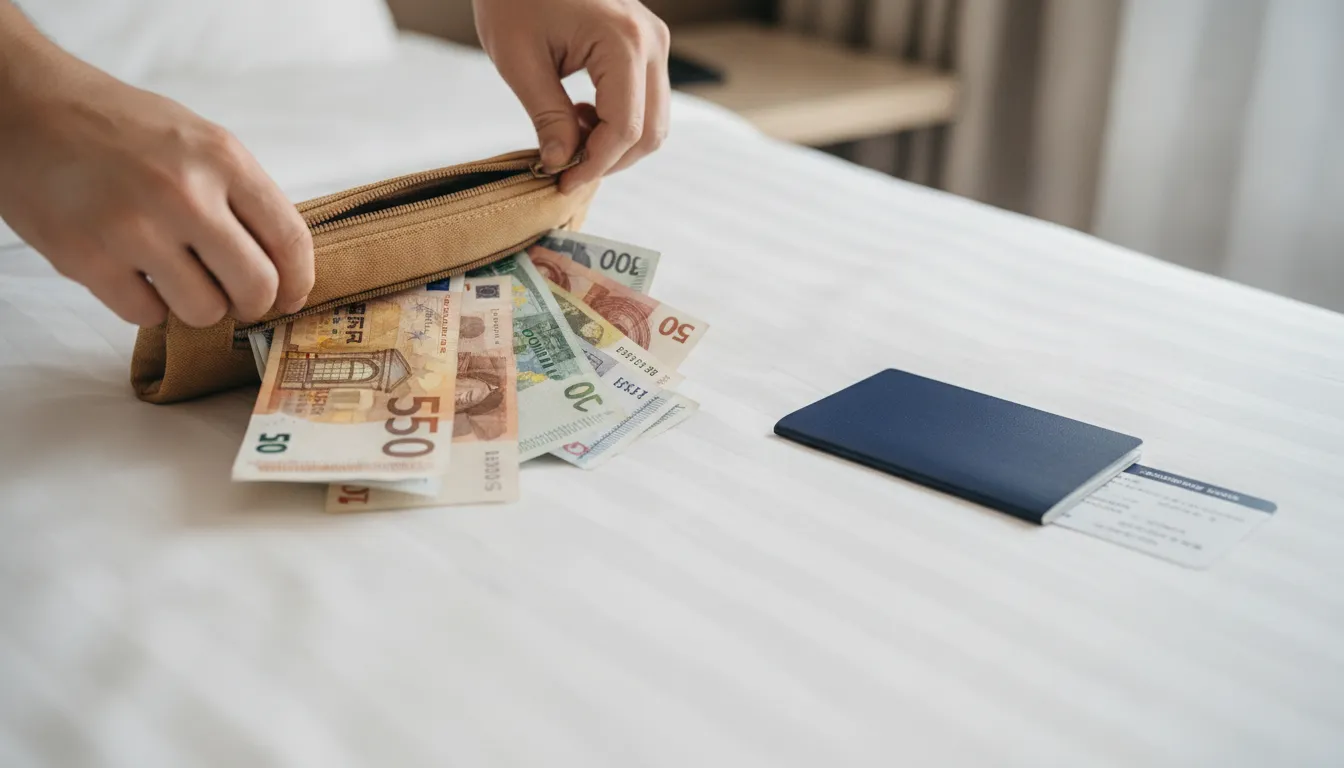
Should I use a money belt?
If you must carry cash, the safest way to do so is to keep it on your body, hidden from view. Investing in a good quality money belt that you can wear under your clothes throughout your journey is a smart choice. This helps keep your money secure and out of sight.
How can I split my cash safely?
Carrying all your cash in one big bundle is not only obvious but also very risky. If that money is lost or stolen, all your funds would be gone at once. It’s a much better idea to split your money. You could keep some in a money belt worn on your person, give some to different members of your traveling group, and put some in separate pieces of luggage. This way, if one stash is lost, you still have other funds available.
Can exchanging cash be expensive?
If you are carrying foreign money and need to exchange it for Thai baht once you get to Thailand, you might find it hard to get a good deal. Many currency exchange booths and offices, especially those located in convenient places like airports or hotels, often offer very poor exchange rates. This means you have to choose between spending your valuable holiday time searching for a better rate or losing money on a bad exchange. For more advice on managing money, check out our guide on what happens to your number when you move abroad.
What items need to be declared at customs in Thailand?
When you enter Thailand, certain items must be declared to customs. This helps control what comes into the country and ensures that all rules are followed. It’s not just about money; other goods also have limits.
Here’s a table outlining what needs to be declared at Thailand customs:
| Item Category | Limit Requiring Declaration | Source |
|---|---|---|
| Goods Value | Exceeds 200,000 THB in total value | Thai Customs |
| Cigarettes | More than 200 cigarettes | Thai Customs |
| Tobacco | More than 250 grams | Thai Customs |
| Alcoholic Beverages | Exceeds 1 liter | Thai Customs |
| Prohibited/Restricted | Any goods that are banned or have limits on them | Thai Customs |
| Duty-Free Allowance | Any goods that go beyond your personal duty-free limit | Thai Customs |
| Commercial Goods | Any items brought in for business purposes | Thai Customs |
| Foreign Currency | Over 20,000 USD (or its equivalent in any currency) | Royal Thai Embassy, London |
| Thai Baht | Over 500,000 THB | Royal Thai Embassy, London |
This table summarizes the main items and amounts that need your attention when you arrive in Thailand. Always ensure you are aware of these rules to avoid any issues with customs.
How much cash can I bring into Thailand without declaring it?
You can bring up to 20,000 USD or the equivalent amount in any other foreign currency into Thailand without being required to declare it to customs. If you are traveling with Thai baht, you are allowed to bring up to 500,000 THB into the country without making a declaration. These limits are clearly stated by the Royal Thai Embassy in London.
How much cash should I plan to have in Thailand?
The cost of living in Thailand is quite affordable, especially when compared to countries like the UK. This means you probably won’t need to carry a very large amount of cash for a holiday or even a longer stay. For safety reasons, it’s often best to bring only a small amount of cash to start with. Then, you can use an ATM to withdraw more money once you have arrived in Thailand. This can also help you manage your funds while you settle in, much like planning how to keep your UK number abroad or your US number abroad while you travel.
Is it a rule to carry 10,000 Baht into Thailand?
While it is not strictly a rule to carry 10,000 THB into Thailand, immigration officials might ask you to show that you have enough funds to support yourself during your stay. The required amount to show is usually 20,000 THB per person or 40,000 THB per family. This is part of the requirements for obtaining a tourist visa, as stated by the Royal Thai Embassy in London.
Is it better to use cash or an ATM in Thailand?
For smaller purchases and immediate needs, having some cash on hand is very useful in Thailand. However, for larger withdrawals or when you need more money, using ATMs is a common and convenient option. Many people find a mix of both works best for managing their daily expenses.
Should I carry cash or use a card in Thailand?
Cash is used very widely across Thailand, especially in markets, smaller shops, and for street food. However, most large hotels, modern shopping centers, and bigger businesses will accept cards. It’s generally a good idea to have some cash for everyday spending and use your card for bigger purchases or in places that accept them. This strategy can help you navigate payment options seamlessly.
Should I get Thai baht before I go to Thailand?
It is not essential to get Thai baht before you arrive in Thailand. You can simply bring a small amount of your home currency for any initial expenses, like transportation from the airport. Once you are in Thailand, you can use ATMs to get local currency. This approach helps you avoid potentially poor exchange rates at your home airport. Understanding how to manage your money efficiently abroad is just as important as understanding other travel logistics, like whether to use an eSIM vs physical SIM for your phone.
When moving or traveling to Thailand, managing your phone number is also a key consideration.
Related reading
Sources
| # | Source | Website |
|---|---|---|
| 1 | Royal Thai Embassy in London | london.thaiembassy.org |
| 2 | GOV.UK | gov.uk |
| 3 | Thai Customs | customs.go.th |
| 4 | THAILAND.GO.TH | thailand.go.th |
| 5 | Thai Customs | customs.go.th |
| 6 | Royal Thai Embassy in London | london.thaiembassy.org |