Using Credit Cards Abroad: Fees, Tips & How to Save Money
Unlock smart spending with credit cards abroad. Learn how to avoid hidden fees, choose local currency, and understand cash advance costs to save money on your next trip.

TL;DR: Using your credit card abroad can be handy, but watch out for common costs. Many cards charge a 2-3% non-sterling transaction fee. Cash withdrawals abroad often come with fees and interest that starts immediately. To save money, always choose to pay in the local currency, not pounds, and tell your bank you’re traveling.
Imagine you’ve just landed in a sunny new country, ready for your trip. You want to buy a cold drink, but when the cashier asks if you want to pay in pounds or the local currency, you quickly pick “pounds” because it seems easier. This simple choice is a common mistake that can cost you extra money. Many travelers, especially those who split their time between different countries, need clear advice on managing their money abroad while also staying connected. This guide will help you understand how to use your credit card wisely overseas, avoid hidden fees, and make sure your spending matches your travel plans.
What are the key things to remember about using a credit card abroad?
When you use a credit card in another country, remember these main points:
- Credit cards are good for large payments and for booking things like hotels or rental cars, where a deposit is needed.
- Most standard credit cards from the UK add extra fees when you spend money in a different currency.
- Taking cash out with your credit card while abroad can be very costly because extra fees and interest charges often begin right away.
- If a payment machine or ATM asks if you want to pay in pounds or the local money, always choose the local currency.
- A travel debit card, like the Wise card, might be a more affordable way to handle your daily spending when you’re away from home.
Can you use a UK credit card in other countries?
Yes, you can generally use your UK credit card in other countries wherever your card company (such as Visa, Mastercard, or American Express) is accepted. This includes paying in stores, restaurants, hotels, and online. Contactless payments also usually work if the place you are visiting supports them.
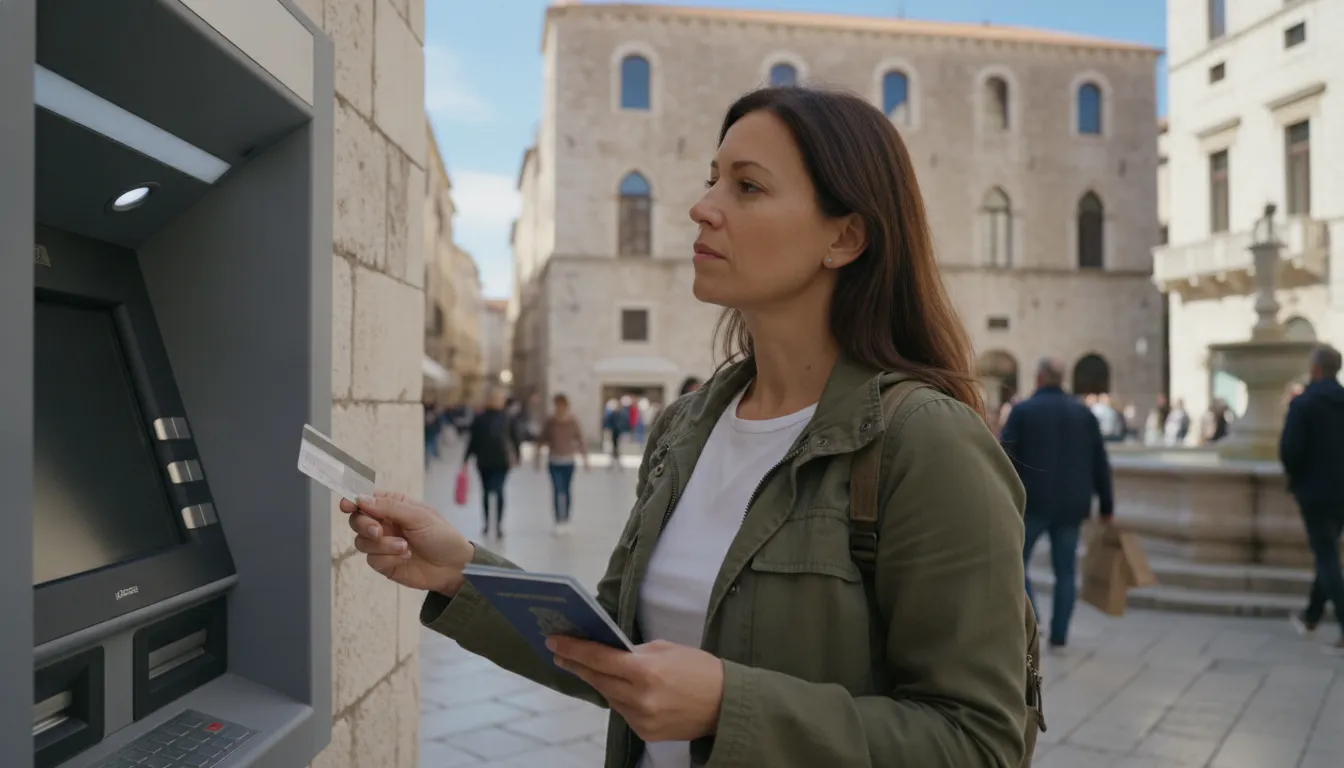
You can also use a credit card to get cash from ATMs overseas. However, this is often one of the most expensive ways to get travel money. Taking cash out with a credit card can lead to several charges:
- Cash advance fee: A fee for using your credit card to get cash.
- Immediate interest: Interest often starts building up on the cash amount from the very day you take it out.
- Foreign currency charges: Your credit card provider may add fees for converting the money.
- Local ATM fees: The ATM itself might charge you an extra fee.
Where your card is accepted can differ based on the country, region, and type of business. For example, some small shops, taxis, or local markets in places like India or Thailand might prefer cash payments. It’s always a good idea to carry a backup card and some local cash, especially if you’re going to less touristy areas. This way, you’re prepared for any payment situation and can avoid being stuck without a way to pay. Also, ensure you can receive alerts from your bank to monitor your spending, which is easier if you keep your home phone number working abroad. For tips on managing your phone number when moving overseas, check out our guide on what happens to your number when you move abroad.
What extra charges might you pay when using a credit card overseas?
The exact costs depend on your credit card company, so it’s wise to check your card’s terms and conditions before you travel. Here are the main fees you should look out for:
| Fee/Cost | What it means | How to Reduce it |
|---|---|---|
| Non-sterling transaction fee | An extra charge when you spend money in a foreign currency. | Use a special travel card or one that charges no foreign transaction fees. |
| Exchange rate markup | The exchange rate your card provider uses might include hidden costs or be worse than the mid-market rate. | Compare rates and fees before your trip. |
| Dynamic Currency Conversion | A shop or ATM offers to charge you in pounds instead of the local currency. | Always choose the local currency so your card provider handles the conversion. |
| Cash withdrawal fee | A fee for taking cash from an ATM using your credit card. | Try to avoid withdrawing cash with a credit card unless it’s an emergency. |
| Interest | Credit card cash withdrawals often start earning interest immediately. | Pay your credit card balance in full and avoid getting cash advances if possible. |
| Local ATM fees | The ATM operator might add their own fee. | Check the ATM screen for any charges before you confirm your withdrawal. |
Let’s look at an example. Suppose you are in Spain and use your credit card to take out €200 from an ATM. The exchange rate is £0.85 for every euro. Besides a 3% non-sterling transaction fee, you could also be charged another 3% cash advance fee. This means you would pay a total of £10.20 in fees. So, for your €200 withdrawal (which is £170), you would actually pay £180.20 in total. The ATM provider might even add more charges on top of this.
Should you pay in the local money or in pounds when you’re abroad?
You should always choose to pay in the local currency. When you are using a card machine or an ATM in another country, and it asks if you want to pay in pounds (your home currency) or the local currency, picking pounds usually triggers something called Dynamic Currency Conversion (DCC).
When DCC happens, the shop owner or the ATM operator decides the exchange rate, not your credit card company. According to Mastercard, their currency conversion rates do not apply if the shop or ATM converts the money. Visa also provides a tool to help you estimate the exchange rate you might get when using your Visa card internationally.
Don’t choose pounds just because it seems simpler. If you are in Spain, pay in euros. If you are in Japan, pay in yen. If you are in the US, pay in dollars. By choosing the local currency, you let your card provider handle the conversion, which usually means you get a better exchange rate.
For example, imagine you are in Switzerland and use your credit card to pay for a ski lesson that costs CHF 2,500. At an exchange rate of £0.9512 for CHF 1, the lesson would initially cost £2,378.00 before any fees. Your credit card provider might then add a 3% non-sterling transaction fee, which would be an extra £71.34. In total, you would pay £2,449.34 (the £2,378.00 for the lesson plus £71.34 in card fees). The exchange rate and fees can change a lot depending on your card provider, so it’s really important to know your card’s terms before you go.
Is it costly to take out cash with a credit card when you’re abroad?
Yes, it can be quite expensive. Taking cash out with a credit card abroad can involve several costs all at once:
- A foreign transaction fee.
- A cash advance or cash withdrawal fee.
- Interest charges that start from the day you take out the money.
- A fee from the local ATM operator.
- A less favorable exchange rate if you choose to be charged in pounds (DCC).
For most trips, using a debit card or a dedicated travel money card is usually a better choice for cash withdrawals. For example, if you have a Wise card in the UK, you can withdraw cash from ATMs for free up to £250 each month. After that, there’s a 2.69% fee on any amount you withdraw over that limit. Remember, some ATM providers might still charge their own separate fee. For more information on choosing the right card, you might find our guide on the best UK debit cards for travel with no foreign transaction fees helpful.
When is using a credit card a good idea abroad?
Despite the potential fees, a credit card can be a useful tool in certain situations when you are abroad.
Larger purchases
When you buy items or services costing between £100 and £30,000 with your credit card, you might be protected by Section 75 of the Consumer Credit Act 1974. This means your credit card provider could be equally responsible with the seller if something goes wrong with your purchase. This protection is very valuable for big travel bookings like flights, hotel stays, or other expensive items. For more details, you can refer to the official Gov.uk website.
Hotel and car hire deposits
Hotels and car rental companies often prefer credit cards for holding deposits. When you use a credit card for a deposit, the amount is held against your available credit limit, rather than actually taking money from your bank account. This is better than having funds “ring-fenced” from your debit card, which reduces the amount of spending money you have in your current account.
Rewards and travel benefits
Some credit cards offer rewards such as points, cashback, travel insurance, or other perks. These benefits can be worthwhile, but only if the value of the rewards is greater than any fees you pay, and if you make sure to pay off your full balance on time.
When might a credit card be the wrong choice for your travels?
A credit card might not be the best option for you in certain situations:
- If your card charges a non-sterling transaction fee on every purchase you make overseas.
- If you plan to take out a lot of cash, as this often comes with high fees and immediate interest.
- If you might not be able to pay off your credit card balance in full each month, leading to interest charges.
- If you are traveling to a place that mostly uses cash or relies on specific local payment methods, like some parts of Southeast Asia. To learn more about payment methods in different countries, you can read about cash versus card in Italy.
- If you find it difficult to keep track of your spending when using credit.
If your main goal is to find a low-cost way to pay for everyday things while traveling, it’s a good idea to compare your credit card with a debit card or a dedicated travel money card before you leave.
What should you do to prepare and to stay safe when using a credit card abroad?
Here are some tips to help you use your credit card safely and smartly when you’re traveling overseas. These tips are especially important for those who travel often and need to ensure their financial security while living between countries.
Before you travel:
- Check your fees: Find out about your card’s non-sterling transaction fee, any cash withdrawal fees, and how interest charges work. For example, HSBC outlines their non-sterling transaction fees on their website.
- Set up payments: If possible, set up a direct debit to pay off your full credit card balance each month. This helps you avoid interest charges.
- Save emergency numbers: Make sure you have your credit card provider’s international support phone number saved.
- Digital backup: Add your card to a mobile wallet like Apple Pay or Google Pay. This gives you a backup payment method if you lose your physical card.
- Carry a spare card: Take a second card, preferably from a different bank or network, in case one is blocked, lost, or stolen.
- Check travel notices: See if your credit card provider still requires you to set a “travel notice.” Some banks no longer need this, but it’s good to check.
To help you remember all these important steps before your trip, you might want to consult a detailed moving abroad checklist.
While you’re away:
- Choose local currency: Always select the local currency when paying at card machines or withdrawing from ATMs.
- Avoid cash advances: Try not to use your credit card to withdraw cash unless it’s an absolute emergency.
- Use secure ATMs: Stick to ATMs that are linked to established banks, as these are generally safer.
- Stay notified: Keep payment notifications turned on for your card. This way, you can spot any unusual activity right away.
- Act fast if lost/stolen: If your card is lost or stolen, freeze it immediately using your banking app if you can, then contact your provider without delay. Use your backup card while you resolve the issue.
- Keep receipts: Hold onto receipts for larger purchases, especially those that might be covered by Section 75 protection.
How do credit cards compare to the Wise card when spending abroad?
When you’re trying to decide how to manage your money internationally, it’s helpful to compare different options. Here’s a look at how a typical credit card might stack up against a Wise card for overseas use:
| Feature | Credit card abroad | Wise card abroad |
|---|---|---|
| Spending source | Borrowed money that you pay back later | Money already in your Wise account |
| Foreign transaction fees | Varies by provider; standard cards often charge a fee | No charges just for using your card abroad |
| Exchange rate | Depends on your card provider and network | Uses the mid-market exchange rate, with clear, low conversion fees* when needed |
| ATM withdrawals | Often expensive, with cash fees and interest | Free up to £250 per month, then a 2.69% fee on amounts over this limit |
| Consumer credit protection | Section 75 may apply to eligible purchases | Not a credit product, but your money is safeguarded |
| Best for | Deposits, larger eligible purchases, earning rewards | Everyday travel spending and managing different currencies |
Let’s consider another example. Imagine you withdraw $200 from an ATM in the US. If the exchange rate is £0.7472 for $1, that withdrawal would first cost £149.44 before any fees. Your credit card provider might then add a 3% non-sterling transaction fee, plus another 3% cash withdrawal fee. Together, these fees would add up to £8.97. So, you would pay a total of £158.41 – that’s the £149.44 withdrawal amount plus £8.97 in card fees. And this doesn’t even include any extra fee the ATM provider might charge. You can learn more about managing your phone number when abroad, for instance, how to keep your US number abroad, to help with banking alerts.
This is why a Wise card can be a good alternative. The Wise card is a debit card, not a credit card. However, it offers a practical way to handle your daily spending overseas, especially if you prefer clear fees, which start from as low as 0.24%, and the mid-market exchange rate. You can get a physical Wise card for a one-time fee of £7. This allows you to spend in over 150 countries and automatically changes your pounds into the local currency whenever you spend, with only a small, clear currency conversion fee. You can also get a digital Wise card for free, which you can start using right away by linking it to your Apple and Google Pay wallets.
Here’s a quick summary of the main benefits of using Wise:
- Easy setup: Quick and simple, with no physical paperwork needed.
- Transparent fees: Low, clear fees* and the mid-market exchange rates.
- Security: Advanced security measures to protect your money, which is always safeguarded.
- Global spending: Low-cost spending in more than 150 countries with the Wise card.
Frequently Asked Questions about using credit cards abroad
Is it a good idea to use a credit card when you’re abroad?
Using a credit card abroad can be a good idea for larger purchases, putting down deposits for hotels or car rentals, and for eligible purchases where Section 75 protection might apply. For everyday spending, whether it’s worth it depends on the fees your specific card charges. Often, a specialized travel card or a travel debit card can be cheaper than a standard UK credit card for daily use.
Do credit cards charge extra fees for foreign transactions?
Yes, many standard UK credit cards charge a non-sterling transaction fee when you spend money in a foreign currency. This fee is often around 2-3%, but it varies depending on your card provider and the specific card. Always check your card’s terms and conditions before you travel to know exactly what to expect.
Is it better to use a credit card or a debit card abroad?
The best choice between a credit card and a debit card abroad depends on what you’re paying for. A credit card can be better for large, eligible purchases and for deposits. On the other hand, a debit card or a travel money card is often better for everyday spending and for withdrawing cash, especially if it has low or no foreign transaction fees. For a detailed comparison, see our guide on credit or debit card abroad: UK travel money guide.
Should I take out cash with a credit card when I’m abroad?
Generally, no, unless you have no other choice. Withdrawing cash with a credit card abroad can lead to several costs, including cash advance fees, interest that starts from day one, foreign transaction fees, and additional fees from the local ATM. These charges can make it a very expensive way to get cash.
Do I need to tell my credit card company before I travel?
Some credit card providers no longer require you to set a “travel notice,” but others might still suggest or recommend it. It’s best to check your provider’s app or website before you leave. Also, make sure your contact details are up to date with your bank in case they need to verify a transaction with you. This is crucial for seamless communication, which is why many expats choose to keep their UK number abroad or keep their Australian number abroad even when living in a new country.
What should I do if my credit card is lost or stolen while I’m abroad?
If your credit card is lost or stolen while you’re abroad, the first thing you should do is freeze the card using your banking app if that option is available. Then, contact your credit card provider immediately to report it. Use your backup card while the issue is being sorted out, and make sure to keep a record of any suspicious transactions you notice.
Sources used in this article:
- HSBC – non-sterling transaction fees for using your card abroad
- Mastercard – Mastercard currency converter
- Visa – Visa exchange rate calculator
- Gov.uk – Consumer Credit Act 1974, Section 75
Sources last checked on 8 July 2026
*Please see terms of use and product availability for your region or visit Wise fees and pricing for the most up to date pricing and fee information. This publication is provided for general information purposes and does not constitute legal, tax or other professional advice from Wise Payments Limited or its subsidiaries and its affiliates, and it is not intended as a substitute for obtaining advice from a financial advisor or any other professional. We make no representations, warranties or guarantees, whether expressed or implied, that the content in the publication is accurate, complete or up to date.
Related reading
Sources
| # | Source | Website |
|---|---|---|
| 1 | Mastercard | mastercard.com |
| 2 | Visa | visa.co.uk |
| 3 | Gov.uk | legislation.gov.uk |
| 4 | website | hsbc.co.uk |