
Getting an Italian Work Visa: Your Guide to Working in Italy
Dreaming of working in Italy? Navigate the Italian work visa process, from employer authorization to EU Blue Card options and document requirements. Learn how to secure your…


TL;DR: To secure an Italian work visa, your employer must first get an authorization for you from local authorities. Once approved, the Italian embassy in your home country will issue your entry visa in less than 30 days, and you have six months to collect it. For highly skilled professionals, an EU Blue Card Italy may be faster, taking up to 3 months for the whole process. Self-employment visas typically last 2 years, while seasonal visas are for six months (extendable by three months). As you plan to work in Italy and split your time, ensuring you stay connected and keep your current phone number active is crucial.
Moving to Italy offers a blend of rich history, vibrant culture, and a Mediterranean lifestyle. Many people dream of living and working there, drawn by the high quality of life and bustling cities. However, planning to split your time between your home country and Italy means you need to think about more than just your job. Staying in touch with family, managing your finances, and especially keeping your phone number active, are key challenges. Forgetting to arrange these details could leave you isolated or facing unexpected costs. The first, and often most complex, step is securing an Italian work visa to make your dream of work in Italy a reality.
Do I Need an Italian Work Visa or Permit?
Whether you need an Italian work visa or Italy work permit depends on where you are from and the type of job you plan to do. If you are a citizen of a country in the European Union (EU), or from Norway, Iceland, Liechtenstein, or Switzerland, you do not need a permit to live or work in Italy. However, if you are from any other country, you will likely need to apply for a visa.
You can check the specific visa requirements Italy on the EU immigration portal by entering your nationality and the kind of work you intend to do. It’s important to know that Italy uses a quota system for most types of work visas. This means that a limited number of visas are given out each year for many jobs. You can only get a visa if you meet all the requirements and if the annual quota has not yet been filled by the time your application is processed.
However, some jobs are not subject to these quotas. This usually applies to occupations where there aren’t enough workers in Italy. Also, if your current employer is transferring you to Italy for a short period, you might also be exempt from these quota limits. Planning for your life abroad also includes thinking about how you’ll manage your phone number; understanding what happens to your number when you move abroad is vital to stay connected.
What is the Process to Get an Italian Work Permit?
The process to get an Italy work permit mainly starts once you have a job offer. Your employer will handle most of the application for you. They must begin by asking for official approval, called an ‘authorisation,’ from the Single Desk for Immigration (Sportello Unico per l’Immigrazione) at their local Prefettura, which is a government office. The Italian Interior Ministry website provides details on where these initial applications should be sent. Since the process is managed at a regional level, the exact rules can be slightly different depending on the area where you plan to work in Italy.
If your application is successful, and as long as the annual quotas for immigrants have not been met (or if your job is exempt from these quotas), your employer will receive your ‘authorisation to work.’ This authorisation means you are approved to work. The local Prefettura will then inform the Italian consulate or embassy in your home country that your visa application can move forward. All the paperwork your employer submitted will be sent electronically to your local embassy, so you shouldn’t need to provide the same documents again.
Your local embassy will then issue your entry visa, which typically takes less than 30 days. Once your authorisation is confirmed, you have six months to visit your local Italian embassy and pick up your visa. For more helpful information, you can check the European Commission’s mobility portal, EURES, and the EU Immigration Portal. This comprehensive process is one of the many items on any international moving checklist; for more tips on making your move smooth, refer to our moving abroad checklist.

What Documents Are Needed for an Italy Work Permit?
Since your employer handles much of the Italy work permit application, they will ask you for certain documents. Your employer must inform the immigration authorities about your role and how you plan to live in Italy during your contract. The documents they submit to the authorities can vary by region but generally include:
- A passport that is still valid.
- Your residence contract, written in Italian, which you must also sign.
- Proof that you have enough money to pay for your journey back home.
- You might also need to show proof of your qualifications and your resume.
After your employer submits these documents to the local Single Desk for Immigration, Italian authorities will check for any reasons that might prevent you from entering the country before giving the authorisation to work.
Depending on the kind of work you plan to do, you might be able to apply for an EU Blue Card Italy. This card is similar to the US Green Card and allows you to work in Italy and across most other EU countries (except Denmark, Ireland, and the UK). To get an EU Blue Card Italy, you must be from a country outside the EU, be highly skilled (usually meaning you have a university degree at bachelor’s level or at least five years of high-level professional experience), and have a firm job offer or an active work contract.
The application process for the Blue Card is typically faster than for other types of work visas, as EU countries prioritize it. However, it can still take up to three months. While you start the application online through a single contact point, the specific steps might change based on your personal situation. For full details on eligibility and application, check the EU Blue Card information.
| Visa Type | Typical Processing Time / Duration | Key Notes |
|---|---|---|
| Entry Visa (after authorisation) | Less than 30 days | Time for the embassy to issue the actual visa after your employer secures the initial work authorisation. |
| EU Blue Card (full process) | Up to 3 months | A faster process for highly skilled non-EU workers with a job offer. |
| Seasonal Workers Visa | 6 months | Can be extended for up to an additional 3 months, total 9 months. |
| Self-Employment Visa | 2 years | Issued after approval from the Chamber of Commerce, requiring proof of funding and a business plan. |
| Working Holiday Visa | 1 year (Canada: up to 2 years) | For young citizens from specific countries; travel is the primary intention, with work being secondary. |
This table highlights the differing timeframes for various Italy work permit options, showing that planning is essential. For those seeking highly skilled roles, the EU Blue Card Italy offers a comparatively streamlined path to residency and employment.
Italian Work Visas for Part-Time, Fixed-Term, and Seasonal Workers
Italy also offers specific visa options for different types of employment, including seasonal workers visa Italy, student work permissions, and working holiday visas. Each has its own rules and durations.
Seasonal Workers Visa Italy
If you plan to work in Italy as a seasonal worker, you’ll need to follow a similar application process as general work visas. Your employer will still be the main applicant. These seasonal workers visa Italy are usually given for six months. After this period, you can apply for an extension of up to three months more, allowing for a total stay of nine months.
Student Visa Work Rules
Most student visas allow you to work part-time while you study in Italy. You can typically work for up to twenty hours a week. It’s crucial to check the specific terms of your student visa before you start looking for a job to make sure you follow all the rules.
Working Holiday Visa
For younger individuals, a working holiday visa offers a unique way to experience Italy. If you are under 30 and a citizen of Australia, New Zealand, or South Korea, or under 35 and from Canada, you can apply for a special visa that lets you travel around Italy and work during your stay. This visa is usually valid for one year. If you are Canadian, you might be able to get this type of visa for up to two years.
To be eligible for a working holiday visa, you must show that you have enough money to support yourself. You also need to confirm that your main reason for coming to Italy is to travel, and that working is a secondary part of your plans, not the main purpose. Your local Italian embassy can give you more specific details about this visa option. While exploring these options, consider how you’ll manage your phone number abroad; for example, if you’re from Australia, you might find our guide on keeping your Australian number abroad useful, or if from Canada, check out our guide for Canadians.
How Can I Get an Italian Work Visa as an Entrepreneur?
If your plan is to be self-employed or start your own business in Italy, you’ll need a different type of Italian work visa. This path requires a self-employment visa Italy or an Italian startup visa.
Self-Employment Visa Italy
To get a self-employment visa Italy, you follow a process that is much like the general work visa application but with some key differences. This process is handled regionally, often in cooperation with local Chambers of Commerce. The requirements can vary and are often decided on a case-by-case basis, as there isn’t always a fixed set of rules for every situation.
You will need to apply to the Chamber of Commerce for a certificate that confirms they approve of the business you intend to start. To get this approval, you must show proof of your funding, your qualifications, a detailed business plan, and your professional credentials. Self-employment visa Italy are typically issued for two years.
Italian Startup Visa
If you are moving to Italy to launch an innovative startup business, or if you plan to work with a certified startup incubator, you might qualify for a specific Italian startup visa. This program is designed to attract entrepreneurs and innovators to Italy. You can find all the detailed information and requirements for this visa on the Italian government’s dedicated startup visa website.

How Can Family Members Join You on an Italian Work Visa?
Bringing your family with you is an important part of planning to work in Italy. Italy offers pathways for Italy family reunification for visa holders, allowing your spouse and dependent family members to join you.
EU Blue Card Italy Family Reunification
If you hold an EU Blue Card Italy, you have a significant advantage. You can apply for visas for your family members without a waiting period under the Italy family reunification scheme. This means your family can join you more quickly after you get your Blue Card.
Italy Family Reunification for Other Work Visas
If you have a standard Italian work visa that is valid for one year or more, your family members can also travel to Italy with you. You must complete the necessary application processes at the Italian embassy in your home country. For their application, family members will need to provide:
- Application forms.
- A valid passport.
- Proof of your income to show you can support them.
- Proof of suitable accommodation in Italy.
- Documents detailing your family relationship (e.g., marriage certificate, birth certificates).
- Depending on specific situations, you might also need to provide health information.
If your family members do not come to Italy at the same time as you, you can apply later for long-term residence permit Italy for them. This allows family members like a spouse, children, or dependent parents to join you through the family reunification program. The application process for these permits can vary based on the specific circumstances. Your family member will need to provide a valid passport, photographs, a clean criminal record, proof of their relationship to you, and pay an application fee. The current application fee is €27.50. For more information about confirming the legality of your stay in Italy, you can consult the Italian police guide. For those considering marriage in Italy as a UK citizen, our guide on getting married in Italy offers further insights.

After Getting Your Italian Work Visa: Next Steps
Once you have your Italian work visa, there are a few important steps you must take within your first few days in Italy to ensure your stay is legal and correctly registered.
Within eight days of arriving in Italy, you must visit the Single Desk for Immigration (Sportello Unico per l’Immigrazione) at the Prefettura closest to where you will be working. Failing to do this means you could technically be in the country illegally. During this appointment, your personal and employment details will be checked and confirmed. You will also receive a fiscal code (codice fiscale), which is your Italian tax identification number and is essential for many daily activities, from opening a bank account to signing contracts.
After this, you will need to go to a post office to get the login details that allow you to track the progress of your residence permit Italy application online. You will also have to attend another meeting to provide your photos and fingerprints, which are required for the permit. After these steps are completed, your residence permit Italy will be issued, and the Provincial police will be informed of your visa status.
While getting an Italian work visa involves several steps, many of them are handled by your employer. Once your application is approved and you complete these initial administrative tasks, you can focus on the more enjoyable parts of settling into your new life in Italy.
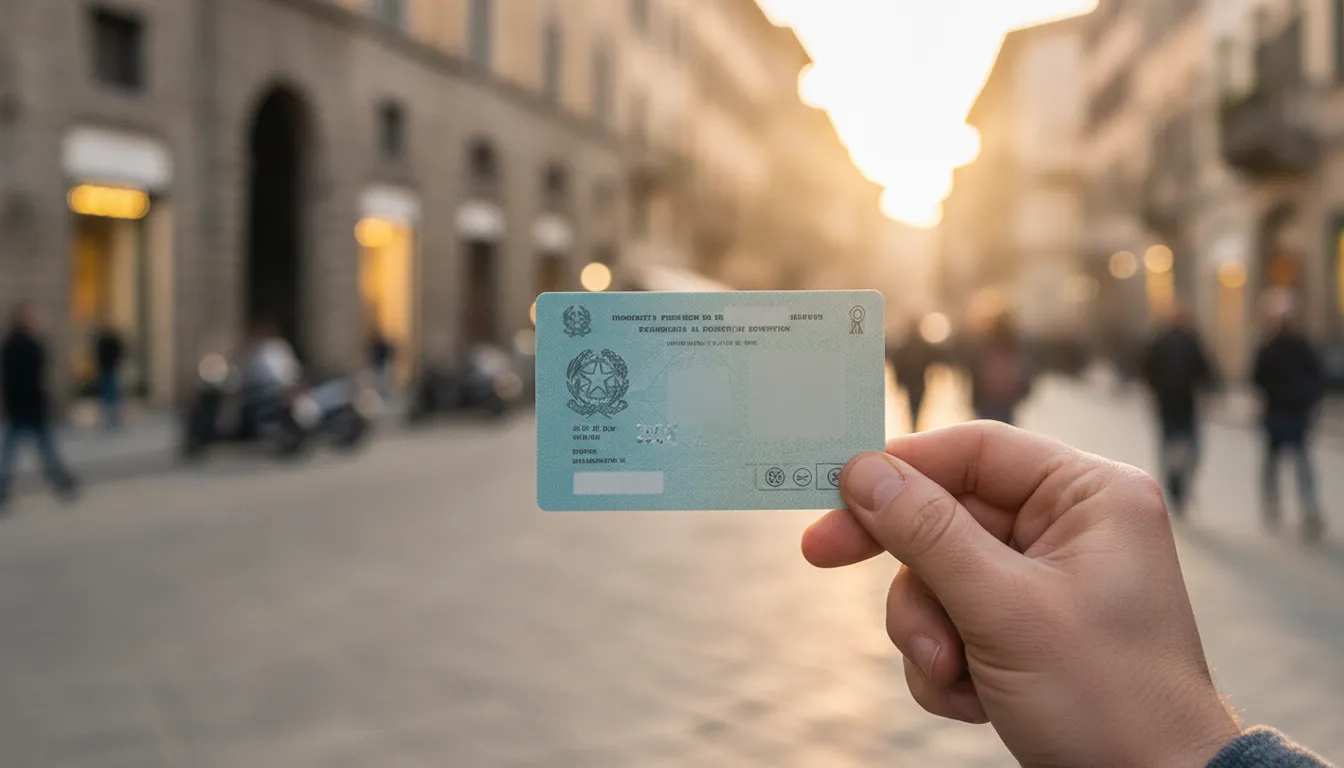
How to Move Money to Italy from Your Bank Account Abroad
Once you’re ready to work in Italy, managing your money across borders will be important. You’ll likely want to open a bank account in Italy, which some banks allow you to do even before you arrive. When you need to move money to Italy from your bank account abroad, or send money out of Italy, you’ll want to find a service that offers fair exchange rates.
When converting money from one currency to another, it’s best to look for services that use the real exchange rate – the same one you can find on Google – and have small, clear fees. Such services often save you money by using local bank transfers instead of more expensive international wire transfers.
If your stay is short or opening an Italian bank account isn’t possible right away, you can still withdraw money from your foreign bank account using ATMs in Italy. A useful tip here is always to choose to be charged in the local currency (Euros), not your home currency. This helps you avoid poor exchange rates often offered by ATMs when you select your home currency. Understanding payment methods in Italy can further assist your financial planning; for more insights, see our guide on cash vs. card in Italy.
Getting an Italian work permit can seem complicated with its different stages and specific visa requirements Italy, but by following the right steps and preparing thoroughly, it can be a smooth process. The most important thing is to make sure you enjoy your new adventure and make the most of your time living and working in Italy.
Related reading
Sources
| # | Source | Website |
|---|---|---|
| 1 | EU immigration portal | ec.europa.eu |
| 2 | EU Blue Card | ec.europa.eu |
| 3 | Italian government's dedicated startup visa website | italiastartupvisa.mise.gov.it |
| 4 | Italian police guide | poliziadistato.it |