
How to Get Proof of Address in the UK: A Complete Guide
Navigating UK proof of address can be tricky. This guide covers accepted documents like bank statements and utility bills, validity periods, and crucial alternatives for new…


TL;DR: To get proof of address in the UK, you typically need documents like utility bills, bank statements, or council tax bills, usually dated within the last 3-4 months. Many institutions now accept digital versions. If you split your time between countries, it can be tricky, but alternatives like HMRC letters or employer letters might be accepted. Always check directly with the organisation.
Living in the UK, especially if you also spend time in other countries, means dealing with some unique challenges. One hurdle many people face is proving where they live. Imagine trying to open a bank account to manage your money, register with a local doctor, or even set up internet at your UK home, only to be stopped because you can’t provide the right paperwork. This happens to countless newcomers and those who split their lives between different locations. This guide will walk you through what UK proof of address means, what documents are usually accepted, and what you can do if you don’t have standard bills in your name. This information is especially important for anyone who wants to keep a stable link to the UK, like keeping a UK phone number active or managing finances remotely.
What Does “Proof of Address” Mean in the UK?
Proof of address is a document that officially confirms where you currently live. It’s important to understand that this is different from proof of identity, which shows who you are, often with a photo (like a passport). Most places in the UK will ask for both: one document to confirm your identity and another, separate document to show your home address.
UK organisations ask for proof of address because of legal rules. Financial companies, for example, must check who their customers are and where they live before offering services. This helps stop financial crime.
It’s also worth noting that “proof of address” is not the same as “proof of residency.” Proof of address simply shows your current home. Proof of residency, sometimes called “proof of right to reside,” shows your legal right to live in the UK. This might be a visa, a biometric residence permit, or a document confirming indefinite leave to remain. Depending on your situation, some institutions might ask for both.
When Do You Need to Show Proof of Address in the UK?
You will need to show proof of your UK address in many different situations, not just when opening a bank account. Here are the most common times you’ll be asked for it:
- Opening a bank account: This includes a standard current account, a savings account, or other financial products. Banks need to know your address to follow legal rules.
- Registering with a doctor (GP surgery): When you need to join a local doctor’s surgery, they will ask for proof of your address. This helps them confirm you live within their service area and connects you to local healthcare.
- Applying for or renewing a UK driving licence: The Driver and Vehicle Licensing Agency (DVLA) requires proof of address to issue or update your driving licence.
- Setting up household services: If you’re moving into a new home, you’ll need proof of address to set up services like gas, electricity, water, or broadband internet.
- Registering for council tax: When you move into a property, you must register with your local council to pay council tax. They will need to confirm your address.
- Getting insurance: Whether it’s for your car, home, or personal belongings, insurance companies will ask for proof of your address.
- Registering to vote: To sign up on the electoral roll and be able to vote, you need to provide your address.
Keep in mind that a document accepted for one purpose might not be accepted for another. For example, a GP might accept something a bank won’t. It’s always a good idea to check what documents are needed in advance, especially for financial services, where the rules are usually stricter.
What Documents Count as Proof of Address in the UK?
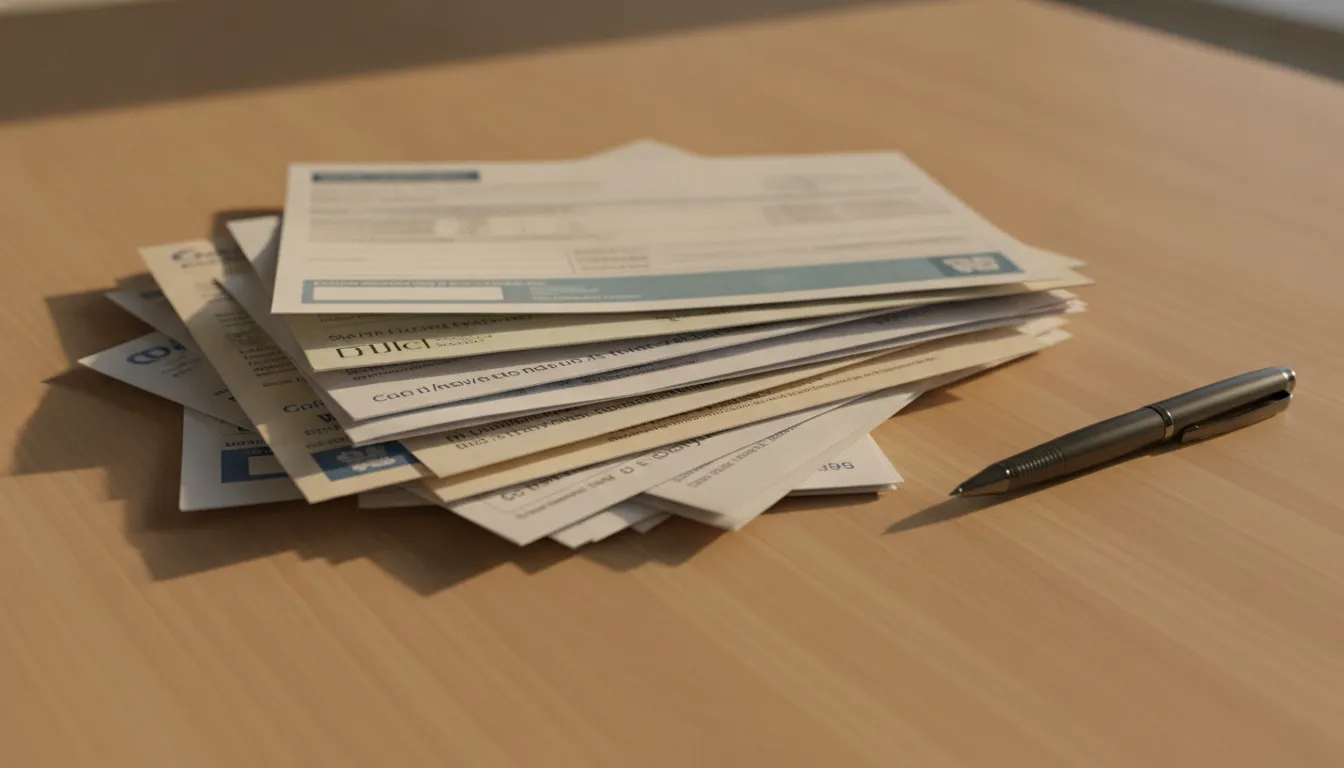
The types of documents accepted for proof of address can differ slightly between different institutions. However, most UK banks, local councils, and service providers will accept a common set of documents. The most important things are that the document clearly shows your full name and your current address, and that it falls within the required time limit (usually recent).
Many places now accept digital versions of documents, such as PDF files downloaded from online accounts. This includes online bank statements and digital utility bills. For example, HSBC specifically states that it can accept online bills and statements in many cases.¹ This is helpful if you manage your accounts primarily online or live between countries.
Here is a general guide to documents commonly accepted by major UK banks and their typical validity periods:
| Document Type | Typical Validity Period* |
|---|---|
| Utility bill (gas, electricity, water, landline) | Usually last 3 to 4 months |
| Bank or building society statement | Usually last 3 to 4 months |
| Credit card statement | Accepted by some institutions |
| Council tax bill | Current council tax year |
| HMRC correspondence or tax notification | Current tax year or recent letter |
| Mortgage statement | Usually last 12 months |
| Tenancy agreement | Current agreement |
| UK photocard driving licence (full) | Must be valid and show current address |
| Benefits entitlement letter | Acceptance varies |
*Please remember that requirements can vary between different organisations and for different services. Always check directly with the organisation asking for the document.
A common question is whether a mobile phone bill can be used as proof of address. In most cases, it cannot. For example, HSBC does not accept mobile phone bills for proof of address, even though they may accept some landline phone bills.¹ Similarly, the official GOV.UK checklist for identity proof also states that mobile phone bills are not accepted as evidence of address.²
Driving licences are another document that can cause confusion. NatWest states that both full and provisional UK photocard driving licences can be used for proof of address when opening some types of accounts.³ However, other banks or institutions might have different rules. For example, some might only accept a full driving licence, or might not accept it at all if you are also using it as your proof of identity.
Before you submit any document, it’s always best to check online or contact the organisation directly. The rules can be different depending on the provider and whether you are applying online or in person at a branch.
How to Get Proof of Address Without Bills
It’s common for people, especially those who have recently moved to the UK or are splitting their time between countries, not to have standard utility bills in their name right away. If you’re in this situation, don’t worry—there are several other documents that banks and other institutions might accept.
Here are some examples of alternative documents:
- A letter from your employer: This letter should confirm your current home address.
- A letter from your university, college, or other educational institution: If you are a student, an official letter from your place of study confirming your address can sometimes be used.
- UCAS confirmation documents: For some student bank accounts, documentation from UCAS (Universities and Colleges Admissions Service) might be accepted.
- Letters from HMRC: Official letters from His Majesty’s Revenue and Customs (HMRC) can often serve as proof of address.
- Housing-related letters: If you are in supported accommodation, official letters related to your housing can sometimes be used.
- Home Office or asylum-related documents: In certain cases, documents from the Home Office or related to asylum applications may be accepted.
For instance, HSBC lists employer letters, UCAS documents, and letters from accredited educational institutions as documents that they might accept under certain conditions.¹ NatWest also has alternative ways for people to prove their identity or address if they can’t provide the usual documents.³
These alternative documents are not guaranteed to be accepted everywhere. The best approach is to contact the service provider directly, explain your situation, and ask them which documents they can accept from you. This is especially helpful if you are an expat or have just arrived and are working on setting up your life.
Example Proof of Address for Major UK Banks: HSBC and NatWest
All major banks in the UK require proof of address when you open a new current account. However, the exact documents they accept can vary.
For example, to open an account with HSBC, you can use utility bills, bank statements, and credit card statements dated within the last four months. HSBC also accepts online versions of many of these documents.¹
With NatWest, you can open an account using documents such as utility bills, council tax bills, bank statements, mortgage statements, HMRC letters, and a UK photocard driving licence as proof of address.³
These small differences in accepted documents can affect whether your application is approved quickly or if you need to provide extra paperwork. It’s always a good idea to check the most up-to-date requirements on the bank’s website before you apply.
If you can’t provide any of the documents on a bank’s standard list, don’t give up immediately. Contact them directly. Many banks have different ways to verify customers who are in unusual situations, such as those who have just moved to the UK or have difficulty getting traditional documents.
How Can I Manage UK Affairs When Splitting Time Between Countries?
For many people who split their lives between the UK and other countries, like Germany or Australia, managing UK affairs can be complex. Maintaining connections, such as keeping your German phone number active abroad or ensuring your Australian number works overseas, is crucial. This helps you receive important messages, access online banking, and stay in touch with family or work.
One significant challenge is finding flexible ways to handle your money that work both locally and internationally. If you often send money across borders, hold different currencies, or travel a lot, having the right financial tools can make life much simpler.
Many traditional banks can make international money management difficult. They might charge high fees for transferring money abroad or for spending in foreign currencies. For people living a multinational lifestyle, it’s important to find solutions that offer low fees and good exchange rates. This ensures more of your money reaches where it needs to go.
Also, consider how you will spend money when you are in different countries. A payment card that allows you to spend directly in local currencies with minimal fees can save you a lot compared to cards that charge high conversion rates. The ability to easily convert money between different currencies at a fair rate is a key benefit for expats and global citizens.
When you’re not always in one place, having an account that can be set up easily, often online without a lot of physical paperwork, is a huge advantage. This flexibility can help you get started quickly and manage your finances even if you don’t have all the standard UK documents immediately.
Finally, ensuring your money is safe and secure is paramount, no matter where you are. Look for providers that offer strong security measures and anti-fraud protection. Reliable customer support can also be very helpful when you’re managing money across different time zones and locations. Making sure you can track your transfers and that they arrive quickly is also a big plus for anyone dealing with international finances.

FAQs About Proof of Address in the UK
Is a driving licence proof of address in the UK?
Yes, a valid UK photocard driving licence that shows your current address is often accepted as proof of address by many organisations. For example, NatWest includes both full and provisional UK photocard driving licences among the documents that can be used to prove an address for some applications.³ However, the rules vary between different institutions, so you should always check with them first. Some might not accept it if you’re using it for your identity check.
Can I request proof of address from HMRC?
HMRC (His Majesty’s Revenue and Customs) does not provide a specific document called a ‘proof of address’ certificate. However, official letters from HMRC, such as tax notifications or letters about your tax code, are widely accepted as proof of address by many financial institutions and other organisations. If you’ve recently received any correspondence from HMRC, this can be a valuable document.
Can I use an NHS letter as proof of address for a bank account?
Some banks and institutions may accept official letters from the NHS (National Health Service) or your GP (General Practitioner) as proof of address. The acceptance of such letters can vary depending on the specific provider and the type of application you are making. It is always best to check directly with the institution, such as your bank, before you submit an NHS letter.
How can I get proof of address online in the UK?
Many people get proof of address online by simply downloading a recent bank statement directly from their online banking account. Many providers also accept digital utility bills (like electricity or gas bills) and online council tax documents that you can download as PDFs. This is often the fastest way if you already have these accounts set up. If you are exploring how to keep your US phone number when living abroad or manage other international affairs, digital documents can be very convenient.
What is the quickest way to get proof of address in the UK?
If you already have a UK bank account, downloading a recent bank statement from your online banking portal is often the quickest way to get proof of address. Other fast options, depending on the institution’s requirements, include recent letters from HMRC, your latest council tax bill, or up-to-date utility account paperwork. For those considering a move or already splitting time across borders, such as moving to Italy, understanding these local requirements is key, as highlighted in guides like your guide to moving from UK to Italy post-Brexit.
Key Takeaways
- Proof of address is a document that confirms your current home address in the UK. It is different from proof of identity (who you are) and proof of residency (your legal right to live in the UK).
- Most UK institutions accept a core set of documents. These include utility bills, bank statements, and council tax bills. Many major banks now accept digital versions or PDFs that you can download.
- Mobile phone bills are generally not accepted as valid proof of address by major banks like HSBC and are excluded from the official GOV.UK proof of identity checklist.²
- If you don’t have standard bills, you can often use alternative documents. These include official letters from your employer, university, UCAS, or HMRC.
- For individuals who have recently moved to the UK, or those who split their time between countries, meeting strict local address requirements can be challenging. It’s important to explore all available options and communicate directly with the organisations you need to deal with. This ensures you can access essential services and maintain your connections to the UK, which could include keeping your Spanish number abroad or your Dutch number active when living elsewhere.
Sources
| # | Source | Website |
|---|---|---|
| 1 | HSBC | hsbc.co.uk |
| 2 | GOV.UK | gov.uk |
| 3 | NatWest | natwest.com |