
Japan Tax for Foreigners: A UK Expat's Guide
Moving to Japan as a UK expat? Understand income tax rules, resident statuses, filing deadlines, and local taxes. This guide simplifies Japanese tax for foreigners.


TL;DR: If you plan to live in Japan, you will need to understand its tax rules. How much income tax in Japan for residents vs non-residents pay depends on your tax status. Permanent residents pay tax on all worldwide income. Temporary resident tax Japan payers are taxed on Japan-earned income or money paid in Japan. Non-resident tax Japan payers only pay tax on income earned in Japan. The Japan tax year starts on January 1st and ends on December 31st. Tax returns are typically due by March 15th each year.
Imagine you’re planning your big move to Japan, picturing cherry blossoms and bustling city life. You’ve sorted your visa, found a place to live, but what about taxes? Many people forget to look into the local tax system until the last minute. This can lead to unexpected bills or confusion. Understanding the tax rate in Japan for foreigners right from the start is key to a smooth financial life, especially if you’re a UK expat living and working abroad.
If you are moving to Japan, working there, investing, or even buying property, you will likely earn money within the country. This means you need to know about Japan’s income tax rules and how they apply to you. This guide will explain how income tax in Japan for expats works, who needs to pay it, what the Japan tax brackets are, and more.

What are the basic tax rules for foreigners in Japan?
Foreign citizens who live in Japan for the long term must pay tax on all income they earn, both within Japan and anywhere else in the world. You are considered a permanent resident for tax purposes if Japan is your main home, or if you have lived in Japan for more than one year.
People who are temporary resident tax Japan payers or non-resident tax Japan payers also need to pay income tax. However, they only pay tax on certain types of income. In Japan, income tax is called Shotokuzei.
Most people who work for a salary or wages in Japan do not need to send in a yearly tax form. This is because their employer takes out taxes from their pay and sends it directly to the government. This is similar to the PAYE system used in the UK. However, people who earn a lot of money might still need to file a tax return.
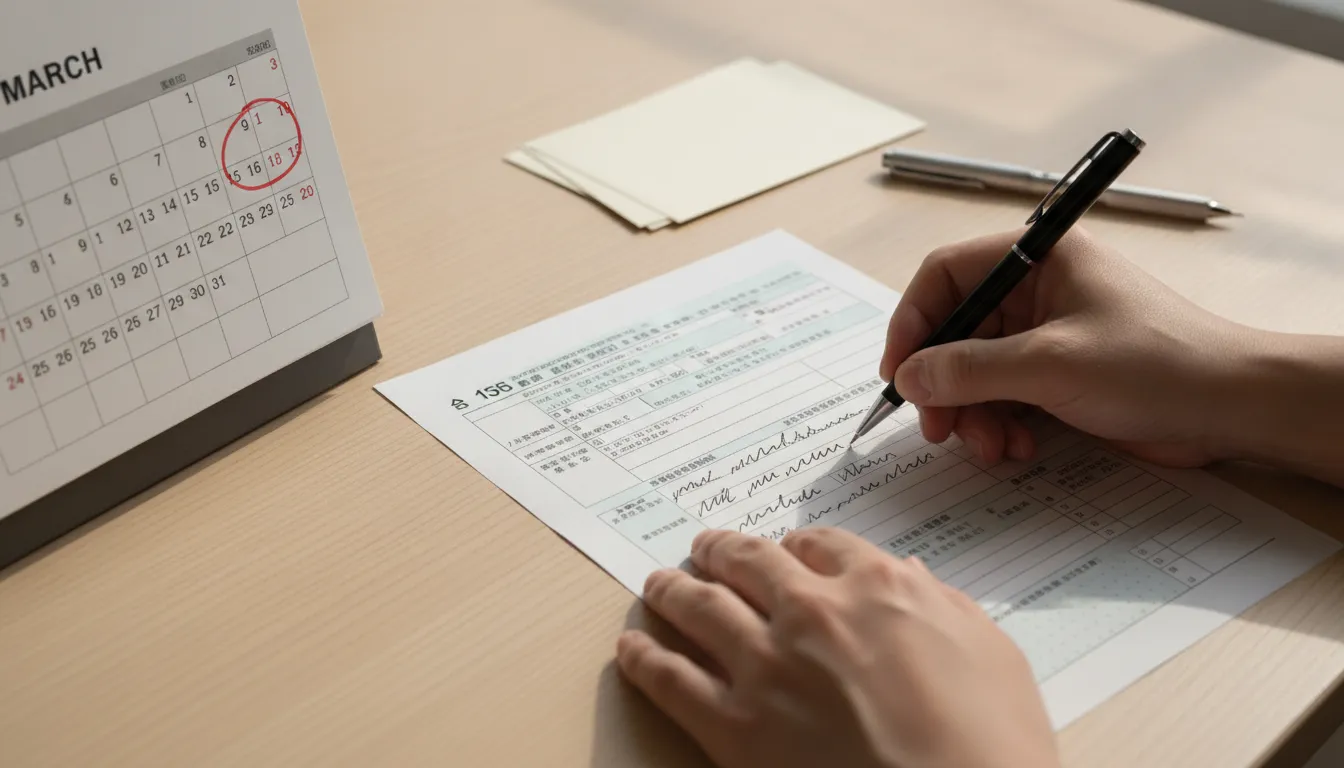
The Japan tax year runs from January 1st to December 31st. Tax returns are usually due between February 16th and March 15th. The country’s main tax office is called the National Tax Agency Japan (Kokuzeicho), also known as the NTA. It is also helpful to know that Japan has two types of income tax: national tax and local tax (which is known as inhabitant tax).

Quick Look: Income Tax for Foreigners in Japan
Here is some useful information about Japanese tax system for foreigners at a glance:
| Detail | Information
Tax authority: National Tax Agency Japan (Kokuzeicho)
Japan tax year: Runs from January 1st to December 31st
Tax returns due: By March 15th
Taxable income for foreign residents: All worldwide income
Taxable income for non-residents: All income earned in Japan
Do foreigners need to submit tax returns? No, unless taxable income goes over ¥200,000 JPY (about £1,050 GBP)
How can you make sure you stay reachable while abroad?
Many people who split their time between Japan and another country, such as the UK, worry about keeping their phone number active and reachable. Losing access to your home number can make it hard to log into bank accounts, receive important calls, or connect with family and friends. For those moving to Japan, securing your Japanese number is easy. However, if you’re a UK expat who still needs to use your UK number for banking or family, you might wonder about your options.
It is worth noting that rules about porting (moving) your phone number differ by country. For instance, you can check out a UK guide if you want to keep your UK number while living abroad. Similarly, if you’re managing affairs in Australia, you might find specific advice on keeping an Australian number useful. Understanding these rules can help you stay connected, no matter where you are.
Who has to pay income tax in Japan?
Anyone who lives in Japan for tax reasons must pay Japan income tax for expats. Also, non-residents who earn money in Japan need to pay. Non-residents might include people who are in the country for a short time, perhaps on student visas or digital nomad visas. It also covers those who live in the UK but have business interests in Japan that earn them money.
How does income tax in Japan differ for residents and non-residents?
The Japanese tax system for foreigners divides taxpayers into three main groups: permanent residents, non-permanent/temporary residents, and non-residents. Each group has different tax responsibilities in Japan. It’s important to know which group you belong to as this affects what income you pay tax on.
Here is a quick look at each category and their tax duties:
| Category | Criteria | Taxable Income |
|---|---|---|
| Permanent residents | Main home in Japan or lived in Japan for at least 1 year | All worldwide income |
| Non-permanent/temporary residents | Lived in Japan for less than 5 years in total over the last 10 years | Income earned in Japan, or earned elsewhere and paid in Japan |
| Non-residents | No long-term residence in Japan, main home elsewhere | Income earned in Japan (usually from work) |
Residents and non-residents might pay different tax rates depending on the type of income they receive. This system ensures that do foreigners pay tax in Japan is answered clearly based on their connection to the country.
How income tax works for foreigners in Japan
For foreign residents, Japan income tax for expats is figured out the same way it is for Japanese citizens. Any costs you can deduct and any losses are taken away from your total income. This total income includes your salary, wages, allowances, and any cash payments. It might also include money from investments, interest from bank accounts, and other kinds of earnings. After these deductions, your taxable income is set, and the correct tax rate is then applied.
Most people living and working in Japan do not need to send in a tax return because their employer handles the tax deductions before paying salaries. However, if you have more than one job and earn over ¥200,000 JPY (about £1,050 GBP) a year, you might need to file a return yourself. This information is supported by Ashiya City, a local authority providing guidance on taxes for foreign residents.
People who work for themselves, freelancers, and businesses must also file tax returns and pay income taxes.
Income tax for businesses in Japan
Businesses operating in Japan need to pay corporate income tax in Japan on the money they earn. The tax rate in Japan for foreigners running businesses can range from 15% to 23.2%, depending on how big the company is. Other taxes might also need to be paid. For more detailed guidance, companies can refer to the National Tax Agency Japan.
Japan tax brackets and rates
Now, let’s look at the Japan tax brackets and tax rate in Japan for foreigners for the year 2024 to 2025. These are the national income tax rates:
| Income bands (JPY) | Tax rate |
|---|---|
| Up to ¥1,950,000 | 5% |
| Over ¥1,950,000 to ¥3,300,000 | 10% |
| Over ¥3,300,000 to ¥6,950,000 | 20% |
| Over ¥6,950,000 to ¥9,000,000 | 23% |
| Over ¥9,000,000 to ¥18,000,000 | 33% |
| Over ¥18,000,000 to ¥40,000,000 | 40% |
| ¥40,000,000+ | 45% |
Remember that you only pay the specific tax rate on the part of your income that falls within each tax bracket. For example, if your taxable income (after all deductions) is ¥2,500,000 JPY (about £13,125 GBP), you would pay 5% Japan income tax for expats on the first ¥1,950,000 JPY. Then, you would pay 10% on the remaining ¥550,000 JPY. These tax rates and bands are based on data from QuickBooks, which tracks NTA income tax brackets.
Non-resident tax Japan payers generally pay income tax on their Japan-based earnings at a flat rate of 20.42%.
Also, do not forget about local income taxes. These are known as individual inhabitant taxes. They are paid to the local city or prefecture authorities where you live. This means your total tax bill will include both national and local taxes. If you are considering buying property in Japan, it’s wise to understand all the associated taxes; a guide to buying property in Japan can provide more details.

After reading this guide, you should have a clearer idea of how the tax rate in Japan for foreigners works. We have covered who pays tax, the different rates, and Japan tax brackets. This information should be helpful whether you are planning to move to Japan from the UK or spend time working in the country.
Related reading
Sources
| # | Source | Website |
|---|---|---|
| 1 | Ashiya City | city.ashiya.lg.jp |
| 2 | National Tax Agency Japan | nta.go.jp |
| 3 | QuickBooks | quickbooks.intuit.com |