
Buying Property in Spain: A UK Buyer's Conveyancing Guide
Navigate buying property in Spain as a UK buyer with this comprehensive guide. Understand Spanish conveyancing steps, NIE number requirements, legal checks, and associated…


TL;DR: Buying property in Spain requires a legal process called conveyancing. This process usually takes between 6 to 12 weeks to finish. Buyers should plan for extra costs of about 8% to 13% of the property’s price, covering taxes, legal fees, and other charges. It is crucial to get an independent Spanish property lawyer and your NIE number early on for a smooth purchase.
Many people dream of owning a home in Spain, whether it’s for holidays, retirement, or as an investment. However, buying property in another country can be a complicated journey, especially because the legal steps might be very different from what you know in the UK. A common mistake many property buyers UK Spain encounter is not fully understanding the conveyancing process Spain uses before they even begin. This lack of understanding can lead to unexpected delays and higher costs. Imagine finding your perfect villa, only to face big problems because of legal issues you didn’t see coming. This guide will help you understand each step, so you can buy your Spanish dream home with confidence and make sure you stay connected to your life back home.
What is Conveyancing in Spain, and Why Is It Important for UK Buyers?
Conveyancing in Spain is the legal work involved in transferring a property’s ownership from the seller to the buyer. This entire process is essential for ensuring that your property purchase is legally sound and that you become the rightful owner without any hidden problems. When you buy a property in Spain, several important legal groups are involved, such as notaries (public officials who make sure documents are legal) and the Land Registry (Registro de la Propiedad), which keeps official records of all properties [¹]. For UK buyers, understanding these differences is key to a successful purchase.
What is Conveyancing in Spain?
Conveyancing refers to all the legal and administrative tasks needed to officially change who owns a property. In simple terms, it’s how you make sure the property you’re buying truly becomes yours in the eyes of Spanish law. This process handles everything from checking the property’s history to making sure all payments and taxes are handled correctly. Since buying property in Spain involves different rules than in the UK, getting this part right is extremely important to protect your investment and avoid future issues. It also ensures that once you move or spend time in Spain, you can manage your affairs and stay reachable, perhaps by understanding how to keep your UK number working abroad or even looking into keeping a Spanish number if you become a permanent resident.

What are the Main Steps in the Spanish Conveyancing Process?
The conveyancing process Spain follows generally includes several key stages, even though every property purchase can have its own unique details. Knowing these steps helps you prepare for what’s ahead and makes sure you don’t miss anything important.
Appointing a Spanish Property Lawyer
Because the conveyancing process in Spain is different from that in the UK, British buyers should always get legal advice before they commit to buying property in Spain. It is strongly recommended to appoint an independent Spanish property lawyer who specialises in property deals. This legal expert can spot any possible problems with the property before you sign any contracts. They will also work to protect your interests throughout the entire purchase. The UK government even provides a useful list of English-speaking lawyers in Spain to help you find suitable help. Having an independent lawyer means they work only for you, not for the seller or estate agent, ensuring you get fair advice.
Getting Your NIE Number
An essential step for any foreign buyer is obtaining a NIE number, which stands for Número de Identidad de Extranjero (Foreigner’s Identification Number). This number is absolutely necessary for almost all financial transactions in Spain, including buying a property. You cannot complete a property purchase without it. You can get your NIE number either at an immigration office (Oficina de Extranjeros) in Spain or by applying through a Spanish consulate in the UK. It’s wise to start this process early, as it can take some time to secure. This number is also vital for other aspects of living in Spain, such as opening a bank account or setting up utilities.
Carrying Out Legal Checks (Due Diligence)
A very important part of conveyancing in Spain is what’s known as legal due diligence. This means your lawyer thoroughly checks the property’s background and legal status before you exchange contracts or transfer any large amounts of money. The UK Government advises all overseas buyers to perform detailed checks before committing to a purchase [¹]. These checks usually include:
- Reviewing the property’s Land Registry information: This confirms who the true owner is and that the property description matches what you are buying.
- Confirming clear ownership: Your lawyer will make sure the seller is indeed the legal owner and has the right to sell the property.
- Checking for any outstanding debts or charges: This ensures the property is not burdened with mortgages, unpaid taxes, or other financial claims that would become your responsibility.
- Ensuring all planning permissions are in order: This verifies that the property was built legally and any renovations or extensions have the correct permits.
- Obtaining a nota simple: This is an official document from the Spanish Land Registry. The nota simple is vital because it gives important details about the registered owner, a description of the property, and any registered charges or limits on the property [²]. It is one of the most critical documents in the legal due diligence Spain property process.
Your lawyer will investigate the property’s legal status by checking many things, such as:
- Who truly owns the property.
- Any outstanding mortgages or debts on the property.
- Whether all building work has the necessary planning permissions.
- If the correct building licences were obtained.
- Proof that local property taxes have been paid up to date.
- Confirmation of community fees being paid (if the property is an apartment or part of an urbanisation).
- Coordination with the Cadastro, which is a different property register used for tax purposes [²].
These careful checks help to confirm that the property is fully legal and free from any unexpected financial responsibilities or problems. This is crucial for your peace of mind and financial security.
Signing the Deposit Contract
Once all the legal checks are done and your lawyer confirms everything looks good, both the buyer and seller typically sign a private purchase agreement, often called a deposit contract or contrato de arras. This agreement is a formal document that clearly states the agreed purchase price, the date when the sale will be completed, and any special conditions both parties have agreed upon [³]. Signing this contract is an important step because it legally reserves the property for you, stopping other buyers from purchasing it.
At this stage, buyers usually pay a deposit. This deposit is often around 10% of the property’s total purchase price. If the purchase goes through as planned, this deposit amount is then taken off the final price you pay. This step locks in your commitment and the seller’s commitment to the sale.
Finalising the Property Purchase
The next major step is for both the buyer and the seller to meet at the notary’s office to complete the purchase. The sales contract is officially turned into a public deed (known as escritura pública) in front of a notary. The notary is a public official who makes sure that the document meets all legal requirements and is valid under Spanish law [²].
The notary’s role is to verify the identities of both the buyer and seller, confirm that the transaction follows all Spanish laws, and witness the signing of the title deed (the official document that transfers ownership). At this meeting, the remaining balance of the purchase price is paid, ownership of the property officially transfers to the buyer, and the keys are handed over. After the deed has been signed, the notary will immediately send an electronic copy, called an asiento de presentación, to the Land Registry. This marks the beginning of the official registration process for your new property [⁴]. This official act is a major milestone in buying property in Spain.
Registering Ownership and Paying Taxes
Disclaimer: The information provided here is for general reference only and should not be taken as financial or tax advice. You are responsible for calculating and paying your own tax liabilities according to the applicable laws. All decisions regarding tax savings or financial strategies should be made after thorough research and consulting with a qualified financial advisor.
After the property purchase is completed at the notary, the signed title deed is submitted to the Spanish Land Registry (Registro de la Propiedad). This is where your ownership becomes a public and legal record. At this stage, the buyer also needs to pay the required purchase taxes and fees for registration. The exact amount of these taxes will depend on whether you are buying a resale property or a brand-new build [⁵].
- For resale properties, buyers typically pay a Transfer Tax (Impuesto de Transmisiones Patrimoniales or ITP). The rate for this transfer tax Spain property varies by region, but it’s a significant cost.
- New-build properties are generally subject to VAT (Impuesto sobre el Valor Añadido or IVA) and an additional Stamp Duty (Actos Jurídicos Documentados or AJD) [⁵].
Once the registration is fully completed, you officially become the registered owner of the property. This process formally protects your ownership rights and is the final legal step in securing your Spanish home. It is part of the larger process of moving and setting up your life abroad, including considerations like a moving abroad checklist to ensure all aspects of your relocation are covered.
How Long Does Buying Property in Spain Usually Take?
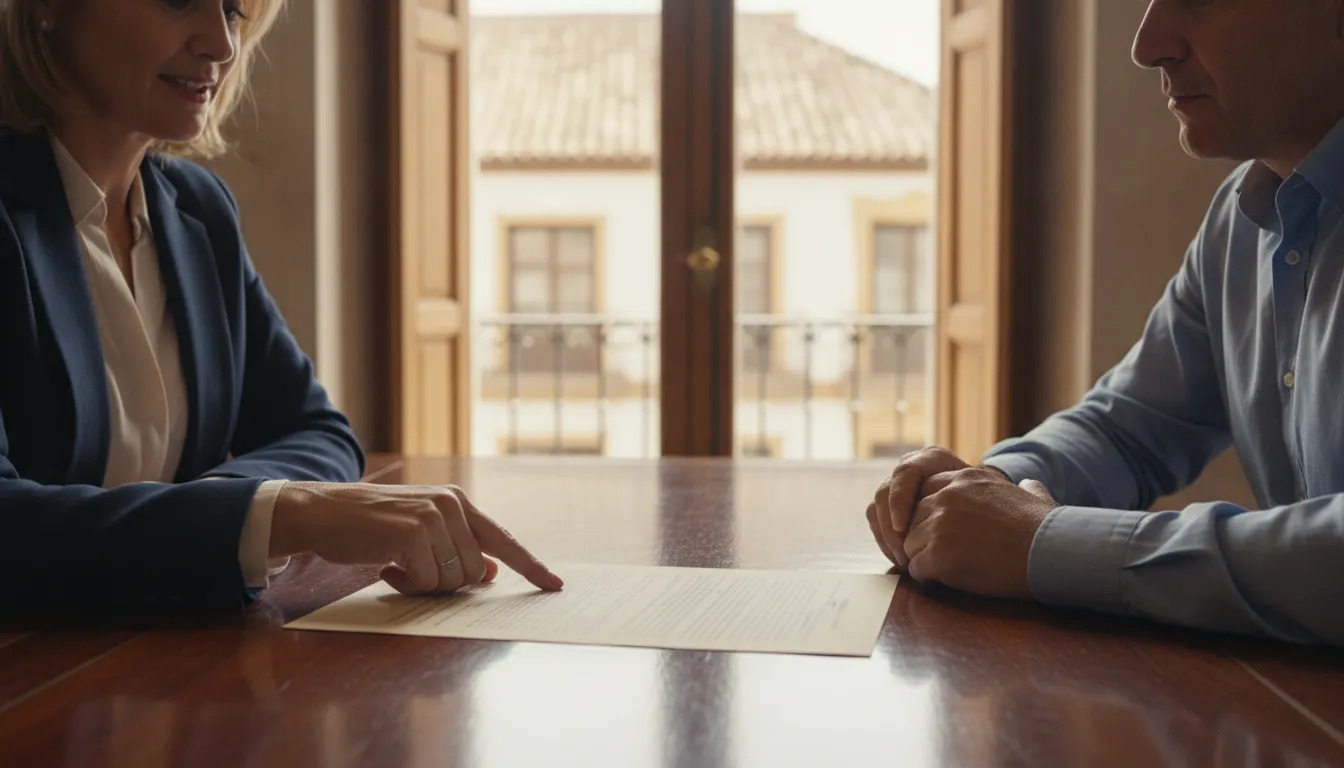
The conveyancing process in Spain typically takes around 6 to 12 weeks from start to finish. However, it’s important to understand that this timeframe can change a lot depending on how complex your specific purchase is. Some property deals are straightforward, while others might involve more complicated legal details or negotiations.
Delays can also happen if problems are discovered during the process. For example, if there is missing paperwork, if the property has outstanding debts, or if there are issues with the property’s registration at the Land Registry, the purchase could take longer. Working closely with an independent Spanish property lawyer can help protect your interests throughout the entire process [⁵]. Because they have no direct connection to the seller, the estate agent, or the developer, they can carry out impartial checks and offer clear advice if any problems come up. This independent support is crucial for keeping the process moving smoothly and addressing any unexpected hurdles.
What are the Typical Costs When Buying Property in Spain?
When you plan to buy property in Spain, it’s essential to remember that the purchase price itself is only one part of the total cost. Buyers need to budget for several extra expenses that add up. These can include:
- Legal fees for your Spanish property lawyer.
- Notary fees for the official paperwork.
- Land Registry fees for registering your ownership.
- Property transfer tax (ITP) for resale homes or VAT (IVA) and stamp duty (AJD) for new builds.
- Costs related to arranging a mortgage, if you are getting one.
Understanding Additional Property Costs
Buyers should generally set aside an additional 8% to 13% of the property’s purchase price to cover these extra costs [⁶]. However, the exact percentage can vary based on several factors, such as where the property is located in Spain and its total value. For example, tax rates can differ between regions. Understanding these costs conveyancing Spain involves upfront will help you create a realistic budget and avoid any surprises.
Breakdown of Key Costs
Here is a general overview of the additional costs you might expect when buying property in Spain, usually calculated as a percentage of the property’s value. These figures are estimates and can vary based on the region and specific circumstances:
| Cost Type | Estimated Percentage of Property Value | Notes |
|---|---|---|
| Transfer Tax (ITP) (for resale) | 6% - 10% | Varies by autonomous community in Spain. |
| VAT (IVA) (for new build) | 10% | Fixed rate for new residential properties. |
| Stamp Duty (AJD) (for new build) | 0.5% - 1.5% | Applies to new builds in addition to VAT; rate varies by region. |
| Notary Fees | 0.2% - 0.5% | Fees are regulated by law and depend on the property value. |
| Land Registry Fees | 0.1% - 0.25% | Regulated fees for registering your ownership. |
| Legal Fees (Spanish property lawyer) | 0.5% - 1.5% (+ VAT) | Can vary depending on the lawyer and complexity of the transaction. Usually a percentage. |
| Mortgage Arrangement Costs (if applicable) | 1% - 2% | Includes valuation fees and other bank charges if you get a mortgage. |
As you can see from the table, taxes like the Transfer Tax Spain property buyers pay can be the biggest additional expense. It’s crucial to factor these percentages into your budget to understand the true total cost of your Spanish home. For a seamless move, also consider all the aspects of relocating, including things like a final month moving abroad checklist.

Frequently Asked Questions About Conveyancing in Spain
Here are clear answers to some common questions people have about the conveyancing process in Spain:
Do I Need a Lawyer to Buy Property in Spain?
While it is not a legal requirement to hire a lawyer for property conveyancing in Spain, it is very strongly recommended. An independent Spanish property lawyer will protect your interests, perform all necessary legal checks, and ensure the process follows Spanish law, helping you avoid costly mistakes. This is especially true for property buyers UK Spain, who are often not familiar with the local legal system.
What Does a Notary Do in Spain for Property Sales?
A notary in Spain is a public official. Their main role is to oversee the signing of the public property deed (escritura pública) [⁴]. They verify the identities of all parties involved, confirm that the transaction follows all Spanish laws, and make sure the document is legally binding. The notary does not represent either the buyer or the seller but acts as an impartial witness to guarantee the legality of the sale.
How Long Does the Property Buying Process Take in Spain?
The entire conveyancing process in Spain usually takes about 6 to 12 weeks to complete. However, this timeframe can be longer or shorter depending on the specific details of your property purchase. Factors like the complexity of the deal, any issues found during legal checks, or delays in getting paperwork can all affect how long it takes.
Key Things to Remember When Buying Property in Spain
- Get a Lawyer Early: Always appoint an independent Spanish property lawyer to help you. They will identify legal issues early, verify who truly owns the property, and protect your interests before you sign any contracts.
- Obtain Your NIE Number: Every buyer must get a NIE number Spain requires for any property transaction. You can get this number at a local Spanish immigration office or a Spanish consulate.
- Thorough Legal Checks: Make sure your lawyer carries out essential legal checks, including getting a nota simple from the Land Registry. This document confirms clear ownership, ensures building licences are in place, and checks for any outstanding debts or mortgages on the property.
- Formal Completion: To finalise a purchase, you must sign the public deed (escritura pública) in front of a Spanish notary, pay the remaining balance, and ensure the title deed is officially registered.
- Budget for Extra Costs: Always plan for additional taxes and fees. These include notary costs, Land Registry fees, and either transfer tax (ITP) for resale properties or VAT (IVA) and stamp duty (AJD) for new builds. These extra costs usually add between 8% to 13% to the property’s purchase price. This careful planning helps ensure a smooth move and avoids unexpected financial burdens as you manage your life in Spain.
Sources used: [¹] GOV.UK - Buying property in Spain [²] Gobierno de España - Purchase and sale of real estate [³] BBVA - Deposit contract [⁴] Costa Luz Lawyers - What happens at the Spanish notary [⁵] Costa Luz Lawyers - Conveyancing timeline [⁶] Idealista - Property buying costs in Spain
Sources last checked on date: 17-Jul-2026
Related reading
Sources
| # | Source | Website |
|---|---|---|
| 1 | English-speaking lawyers in Spain | gov.uk |
| 2 | GOV.UK - Buying property in Spain | gov.uk |
| 3 | Gobierno de España - Purchase and sale of real estate | administracion.gob.es |
| 4 | BBVA - Deposit contract | bbva.es |
| 5 | Costa Luz Lawyers - What happens at the Spanish notary | costaluzlawyers.com |
| 6 | Costa Luz Lawyers - Conveyancing timeline | costaluzlawyers.com |
| 7 | Idealista - Property buying costs in Spain | idealista.com |