
Selling Property in Thailand as a UK Non-Resident
A UK non-resident selling property in Thailand? This guide breaks down the process: from finding an agent and understanding taxes to gathering vital documents like the FET form…


TL;DR: Selling property in Thailand as a UK non-resident generally takes between 2 to 6 months. Key costs for sellers include a 2% transfer fee (often split with the buyer), an estate agent commission of 3% to 5%, and varying legal fees (typically 0.5%–1.5% of the property value). Taxes depend on how long you’ve owned the property: if it’s less than 5 years, you’ll pay a 3.3% Specific Business Tax; if 5 years or more, a 0.5% stamp duty applies, along with progressive withholding taxes. Always keep your original Foreign Exchange Transaction (FET) form, as Thai banks need it to send your sale money back to the UK.
Imagine you’ve built a life, or at least a second home, in Thailand, perhaps a peaceful villa by the coast or a city apartment. Now, you’re a UK citizen living abroad, and it’s time to sell that property. One common mistake people make is thinking the selling process will be just like buying, or like selling property in their home country. Thailand has its own unique rules, especially for foreigners, which can make things tricky. Keeping your UK phone number active while you manage the sale from afar is often overlooked, but it’s vital for staying in touch with agents, lawyers, and buyers. For those splitting their time between countries, knowing how to keep your old number working can save a lot of hassle—you can find out more about how to keep your UK number abroad or even your Australian number abroad if that’s where you’ve settled. This guide will walk you through every step of selling your property in Thailand, from getting a valuation to transferring your money back home.
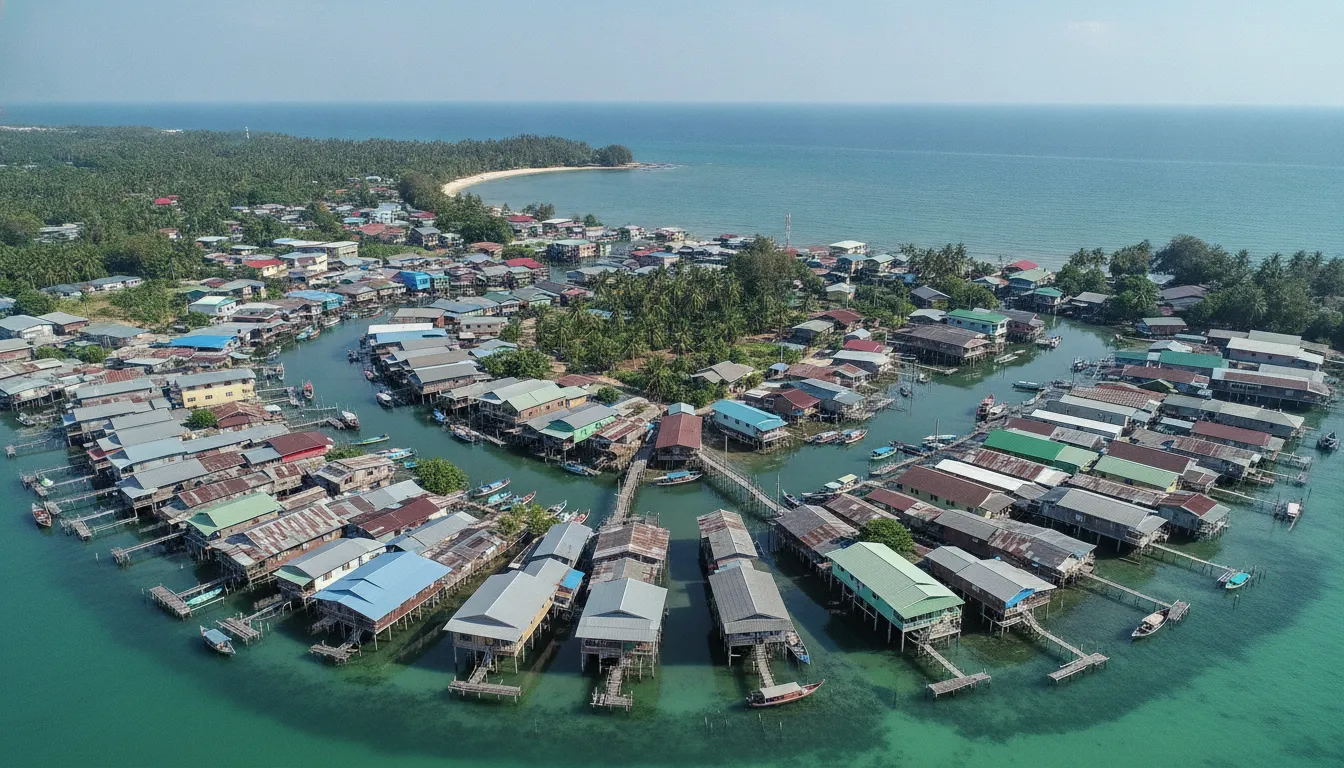
How do UK non-residents sell property in Thailand? (Step-by-step guide)
Selling property in Thailand for the first time might seem confusing, especially if you’re not a local. While you might remember some parts from when you bought your property, selling works a little differently. Here are the main steps you’ll follow to sell your home in Thailand:
Step 1: Find an estate agent and get a price estimate
The very first thing to do is figure out how much your property is worth. This helps you set a fair and attractive price. An estate agent can give you a professional valuation. You can also do your own research by looking at similar properties for sale in the area. Some online tools can also help you estimate a price.
It’s important to know that estate agents in Thailand don’t need a special license. This means you need to be very careful when choosing one. Always do your homework, ask many questions, and make sure any paperwork is translated clearly. If possible, choose an agent that someone you trust has recommended.
Step 2: Hire a solicitor
It’s a good idea to hire a conveyancing solicitor early on. This person is a legal expert who handles property transfers. Getting a solicitor sorted quickly means they can start working as soon as you find a buyer. This can help prevent unnecessary delays.
Having a solicitor is also very important because Thailand has specific laws for foreigners buying and selling property. Your solicitor can tell you exactly which documents you need. They will also guide you through the process based on how you own the property. For example, selling an apartment (condo) is generally simpler than transferring a lease for a leasehold property.
Your solicitor will work to protect your interests throughout the sale. They will write and check contracts, give you legal advice, and make sure your money is safe. A good place to start looking for an English-speaking lawyer in Thailand is this UK Government website, which lists professionals working abroad.
Step 3: Gather your documents
Before you can even put your home on the market, you need to collect all the important documents. Getting these ready early will speed up the process. Here is a list of documents you will likely need:
- Photo ID: Like your passport.
- Proof of address: A recent bill or official letter.
- Proof of ownership: This is usually the title deed, called a Chanote, or your condominium certificate.
- House registration document: Known as a Tabien Baan, if you have one.
- Debt clearance certificate: This shows that your mortgage has been fully paid off, or that it will be paid when the property sells.
- Proof of other paid debts: You need to show that all other bills and shared costs (for condos) are paid up.
- Original Foreign Exchange Transaction (FET) form: This is a crucial document. You received it when you first bought the property. It proves that the money you used to buy the property came from outside Thailand. You will need this later to send your sale money back to the UK, as mentioned by Esales International Property.
- Relevant tax records or warranties: Any papers related to taxes or guarantees on the property.
- Marriage or divorce certificates: Only if these apply to you.
- Confirmation of foreign ownership quota for condominiums: This shows that the building still allows foreign owners, as there is a limit.
Your solicitor or estate agent can help you gather these documents. They can also tell you if you need any other specific papers for your situation. Keeping your digital copies organized, perhaps on a cloud drive, can be useful, especially when managing paperwork from a different country. For many expats, staying organized is key, much like those moving to Australia need to manage documents for having a baby there, as described in our guide on having a baby in Australia.
Step 4: Get your property ready
Before you show your property to potential buyers, it’s a good idea to make it look its best. This means cleaning the house thoroughly and removing any clutter. You might also want to fix any small problems or update old fittings. Making your home attractive can help it sell faster and for a better price.
Step 5: Advertise your property
Now it’s time to show your property to interested buyers. If you have an estate agent, they will do most of the marketing work. This includes taking good photos, writing appealing descriptions, and listing your property online.
Some popular Thai property websites and agencies where your home might be listed include:
- Dot Property
- Thailand-Property.com
- DD Property
- Hipflat
- Rightmove Thailand
It’s also common in Thailand, just like in the UK, to put a “for sale” sign at the property. After your property is advertised, you or your agent can start holding viewings for interested people. With a bit of luck, offers will soon start coming in.
Step 6: Sign the sale agreement
Once you receive an offer you like, you can accept it. Sometimes, you might negotiate the price or other terms first. After an agreement is reached, solicitors on both sides will draft a sale and purchase agreement. This contract will include all the important details, such as the final price, which items (like fixtures and fittings) are included, any rules for transferring a leasehold, and the final completion date.
The buyer usually pays a deposit at this stage. Both you and the buyer, along with your legal representatives, will sign the agreement once everyone is happy with the terms.
Step 7: Complete legal checks
Before the final sale date, both the buyer’s and seller’s solicitors need to carry out due diligence checks. These are detailed legal checks to make sure everything about the property and the sale is correct and legal. They will also get all the necessary documents ready for the final step.
Step 8: Finalize the sale
On the agreed completion date, both the buyer and seller must meet in person at the Thai Land Department office. This is where the official transfer happens. You will sign the documents that transfer ownership, and these documents will be processed. At this point, all taxes and fees related to the sale are paid. The buyer then transfers the remaining amount of money for the property. Congratulations, your Thailand property is officially sold! The last thing to do is hand over the keys to the new owner.
Step 9: Transfer your sale money home
There’s one crucial final step that many foreign sellers might not know about. To send the money from your property sale out of Thailand, for example, back to a bank account in the UK, you need to have the right paperwork.
The most important document is the Foreign Exchange Transaction (FET) form. This is the official record from when you first bought the property, showing that the money came from abroad. When you want to send your sale money out of Thailand, Thai banks will ask to see the original FET form. Without it, your money transfer could be delayed or even stopped completely, leaving your funds stuck in Thailand. This is a common issue, as noted by ExpatFocus. Make sure you keep this form safe from the moment you buy your property until after you sell it. Planning your finances when moving back can be complex; our guide on receiving money from abroad in the UK offers helpful tips.

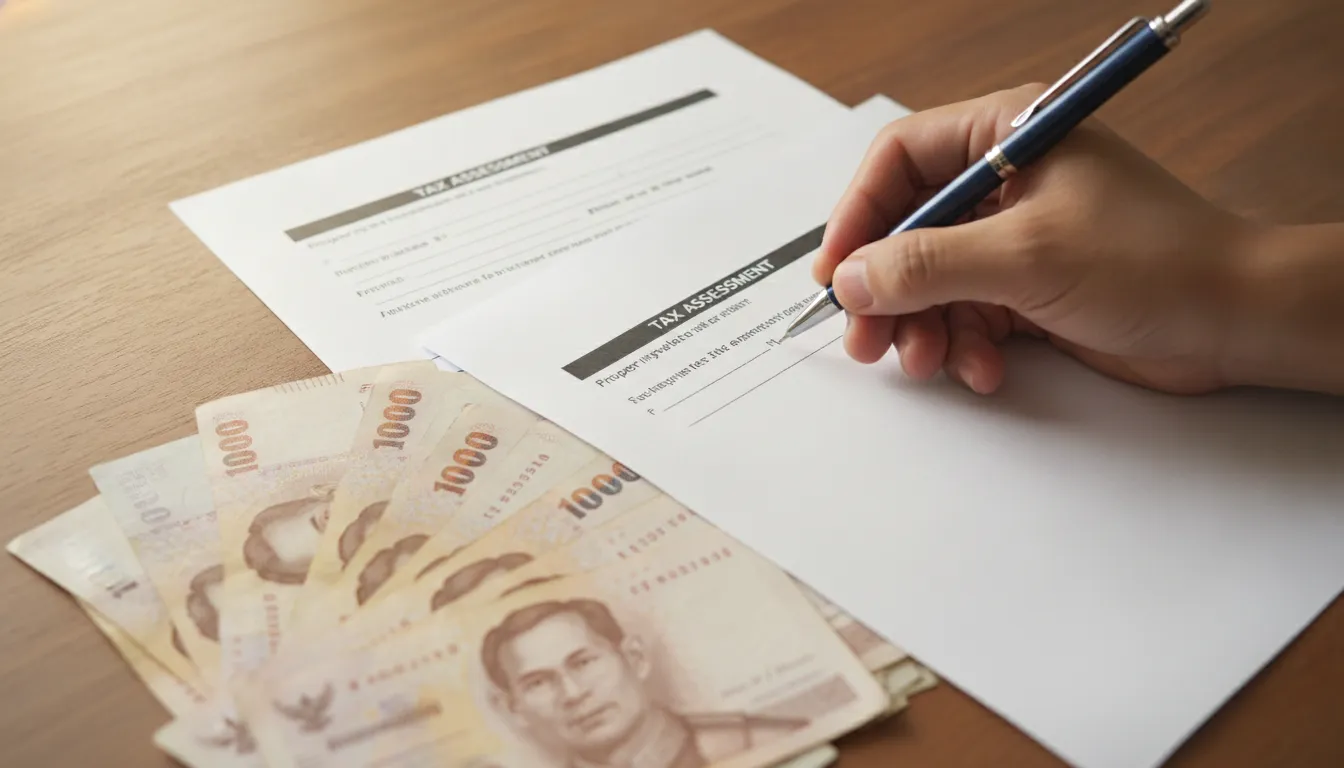
What taxes and fees do you pay when selling property in Thailand?
When you sell property in Thailand, you need to know about the costs involved. While the buyer often pays many of the costs, as the seller, you will still have to budget for certain fees and taxes. The information provided here is for general guidance only and should not be seen as financial or tax advice. You are responsible for calculating and paying your taxes correctly based on the law. Always talk to a qualified financial advisor before making any tax decisions.
Here is a summary of the main taxes and fees you might face:
| Tax/fee name | Rate/fee |
|---|---|
| Transfer fee | 2%, usually split equally between buyer and seller |
| Estate agent commission | 3% to 5% of the final sale price |
| Legal/conveyancing fees | Varies, typically 0.5%–1.5% of property value or a fixed fee |
| Specific Business Tax (SBT) - if property owned less than 5 years | 3.3% of sale price or appraised value (whichever is higher) |
| Stamp duty - only applies if SBT does not apply | 0.5% of the registered value |
| Withholding taxes | Progressive rates based on property value and how many years you owned it |
Transfer fee
In many countries, the buyer pays the transfer fees. However, in Thailand, the transfer fee is 2% of the property value. This amount is usually split 50/50 between the buyer and seller. Still, this split can be negotiated between both parties.
Estate agent fees
If you use an estate agent, you will need to pay them a commission. These fees can differ from one agent to another in Thailand. However, you should expect to pay around 3% to 5% of the final price your property sells for.
Legal fees
Another cost to remember is what you pay your solicitor. These fees vary widely depending on the solicitor you choose and the services you need. You can typically expect to pay a fixed fee, or sometimes a percentage of the property’s value. This percentage is commonly between 0.5% and 1.5%.
Taxes: Specific Business Tax (SBT), stamp duty, and withholding taxes
Unlike some other countries, Thailand does not have a capital gains tax on property sales. However, there are several other taxes that sellers must pay.
- Specific Business Tax (SBT): If you have owned the property for less than 5 years before you sell it, the Specific Business Tax (SBT) will apply. This tax is 3.3% of the sale price or the official appraised value of the property, whichever amount is higher.
- Stamp duty: If you have owned the property for 5 years or more, the SBT will not apply. Instead, you will pay stamp duty. This is 0.5% of the registered value of the property.
- Withholding taxes: On top of these, there are also withholding taxes. These taxes use a progressive rate, meaning the percentage changes based on the appraised value of the property and how many years you have owned it. These taxes are collected at the Thai Land Department on the day you finalize the sale.
It’s also important to check if UK capital gains tax rules apply when you sell property abroad. You should also consider double taxation. This is where you might end up paying tax in two different countries on the same income. Tax laws can be very complicated. It is always best to get advice from a tax specialist to fully understand your obligations in both Thailand and the UK. Our guide on moving to Thailand from the UK has more details on financial planning.
Does owning property in Thailand make you a tax resident?
If you are thinking about moving to Thailand, or if you are already living there temporarily, it’s good to understand how tax residency works and if owning property affects it.
Owning property in Thailand does not, by itself, automatically make you a tax resident of the country. Instead, your tax residency is decided by how long you physically live in Thailand. If you spend at least 180 days in Thailand during a tax year, then you will be considered a Thai tax resident, according to PwC. This means your main tax duties will be to Thailand. For expats who travel a lot, keeping track of your days in each country is essential, similar to how many manage their numbers when using services like Google Voice vs. Keep My Number.
Do you need a lawyer to sell property in Thailand?
Yes, you will definitely need a solicitor when selling property in Thailand. The rules and procedures for foreigners can be very complex. Because of this, you will need a local legal expert to help you.
Your solicitor is extremely important. They will help you gather all your legal documents for the sale. They will also write and carefully check all contracts. Your solicitor will give you advice about the entire selling process and many other things. Having a good solicitor can make your property sale go much more smoothly. More importantly, they can help you avoid expensive mistakes.
Can you use a Power of Attorney (POA) to sell your property from abroad?
Yes, you can use a Power of Attorney (POA) to sell property in Thailand without being there in person. This can be very helpful if you don’t want to travel to Thailand, or if you are unable to.
However, you must complete the correct legal documents and follow the proper procedures. This involves creating and signing a legally binding document. This specific document must relate to your property type. It gives a lawyer or another chosen person the power to act on your behalf in everything related to selling your property. The POA must clearly state that it gives powers for real estate sales. It also needs to be properly notarized and officially certified to be valid. Managing legal documents from afar is a key part of living abroad; knowing how to manage your digital communications, for example, by choosing between an eSIM vs physical SIM, can make a big difference.

What should you know about selling inherited property in Thailand?
For foreign citizens and UK expats living abroad, selling a property inherited in Thailand can be a complicated process. Thailand has specific laws about how foreigners can own property. Here are some of the most important things you need to know:
- Probate and inheritance first: All legal steps for proving the will and handling the inheritance must be finished. Also, the land registry records must be updated to show you as the new owner before you can sell the property.
- Clear ownership: Your ownership must be very clear. You need to have all the required documents that prove you have the right to sell the property.
- Condos vs. land: Foreigners are generally allowed to own condos. However, there is a rule: the total foreign ownership in the building must be less than 49%. If you inherit land, you must sell it within one year. This is a strict rule in Thailand, as explained by Global Law Experts.
- Taxes: Thailand does not have inheritance tax for most estates (only for very high-value ones) or capital gains tax on property. But you will still need to pay other taxes. For example, the Specific Business Tax (SBT) will apply if the person who originally owned the property bought it less than 5 years ago.
- Timeframe: Inheritance legal proceedings can take a long time, sometimes up to a year. So, be ready for a delay before you can put the inherited property up for sale.
It is highly recommended that you use a solicitor and/or a tax specialist. They can help you understand all the legal steps involved in inheriting and then selling property in Thailand. This can be a complex area, similar to managing inheritance tax in Italy for UK expats.
How long does it usually take to sell property in Thailand?
The time it takes to sell property in Thailand can vary a lot. Many things can affect this, and some of them might be out of your control. For example, the current state of the local property market, whether your property is priced realistically, and the buyer’s own situation can all play a role.
The type of property also matters. A simple condo sale might be finished in just a few weeks. However, other more complicated sales can take several months. On average, you can expect the process to take around 2 to 6 months.
Common problems that can delay property sales in Thailand include:
- Paperwork mistakes: Such as missing title deeds or differences in names on documents.
- Unregistered buildings: This happens when houses are built on land without getting the right building permits first.
- Slow processing times: It can take a long time to get important documents, like the debt-free certificate or proof of foreign ownership limits for condos.
- Slow legal processes: The time it takes for solicitors to handle paperwork and checks.
- Overpricing: Setting the property price too high can make it difficult to find buyers.
- Inheritance complications: Legal issues related to inherited property can cause long delays.
- Land department waiting times: The official Land Department offices can have long queues and slow service.
- Buyer’s mortgage problems: If the buyer’s home loan application is turned down, the sale will be delayed or cancelled.
Keeping your phone number active is crucial during this period to avoid delays from missed calls or messages. Understanding what happens to your number when you move abroad can help you prepare.
Do you need a bank account in Thailand to sell property?
It is not absolutely necessary to have a Thai bank account to sell your property there. You might be able to use an international bank account or an offshore account for some of your transactions. However, you should always check with your solicitor about this. They can tell you what is possible and what specific rules apply.
Having a local bank account could make some transactions easier, especially for receiving local payments or paying local fees. However, it could also lead to higher costs for international transfers. For example, if a bank or service adds a hidden fee to the exchange rate when converting Thai Baht (THB) to British Pounds (GBP) or vice versa. It’s important to compare options for international money transfers.
Is it a good time to sell your property in Thailand now?
Whether it is a good time for you to sell your property in Thailand depends mostly on your own personal situation. For instance, consider how much you originally paid for the property. Also, look at what prices are currently like in the local property market. If prices have gone up since you bought it, it might be a good time to sell.
It is also worth looking into your tax responsibilities. Remember, you might have to pay Specific Business Tax (SBT) if you have owned the property for less than 5 years. This tax can affect how much profit you make from the sale. The information here is general market information only. It is not financial or investment advice. Always talk to a qualified financial advisor before you make any big decisions about selling your property.

Key takeaways
Selling property in Thailand as a UK non-resident involves several steps and can take approximately 2 to 6 months. You will face important costs, including a 2% transfer fee (often shared with the buyer), an estate agent commission that ranges from 3% to 5%, and legal fees, which are typically between 0.5% and 1.5% of the property’s value. Taxes depend on how long you have owned the property: if you sell within 5 years, a 3.3% Specific Business Tax applies. If you’ve owned it for 5 years or more, you’ll pay a 0.5% stamp duty. Both situations also involve progressive withholding taxes. A critical step is to keep your original Foreign Exchange Transaction (FET) form from your initial purchase. Thai banks require this document to process and send your sale money back to the UK. While foreigners can keep inherited condominiums, any inherited land must be sold within one year under Thai property laws. Making sure your communication lines are always open, whether it’s through a reliable mobile connection or by keeping your existing phone number active, is essential throughout this process.
Sources
| # | Source | Website |
|---|---|---|
| 1 | UK Government website | find-a-professional-service-abroad.service.csd.fcdo.gov.uk |
| 2 | Esales International Property | esalesinternational.com |
| 3 | ExpatFocus | expatfocus.com |
| 4 | PwC | taxsummaries.pwc.com |
| 5 | Global Law Experts | globallawexperts.com |