
Getting Married in France: A UK Citizen's Complete Guide
Planning a wedding in France as a UK citizen? This guide covers residency requirements, essential documents, civil ceremony rules, and French wedding traditions to help you say…


TL;DR: To get married in France as a foreigner, you generally need to live there for at least one month before the wedding and provide proof of residence. The only legally binding ceremony is a civil one at the town hall. While costs can vary, a venue might cost €6,000 - €15,000, and catering €70 - €250 per person. Staying connected while planning your wedding abroad is key, especially when you need to confirm details and speak with your family and wedding planner.
Imagine exchanging vows in a stunning French château, with vineyards stretching out behind you, or perhaps a romantic ceremony by the sparkling Mediterranean Sea. France offers a truly magical setting for a wedding. However, planning a wedding in a foreign country, especially from the UK, comes with its own set of rules and paperwork. One common mistake couples make is underestimating the residency requirements and the importance of clear communication throughout the process, which is where keeping your home phone number active abroad can be a lifesaver.

Can people from other countries get married in France?
Yes, people from other countries can get married in France, but there are specific rules you must follow. You need to live in France for at least one month before your wedding. You must also show documents that prove you have a home or a place to live there. At least one person in the couple should have a real connection to France, like owning a home or living there for a while.
What types of wedding ceremonies are possible in France?
In France, only a civil wedding ceremony is legally recognized and makes your marriage official. This ceremony must take place in a town hall, called a “mairie,” in a public room.
You can also have a church wedding or another type of ceremony in France after you are legally married. This means you must complete the civil wedding first, either in France or in your home country, such as the UK. You will need to show your official marriage certificate before you can set a date for any religious ceremony.
Civil wedding ceremonies in France
A civil wedding ceremony is led by the mayor or one of their assistants at the town hall. Usually, the wedding must happen at the town hall itself. Only in special cases, like if someone is seriously ill, can the wedding be moved to another place, such as a home or a hospital.
You can only get married in a town where either you or your partner has a direct link. This connection can be that one of you lives there, or even that one of your parents lives there.
Religious ceremonies in France
If you want to have your wedding in a French church or any other religious place, you must complete the civil wedding first. You can do this civil wedding either in the UK or in France. Before the church agrees to a date for your religious ceremony, they will check your official marriage certificate to make sure you are legally married.
Are same-sex weddings allowed in France?
Yes, same-sex marriage became legal in France in 2013. This means that same-sex couples have the same rights to marry as heterosexual couples. Before this, since 1999, both same-sex and opposite-sex couples could enter into civil partnerships, known as a “Pacte Civil de Solidarité” or PaCS.
A PaCS is a less formal agreement than a traditional marriage. It allows partners to be officially recognized without all the extra legal ties that come with marriage.
What are some French wedding traditions and customs?
If you like the idea of adding some local flavour to your wedding, here are a few French customs you might enjoy:
- Wedding procession: On the wedding day, the groom traditionally goes to the bride’s home to pick her up. As the bride walks with her father at the front of the procession, she often cuts white ribbons along the way. This is a symbolic act, meaning they will easily solve any problems that might come up in their future together.
- Dragée (Sugared Almonds): French couples often give their guests five sugared almonds, called “dragée.” Each almond has a special meaning: health, long life, wealth, happiness, and fertility.
- Croquembouche: Instead of a large wedding cake with many layers, French couples often have a “croquembouche.” This is a tall pyramid made of vanilla-filled pastry puffs, held together with caramel.
- Sabrage: This exciting tradition involves opening a bottle of champagne with a special sword called a sabre. It is a dramatic and festive way to start the celebrations.
What are the official rules for getting married in France?
To get married in France, both people must be at least 18 years old. If someone is younger than 18, they can only marry if at least one of their parents gives permission. There is no maximum age limit for marriage.
Marriages between close family members are not allowed. Also, both people must freely agree to the marriage. If someone is forced to marry, or does not truly agree, the marriage can be cancelled by a public lawyer or by one of the people involved.
You will also need to have between two and four witnesses at your wedding. These witnesses are there to confirm who you are and that everything you say is true.
What specific marriage requirements apply to foreigners in France?
If you are not a French national and want to get married in France, you need to live in the country for at least one month before the wedding day. You must provide official documents to prove this residency or domicile, such as a rental agreement or a utility bill.
Some non-French citizens may also need to get a “certificate of celibacy.” This document shows that you are not already married. This certificate must be translated into French.
What documents do foreigners need for a French wedding?
To get married in France, you will need to prepare a “dossier,” which is a collection of all your required documents. This file should include all general marriage documents and any extra papers needed for foreigners. You will then bring this dossier to the town hall where your wedding will happen.
Here are the main documents you will need to provide:
- Valid ID cards for both people (you need to show the original and a copy).
- Original birth certificates for both people.
- If you have been married before and are divorced or your previous spouse has died, you will need to provide divorce papers or a death certificate.
- Proof that you live in France, such as a recent utility bill, a tax notice, or your rental agreement.
Your chosen witnesses will also need to give copies of their ID. They will also fill out a form with some personal details, like their job, where and when they were born, and their home address.
How long must you be in France before and after the ceremony?
You must officially live in France for at least one month before your wedding can take place. It’s a good idea to arrive even earlier than this, just in case you run into any unexpected problems with paperwork or arrangements. Planning ahead can save a lot of stress.
How can you contact your local embassy?
If you are a British citizen, you can find the British Embassy in Paris at 35, Rue du Faubourg St Honoré. You can only visit the embassy in person if you have an appointment. However, you can reach them through an online inquiry or by phone if you have an emergency.
Consular services, which help with citizens’ needs, are also available in Bordeaux and Marseille. It’s a good idea to keep your home country’s number active so you can easily contact the embassy or family if needed. See our UK guide for more on how to manage your phone number when living abroad.
How to get married in France as a UK citizen: A step-by-step guide
Here are the most important steps for UK citizens planning to get married in France:
Choose the type of wedding
Your first step is to decide what kind of wedding you want. The type and size of your ceremony will help you figure out your budget and plan everything else. For example, a civil ceremony followed by a large reception will have different needs than a smaller, more private event. The type of ceremony also affects which documents you will need to gather.
Think about hiring a wedding planner
Hiring a wedding planner can save you a lot of time and effort, especially when organising a wedding in another country. They are experts at handling all the details and can help you avoid common problems. Since popular venues often need to be booked more than a year in advance, hiring a planner early on should be one of your first tasks. For insights into planning other international weddings, check out our guide on getting married in Italy.
Collect and translate important documents
You need to prove that you have lived in France for at least one month to get married there. So, at this stage, you should make sure you have a place to stay and documents to prove your address. This is also a good time to check that your passports are valid and that you can find your birth certificates. All your documents, such as divorce papers from any past marriages, must be officially translated into French. The exact list of documents you need will depend on your personal situation, so it’s important to check in advance if you need any other specific paperwork.
Decide on your wedding witnesses
You will need between two and four witnesses for your wedding in France. Now is a good time to choose who these people will be. It’s best to ask them early to make sure they can be there on your special day.
Post the marriage banns
At least ten days before your wedding, an announcement called “marriage banns” must be displayed at the town hall. This announcement lets the public know about your upcoming marriage. You cannot get married until these ten days have passed since the announcement was first put up.
What is a getting married in France checklist?
Here is a quick summary of what you need to do to get married in France:
- Decide on your wedding type and consider hiring a wedding planner.
- Arrange for your proof of residence in France.
- Get all your necessary documents translated into French.
- Choose your wedding witnesses.
- Book flights and accommodation for your closest family and guests.
- Send out your wedding invitations.
- Make sure the marriage banns are posted at the town hall.
How do I find the perfect wedding venue in France?
Your legal civil wedding ceremony will take place at the town hall. However, you can have your celebration and party at a different location afterwards. France offers many different types of venues, from grand châteaux to rustic farmhouses, so it’s important to start your search well in advance.
When is the best time of year to get married in France?
The best time for your wedding depends on the kind of celebration you are planning. Generally, spring (April to June), summer (July to August), and early autumn (September to October) are the most popular times. Winter weddings in France can be beautiful too, often offering a cozy atmosphere, and they might even help you save money compared to getting married during the peak season.
Where are the best places to get married in France?
Some of the most popular areas for weddings include the beautiful Provence countryside, the famous Burgundy vineyards, the stunning French Alps, the charming Loire Valley, or the glamorous French Riviera. However, French cities like Paris or Nice are also excellent choices, especially if you are planning an indoor wedding or prefer an urban setting.
The best wedding venues in France
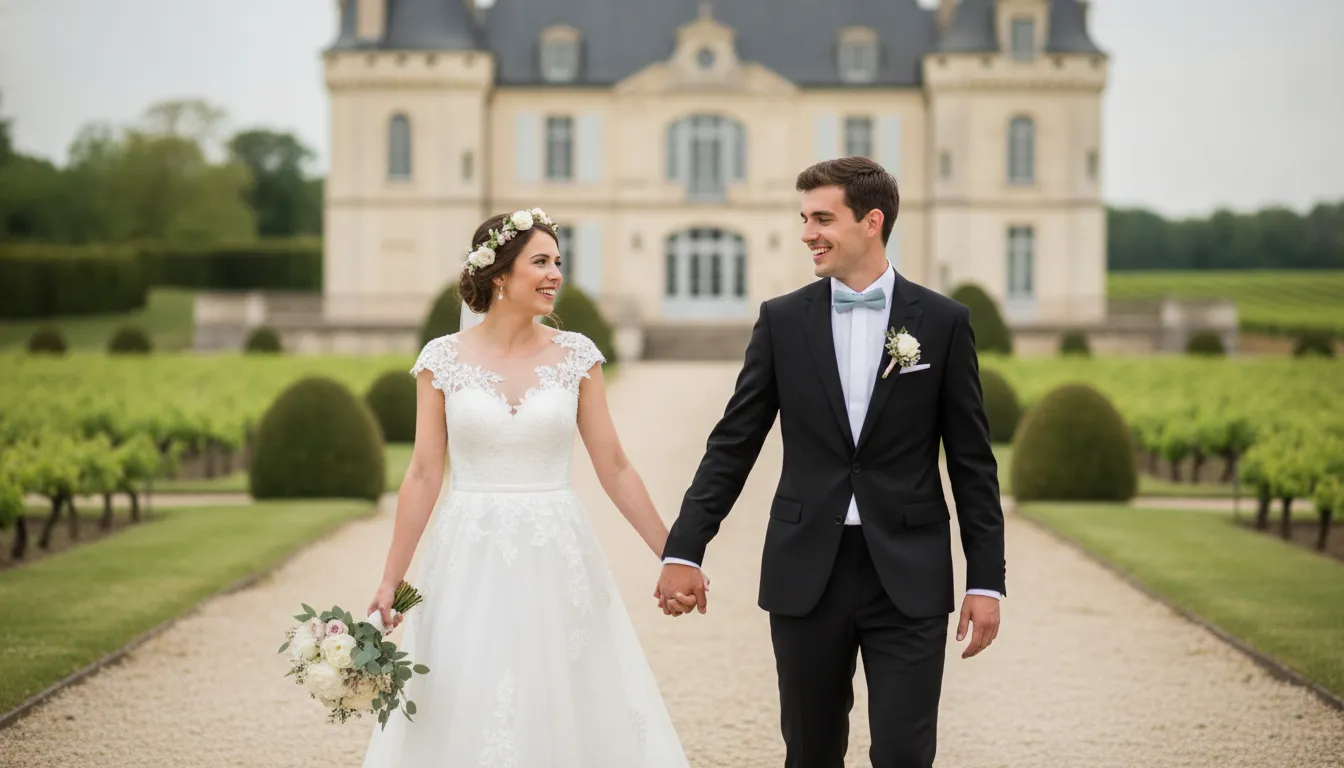
France has many breathtaking venues. For example, the Château Challain in the Loire Valley is considered one of the most beautiful wedding locations. It looks like something from a fairytale, with amazing stained-glass windows, gardens that feature a lake, and a grand ballroom.
If you dream of getting married on the Côte d’Azur, the Domaine de Canaille in the Calanques National Park is a stunning option. This villa has direct access to the beach, amazing views of the Mediterranean Sea, and 12 rooms for your guests to stay in.
For a classic Provencal wedding, the Château des Barrenques offers a wonderful setting. It is located near a river and surrounded by fields of lavender and sunflowers, making it perfect for couples who want to be close to nature.
What are the costs involved for a wedding in France?
Beyond the main wedding expenses, there are a few other fees you might encounter. You can expect to pay for official documents like birth, death, or marriage certificates. These typically cost around £12.50 for a standard service and £38.50 if you need them quickly.
If you choose to have a prenuptial agreement (a contract made before marriage about money and property), this will also be an extra cost. The price for this will depend on how much money and how many assets you have.
How much does a wedding in France cost?
Getting married in France can be as fancy or as simple as you wish, depending on what you prefer and how much money you want to spend. Here is a general idea of how much couples spend on average for different parts of their wedding [^10]:
| Category | Approximate cost |
|---|---|
| 🏰 Venue | €6,000 - €15,000+ |
| 🍴 Catering | €70 - €250 per person |
| 📝 Wedding planner | €2,000 - €10,000 |
| 📷 Photography | €1,500 - €8,000+ |
| 💐 Decorations | €800 - €4,000+ |
| 🎶 Music | €1,500 - €8,000 |
As you can see, the venue is often the biggest cost, ranging from €6,000 to over €15,000. Catering can add up quickly, costing anywhere from €70 to €250 for each guest. Hiring a wedding planner, while a significant cost at €2,000 - €10,000, can be a worthwhile investment for managing everything from afar. Photography and music are also considerable expenses, typically falling between €1,500 and €8,000. Finally, decorations can cost between €800 and €4,000 or more.
Other costs to think about for your wedding in France
When planning your budget, remember to include travel and accommodation costs for yourselves and perhaps for some guests. Also, factor in transportation within France, like taxis or hired cars, to get to different wedding locations. If you plan to hire a professional for makeup or hair, prices can be quite high, especially if you do not book these services well in advance. Communication costs, like mobile data plans or international calls, are also worth considering when you’re managing arrangements from another country.
Should you visit France before your wedding day?
Yes, it is not just recommended, but legally required that you visit France before your wedding. You must actually live in France for at least one month before your wedding ceremony can take place. This residency is a key legal requirement for foreigners to marry in France.
Why hire a wedding planner for a wedding abroad?
A wedding planner can be very helpful for finding and booking your venue, as well as keeping track of all the important dates for your wedding abroad. They have local knowledge and connections that can be very valuable. Even though a planner can be a big expense, their expertise often makes the cost worthwhile, ensuring your special day runs smoothly.
Should you hire an interpreter for your wedding in France?
Yes, it is often a good idea to hire an interpreter. The town hall where your civil wedding takes place usually provides an interpreter who can be present during your ceremony. This ensures that you understand everything that is said and that all legal requirements are clearly communicated, especially if you or your partner are not fluent in French. Clear communication is key to avoiding misunderstandings on such an important day.

Planning your French wedding while staying connected
Getting married in France offers a dream setting, but it needs careful planning, especially when you are coordinating from another country. From legal documents to venue bookings and guest arrangements, clear and reliable communication is critical. Ensuring your phone number works seamlessly abroad means you can easily stay in touch with your wedding planner, vendors, and family, making the whole process less stressful. This allows you to focus on the joy of your upcoming marriage in beautiful France.
Related reading
Sources
| # | Source | Website |
|---|---|---|
| 1 | civil wedding ceremony is legally recognized | weddingsabroadguide.com |
| 2 | online inquiry | contact.service.csd.fcdo.gov.uk |