
How to Check Property Ownership in Australia
Learn how to check property ownership in Australia step-by-step. Understand why it's crucial for due diligence, especially for expats and overseas investors, and what fees to…


TL;DR: To check property ownership in Australia, you need to get the property’s details (like its street address or unique numbers), then visit the official government land registry website for the specific state or territory. Examples include Landgate for Western Australia, NSW Land Registry Services, or the Victorian Land Registry. You will enter the property information, find the Certificate of Title document, and pay a fee, which typically costs around $18.70 AUD in New South Wales or $33.90 AUD in Western Australia.
Imagine you’re living overseas, perhaps keeping your Australian phone number active with a service like Keep My Number to stay in touch with loved ones back home. You decide to invest in property in Australia. What if the person selling the property isn’t the real owner, or the property comes with hidden debts or rules you don’t know about? Many people buying property, especially from a distance, face this serious risk. To protect your money and avoid future problems, it’s very important to check who truly owns a property before you buy it. This is a key step in what’s called “due diligence” – doing all the necessary checks.

Why is checking who owns a property important when buying in Australia?
Checking who owns a property is extremely important when you are buying a home or land in Australia, just like anywhere else in the world. This process is all about protecting your money and making sure you have all the facts to make a good decision. When you are buying property from afar, for instance, if you are an expat managing your finances and planning your future in a new country, ensuring the legality of your investment back home is even more critical. Getting things right from the start can prevent many headaches later on, especially when dealing with international transactions or managing your assets from another country.
Confirming the legal seller
The first big reason to check ownership is to make sure the person or company named on the sales agreement is truly the legal owner of the property. They must also have the legal right to sell it. If they are not the rightful owner, the sale isn’t valid, and you could lose your money.
Uncovering debts
During your ownership check, you will also find important details about any money owed on the property. This could be a registered mortgage, a “caveat” (a formal warning of a claim against the property), a legal claim, or other types of debts or burdens. It is absolutely vital that any such debts are paid off before the sale is completed. If they are not, you, as the new owner, could become legally responsible for them. This means you could end up having to pay someone else’s debts, which could be a huge financial shock.
Checking for restrictions
The official document showing who owns the property, called a title deed, also contains important information about any rules for using the land. It might mention “easements,” which give other people the right to use part of your land (like a pathway or access for utilities). It could also list “covenants,” which are agreements that limit what you can build or change on the property. Knowing these restrictions beforehand helps you understand exactly what you are buying and what you can or cannot do with it.
Preventing financial loss
Thoroughly checking property ownership can stop you from making a bad investment. For example, you might discover that the property or land is tied up with debts from other parties or that the seller is going through bankruptcy. Buying a property with these kinds of issues can lead to major financial problems for you down the road, potentially costing you a lot of money and stress. This due diligence is similar to how you’d check rules and regulations when you are getting ready to move abroad and keep your UK number, ensuring all legal steps are covered.
What are Australian title deeds and how do they work?
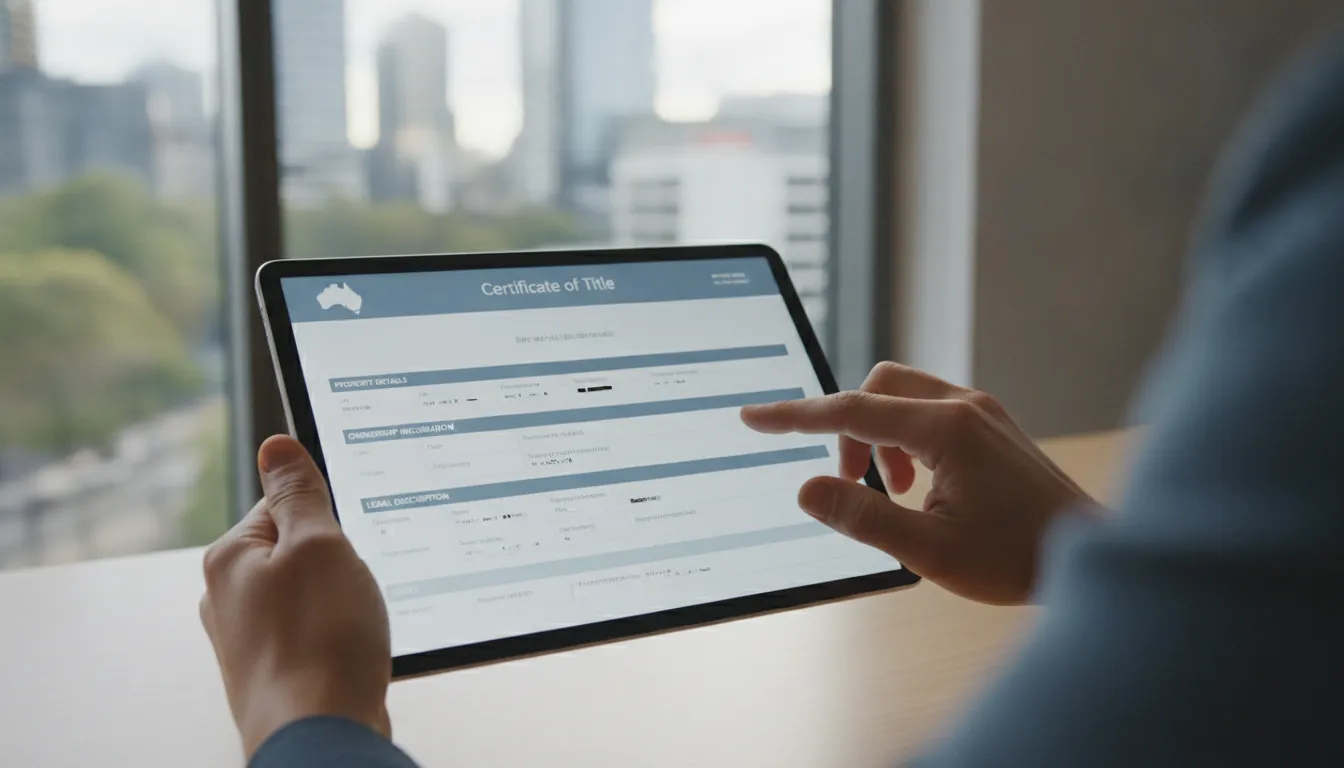
The main way to check who owns a property in Australia is to look at its title deed. In Australia, this document is officially called a “Certificate of Title.” Unlike some other countries where you might find paper certificates, Australia uses a modern, fully digital system for keeping land records. Each state and territory in Australia maintains its own official online records showing who owns every property and piece of land within its borders. This means you can easily search for a property’s title online.
A Certificate of Title is the official proof of who owns a property. It holds key information about the property itself and its owner. According to Landgate, which manages land information in Western Australia, these certificates include several important details.
Here is what a Certificate of Title typically includes:
- Current property ownership details: This covers the full legal name and address of the current owner or owners.
- Registration date: The exact date when the last change of ownership was officially recorded.
- Reference numbers for the property: These are unique numbers, often called volume and folio numbers, which help identify the specific property in the land registry system.
- Survey plan number and type: Information related to the official survey map of the land.
- Details of boundaries, size, and dimensions: A clear description of the property’s edges, its total area, and exact measurements.
- Details of limitations, encumbrances, interests, and notifications: This section lists any restrictions, debts, other claims, or important notices related to the property.
- Statements of additional useful information: This can include notes about upcoming surveys or caveats that have expired.
How can you check property ownership in Australia step-by-step?
Your solicitor or legal representative will mainly be responsible for doing important background checks, like searching for the property title, as part of the buying process. However, it’s very helpful for you to understand how this process works, especially if you plan to do some of these checks yourself. The good news is that checking property ownership is fairly simple, though the exact steps might differ slightly from one Australian state to another. This is an essential part of your due diligence, similar to putting together a thorough moving abroad checklist before relocating.
Here are the main steps involved in checking property ownership:
- Gather the plot or property details: You will need some specific information to start your search. This could be the full street address of the property, its unique volume and folio numbers, or its lot plan number. Having accurate details is crucial to find the correct record.
- Go to the state or territory’s official government portal: Each Australian state and territory has its own land registry service. For example, if the property is in Western Australia, you would go to Landgate. For New South Wales, it’s the NSW Land Registry Services (NSW LRS). If it’s in Victoria, you’d use the Victorian Land Registry.
- Enter the requested information: On the chosen portal, you will be prompted to enter the property details you gathered in step 1. Make sure to enter them carefully to ensure you get the right results.
- Find the document you need: Once you’ve entered the details, the system will show you relevant documents. You’ll need to identify the Certificate of Title.
- Pay the fee (if applicable): There is usually a small fee to access and download these official documents. We’ll cover more about these costs in the next section.
After you complete these steps and pay any necessary fees, you should receive a digital copy of the property’s Certificate of Title via email. This document will contain all the vital information you need about the property’s ownership and any associated details.

Does it cost money to check property ownership in Australia?
Yes, there is usually a small fee you need to pay to get and download official title certificates in Australia. These fees for a title search can change depending on which state or territory the property is in.
For example:
- In New South Wales, the fee for a title search is $18.70 AUD, and this includes GST (Goods and Services Tax), according to the LRS.
- In Western Australia, you can expect to pay $33.90 AUD for a similar search, as stated by Landgate.
Often, these costs are part of the total fees your solicitor charges you for managing the property purchase. However, it’s always a good idea to check with your solicitor and ask for a detailed list of all fees so you understand exactly what you are paying for.
If the Certificate of Title shows any hidden burdens, interests, limitations, or notices, you might need to get more documents to find out detailed information about them. Each of these additional documents might also come with its own fee.
Here’s a quick look at how title search fees can vary:
| State/Territory | Example Fee (AUD) | Source |
|---|---|---|
| New South Wales (NSW) | $18.70 | NSW Land Registry Services |
| Western Australia (WA) | $33.90 | Landgate |
| Other states/territories | Varies | Check specific state land registry |
These numbers are important for budgeting your property purchase, especially if you are living in a different country and are sending money for these transactions.

What other important checks should you do when buying property in Australia?
Besides checking the Certificate of Title, there are several other important searches and checks you should do when buying property in Australia. Your solicitor should handle most of these as part of the conveyancing process, which is the legal work involved in transferring property. These extra checks help make sure you have a complete picture of the property’s history and any potential issues. This careful checking process is crucial for anyone, especially for those considering living in Australia or making a significant investment from overseas.
Here are some of the other key checks:
- Plan image search: This is a search for the official, registered survey or cadastral plan for a piece of land. It shows the exact legal measurements, boundary lines, and the total area of the land. This ensures that the property’s physical boundaries match its legal description.
- Land tax clearance certificate: This document comes from the state revenue office. It confirms whether any land tax is still owed on the property. If there is outstanding land tax, it needs to be settled before the sale, as it could become your responsibility.
- Council rates search: This document comes from the local government council. It shows the current balance of council rates (local property taxes) and any interest that is overdue. Just like land tax, any outstanding council rates typically need to be paid off by the seller before you take ownership.
- Building approval search: Also known as a building records search, this check looks into the history of building approvals, permits, extensions, and Certificates of Occupancy for the property. This is very important to make sure all existing structures and any past changes were built legally and meet safety standards. Without proper approvals, you might face fines or be forced to remove or alter parts of the property later on.
Completing all these searches gives you a full understanding of the property and helps you avoid any nasty surprises after you’ve bought it. This thoroughness is especially vital when you’re managing property from abroad, perhaps relying on reliable communication methods and services that allow you to keep your Australian number abroad to coordinate all the necessary checks.
Related reading
Sources
| # | Source | Website |
|---|---|---|
| 1 | Landgate | landgate.wa.gov.au |
| 2 | NSW Land Registry Services (NSW LRS) | online.nswlrs.com.au |
| 3 | Victorian Land Registry | land.vic.gov.au |
| 4 | LRS | nswlrs.com.au |
